



I sit on the Advisory Board for the Connecticut Department of Mental Health and Addiction Services and am co-president of NAMI Shoreline but I’m speaking here today as a mother whose son was arrested four years ago while still in his senior of high school.
My son Ellis is known as being bright, funny and well-liked. His natural disposition is extremely easygoing. To give a little context, for senior superlative, he was voted Most Likely to Sleep Through an Earthquake. He was a strong student, thrived in high school, and received a Presidential Scholarship to attend the college of his choice.
And then one day he went missing. He was experiencing a psychotic break. Initially, we had no idea.
This brings me to his first intersection between mental illness and incarceration. When Ellis went missing, his father, his friends and I pleaded with our local police department overnight and into the next day to help us find him and bring him home. After midnight he was located by police sleeping at a rest stop more than one and a half hours from home.
Prior to this he had never driven beyond a 20-mile radius, so with that information and some other indicators we knew that something was terribly wrong — that he could not be in his right state of mind and clearly told the officer so. That police officer told me that Ellis was not having a psychotic break.
Well, he was. He was hallucinating, delusional and had lost his sense of reality. And this unaddressed spiraling led to his arrest.
It’s my belief that if the officers we encountered had had crisis intervention team training Ellis would never have been arrested; that he would not have lived his worst moment ever while just a senior in high school; that his future would not have been taken from him because that moment would not have led to his imprisonment. Instead he was incarcerated at the onset of a very serious illness — one that requires proper treatment and a qualified team in place for support. Instead, he’s been awaiting in pretrial for four years.
Recovery from serious mental illness requires carefully prescribed medication, cognitive behavioral therapy to work through the experience and family support. Family and social relationships are hugely important for recovery, as is early intervention — which is only possible with an available qualified team.
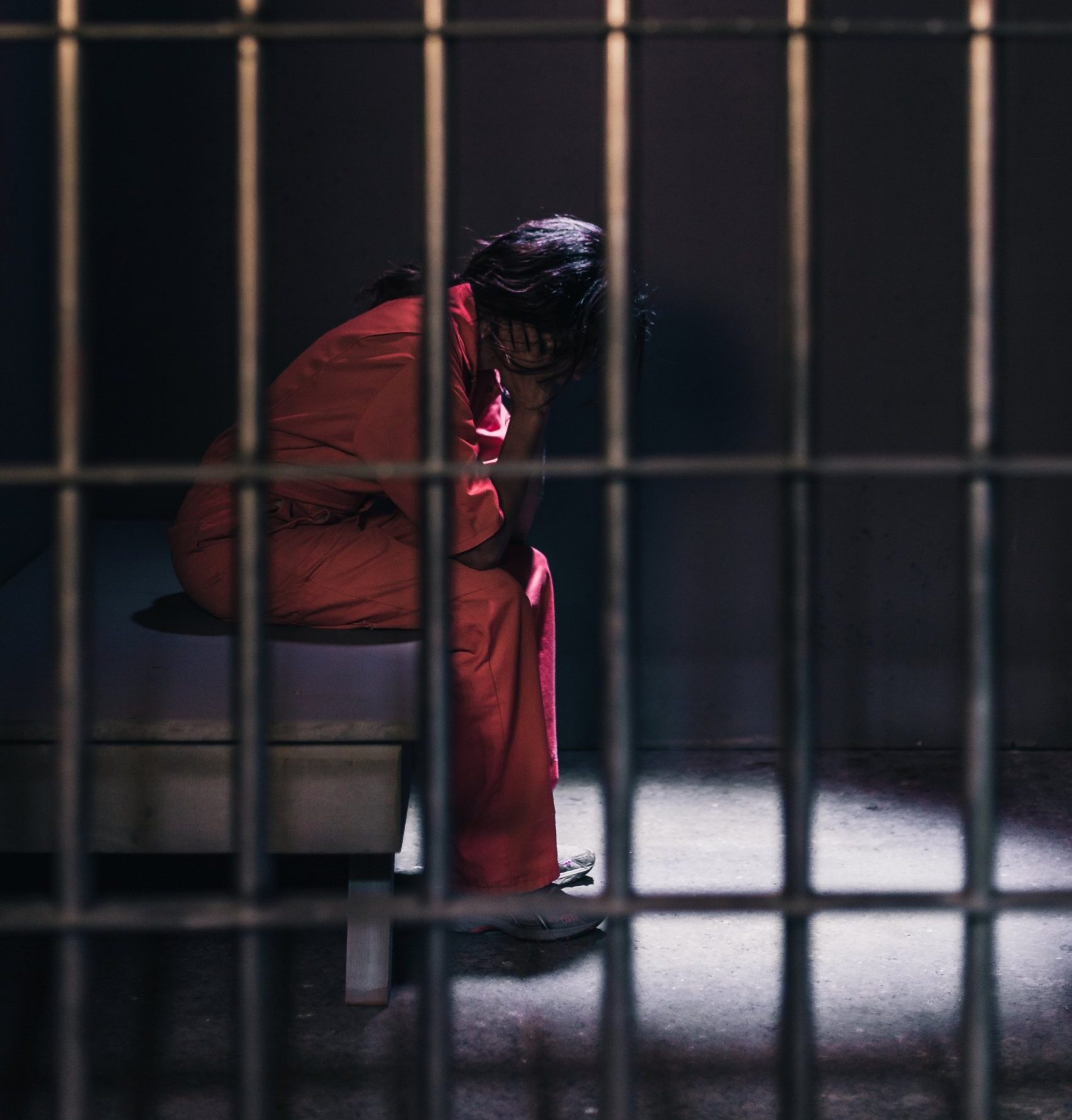
Instead, Ellis is warehoused in a cell about the size of a bathroom. He’s been terrorized by thoughts in his head. I remember one time he called and said the walls were bleeding. He was sent to the prison infirmary — which is just another cell that involves a strip search — where he was confined in complete isolation with absolutely nothing to distract his mind. Not a book, nothing. All stimulus is taken away. This is part of the reason that incarcerated people with mental illness don’t ask for help. The “treatment” can be more punishing than the illness itself.
Then there’s the overwhelming loneliness. We’ve all lived through COVID, so I know you all know what it feels like to be lonely. Imagine the impact of his loneliness on his mental distress. Ellis recently turned 22. It’s been years since we’ve touched or hugged our son.
And it’s taken years — years of anguish. Mental illness can be excruciating for the person who’s suffering. Ellis initially received no medication, then poor medication. With a lot of advocacy on our part and an engaged mental health counselor Ellis was finally given medication that can treat his psychosis. He improved and we were grateful for it.
But he was given medications that are not to be used together in doses that should not be used, and was essentially poisoned with severe side effects. Ellis finally accessed a more knowledgeable prescriber and is now receiving a good regimen of medications. And we have supported him during calls and visits applying therapeutic techniques we’ve learned. We’ve supplied him with books and resources to aid his recovery. Today he tries to navigate the stress of prison on his mental health and thankfully he no longer suffers from psychosis.
But he’s still in prison. For what? Rehabilitation? What exactly is the Department of Corrections going to correct? DOC is a harmful environment. Brutal. Prior to his arrest Ellis was never even in a fist fight, but since being incarcerated he’s had an altercation where he was not just injured physically but in the infirmary for several more days due to the impact on his mental health.
Mostly, he just sits in his cell all day. There is limited access to fresh air or exercise, both critical to mental health. He’s been trying to get into a college course for years and is consistently denied.
I asked Ellis what he’s looking forward to most when he’s free and what he wants others to know about living in incarceration. He shared that he’s looking forward to reconnecting with his family and friends. His brother was just a freshman in high school when this ordeal started and now he’s a freshman in college. Ellis had never even shaved yet, now he has a beard. His grandfather died while he’s been incarcerated and he wants to see his grandmother. He wants to go to school. And as far as what he thinks you should know about living in incarceration: he is aware that the job of a corrections officer is stressful and that they are not resourced to navigate all they encounter. But he describes it as a culture of extreme neglect.
It’s been four years and Ellis has still not been sentenced. About every other month a hearing is scheduled. So over four years that’s about 24 hearings — 24 continuances of his case. I imagine the cost to the state for transportation alone is significant. Then there’s the cost to him. Each time he is strip searched and shackled. He’s been shackled to others chain-gang style during transport, to sit in what’s called the bull pen in a courthouse all day for nothing. On the inside they call it bull pen therapy and it is not rehabilitating.
People ask me all the time, how is he still in prison? How does our state allow this treatment of people who outside of their illness would never commit a crime. People are astounded by how our state operates. The money wasted. The lives wasted. My child has been reduced to a data point in reports that are presented at forums like this one. We need to stop examining data and start taking action.
If it were not for the fact that I’m living this, it would otherwise be unthinkable. But our country is in a mental health crisis and no one here is immune to it. So one last thing, when you go home later make sure you hug and kiss your kids. Because tomorrow isn’t promised and it may be your last chance for a long, long time.
Denise Paley lives in Guilford.
This commentary was delivered to the Nov. 16 Connecticut Sentencing Commission Symposium under the title “The Intersection Between Mental Illness and Incarceration.”