



Becoming a parent is one of the most joyous, yet daunting times in life. As you and your baby are getting ready to leave the hospital after birth, a mini crash course on all things from how to change a diaper to how to feed a baby is taught. But what is not brought up is the very high likelihood that your healthy baby may be hospitalized if exposed to respiratory syncytial virus, better known as RSV.
According to the CDC, RSV is the leading cause of infant hospitalization in the U.S. It’s estimated that 58,000-80,000 children younger than five years old are hospitalized each year due to RSV. What’s so scary about RSV is that babies and kids are dying from this virus. Something as simple as a runny nose and cough can turn lethal in hours. Approximately 100-300 deaths occur each year in children younger than five. These statistics are unnerving and only continuing to rise.

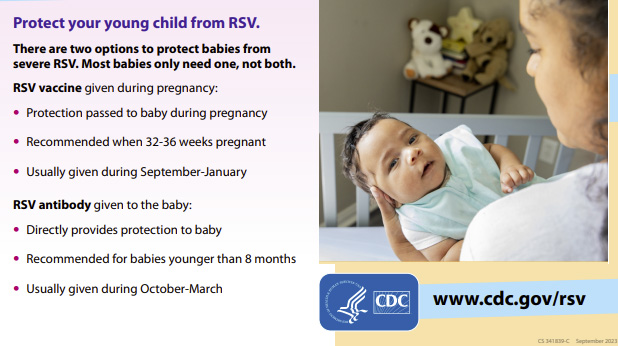
Infants depend on their caregivers to keep them safe. Starting in 2023, The RSV vaccine has been available for infants being born into or during the RSV season. The vaccine has changed the way prevention against RSV has looked in the past two years. So how effective is the vaccine? The vaccine was 90% effective in preventing infants from being hospitalized with RSV. Like any illness, the severity of RSV can range from mild to severe but receiving the vaccine drastically reduces the likelihood of experiencing severe symptoms.
With cases spreading at rates higher than ever before, RSV is getting more attention in both the media and the medical field. The RSV pathogen is increasing in society, specifically over the past 10-20 years. As social distancing and quarantines have seemed to slow down since the pandemic and more in person interaction has resumed, the spread of germs has run ramped. Simple things like handwashing and covering a cough once again have taken a seat on the back burner.
RSV sets itself apart from the common cold. What makes RSV so dangerous to infants is that RSV specifically affects the way babies breathe, putting their health in jeopardy. Babies have an immature immune system that has little exposure to outside pathogens. The virus can lead to decreased feeding, dehydration, and most severe, ineffective breathing. Infants are considered to be a fragile population as they aren’t able to advocate for themselves and they also are immunocompromised. As the caregiver, it’s crucial to look for early warning signs of illness and get medical care as soon as possible.
Although we can’t control what others chose to do about handwashing and social distancing, we can decide to protect our infants with vaccination. To think that one vaccine can cut the chances of being hospitalized with a virus down by 90% seems like a no-brainer. Having an extra line of defense against the virus gives parents an extra sense of security.
With so many things to worry about as a parent, don’t let RSV be another item on the list.
Sophia Bechenek attends the University of Connecticut School of Nursing.