


Connecticut veterans expressed fear and uncertainty this week about possible threats to health care access in the face of federal changes at the Department of Veterans Affairs.
In March, a leaked internal memo from the VA laid out plans to return the agency to its 2019 staffing levels, at which point it had just under 400,000 employees. According to a report last year, VA employs roughly 472,200 people, so meeting the Trump administration’s target would require slashing at least 70,000 jobs.
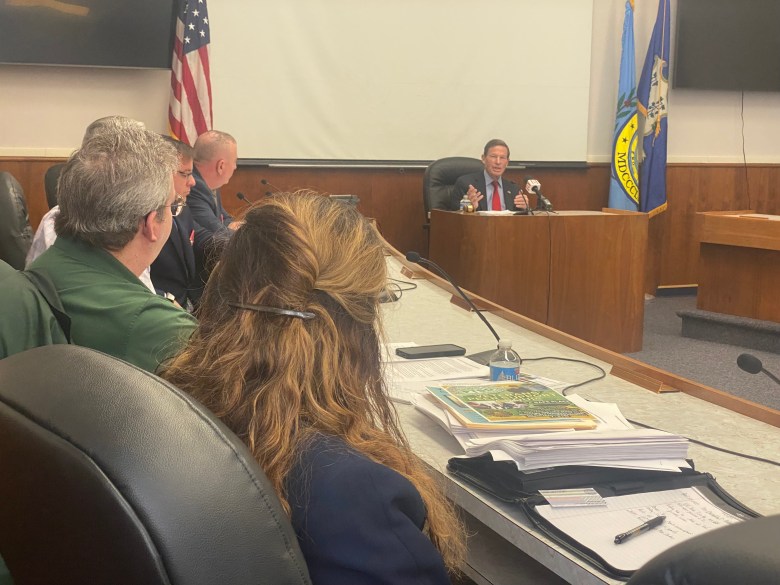
“A big concern that I’m seeing across the entire veteran community is just lack of information. We’re not really being informed about what’s going on,” Emily Trudeau, a veteran and chair of the Connecticut Bar Association’s Veterans and Military section, said during a gathering of Connecticut veterans organized by Sen. Richard Blumenthal, D-Conn., in Meriden on Wednesday.
The Trump administration has assured that the headcount reductions would focus on eliminating waste and would not impact the services veterans receive. In an opinion piece published in The Hill, VA Secretary Doug Collins said that while the department conducts its review, it will “continue to hire for more than 300,000 mission-critical positions to ensure health care and benefits for VA beneficiaries are not affected.”
JamesPeter Matthews, a member of the Army Reserves living in Winsted and chairman of legislative affairs for the CT VFW, expressed skepticism.
“The Secretary of VA claims that a reduction of force within the VA will not reduce any services or resources for the VA to our veterans, their caretakers and families. That is an unrealistic statement,” Matthews said.
[RELATED: Veterans say Trump’s planned cuts will return VA to era of backlogs]
Peter Kasperowicz, press secretary for the VA, said in emailed comments that the agency would achieve savings without impacting services by maintaining “mission-essential jobs like doctors, nurses and claims processors, while phasing out non-mission essential roles like interior designers and DEI officers.”
That savings would be “redirected to Veteran health care and benefits,” Kasperowicz added. “We will accomplish this without making cuts to health care or benefits to Veterans or VA beneficiaries.”
Several people in attendance at the event Thursday acknowledged that they had not yet experienced interruptions in their own care and said that Connecticut’s VA facilities are among the best in the nation. But there are existing challenges to accessing care, some said, which they worry could be exacerbated by broad staffing cuts.
Matthews said he’d heard of Connecticut veterans facing long wait times and sometimes traveling as far as Long Island or Massachusetts for basic testing. None of the VA health facilities in Connecticut have a mammogram machine, for example, Trudeau said.
“There are a lot of concerns within the veteran community that efforts to expand into currently unaddressed areas of health care will have to be put on hold as the VA works to adapt and realign to maintain current services,” Trudeau said.
VA press secretary Kasperowicz confirmed VA Connecticut doesn’t offer mammography services, but added that it partners with community providers to “ensure Veterans receive these services at locations throughout the state.”
In January, President Trump announced a sweeping freeze on federal hiring, with some exceptions. Several VA positions were exempt, including doctors, mental health counselors, nurses and dentists. But last month, VA clinics and hospitals across the country reported that, despite the exemptions, issues with a government HR software program were creating hiring challenges.
While access in Connecticut remains largely uninterrupted thus far, Mike Cabrey, a retired veteran who served 30 years in active duty and lives in Hartford, said he’s starting to see cracks in the system.
Cabrey receives medical and behavioral health services at the VA. He said his counselor’s office hasn’t been able to rehire for an office position after someone left. As a result, his counselor has taken on added responsibilities, like restocking supplies, scheduling appointments and managing the front desk.
“There’s a level of stress and anxiety that they’re dealing with,” Cabrey said of VA providers.
At the Wednesday event, Blumenthal said while there are undoubtedly opportunities to streamline VA operations, the current approach could upend access to care for veterans.
“If there’s going to be elimination of waste, it has to be done thoughtfully, carefully,” Blumenthal said. “Not just slashing numbers of employees for the sake of saving a few dollars, which in the long-run, is going to cost more.”
The VA’s Kasperowicz responded directly to Blumenthal’s comments in his emailed statement. “Imagine how much better off Veterans would be if Sen. Blumenthal cared as much about fixing the department as he does about protecting its broken bureaucracy,” Kasperowicz wrote.
“Unfortunately, many in the media, government union bosses and some in Congress are fighting to keep in place the broken status quo,” he added. “Our message to Veterans is simple: Despite major opposition from those who don’t want to change a thing at VA, we will reform the department to make it work better for Veterans, families, caregivers and survivors.”