



|
Getting your Trinity Audio player ready...
|
Editor’s note: We now offer an audio version of our Sunday features. To access, click on the player above.
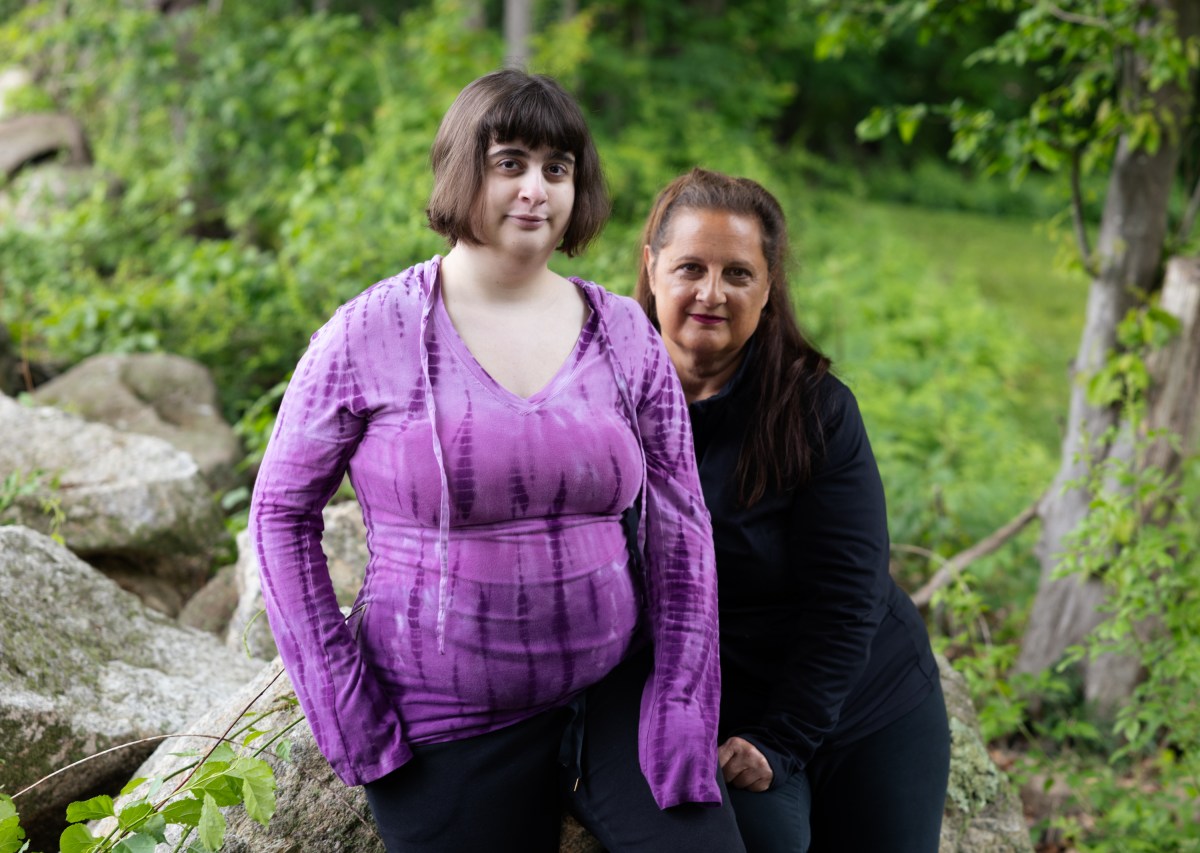
Emma McKeever and her mom, Pamela, often do artistic projects together.
Emma likes to make digital drawings inspired by her favorite songs, and Pamela helps her turn those illustrations into notecards. Sometimes they make floral arrangements that incorporate vegetables: Emma might put carrots in a vase alongside flowers or sculpt a cabbage into a vessel for irises and tulips.
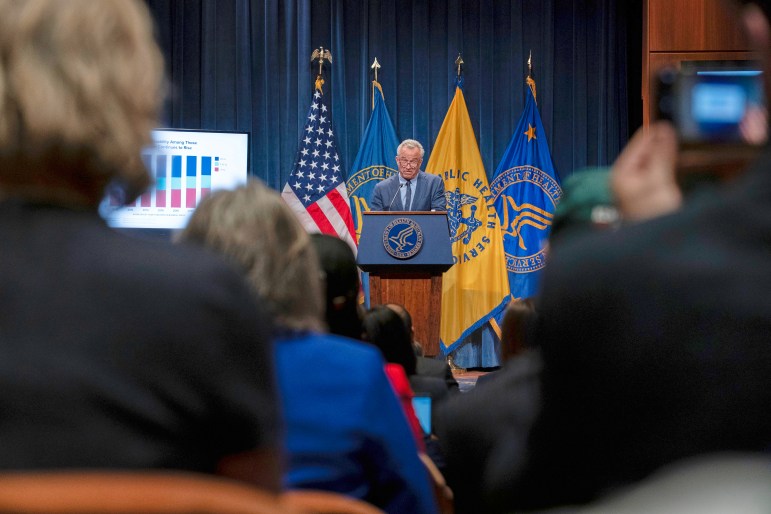
But in May, when mother and daughter decided to turn their sights on another creative project — writing poetry — they weren’t inspired by nature or music. Rather, they were looking for an outlet for their frustration after a press conference by Health and Human Services Secretary Robert F. Kennedy Jr. about people with autism — people like Emma.
At that press conference, Kennedy discussed a new Centers for Disease Control and Prevention report that found the rates of autism are rising, and he announced a significant new investment in research to find the cause of autism. But his remarks were peppered with assertions that experts say are untrue or misleading. He claimed that new research efforts would discover an environmental cause of autism in just a few months, even as scientists say that research overwhelmingly points to autism as primarily genetic.
Kennedy also painted a bleak picture of people with autism spectrum disorder, or ASD, that was especially hurtful to Emma.
“These are kids who will never pay taxes, they’ll never hold a job, they’ll never play baseball, they’ll never write a poem, they’ll never go out on a date,” Kennedy said. “Many of them will never use a toilet unassisted.”
At the press conference, Kennedy seemed to be speaking about people with ASD who face the most significant challenges, along a broad spectrum. But he didn’t specify that in his remarks, and seemed to paint all people with ASD with a broad brush.
Emma wrote her poem as a kind of rebuke. In it, she wonders about the inner thoughts of the HHS Secretary:
Did RFK Jr ever think?
Did he really think that I, an autistic person, couldn’t write a poem?
Did he ever stop to listen to himself, to the nonsense he was speaking?
That the false words, the wretched lies he spouts, are something to believe?
Are his words out of greed and selfishness or to better lives?
Did he really believe that it was okay to strip funding from families in need of financial support? Did he ever think that accessing databases violates our privacy about protected health information?
Did RFK ever think we would just roll over and accept this treatment?!
His thought that autism is a curse that destroys families IS the tragedy.
It did not destroy my family, it made my family stronger, more real!
I have a great mind, maybe sharper than his.
So, did RFK Jr ever think?
This is hardly the first time that Kennedy has cast autism as a national scourge with a culprit hiding in plain sight. In 2005, he penned an article then published in Rolling Stone and Salon, titled “Deadly Immunity,” which pointed to research arguing that a preservative in vaccines called thimerosal causes autism.
In the years since, Kennedy has focused on the specter of climbing autism rates to drum up skepticism about vaccines writ large, even as scientists concluded that there is no link between autism and vaccines. Families impacted by autism who have followed this debate have found themselves riding an emotional rollercoaster: some felt hopeful when a study suggested a causal link between vaccines and autism and then lost trust in scientific research when they learned that the data in that oft-cited study was falsified. Despite overwhelming agreement in the scientific community that there is no link between autism and vaccines, Kennedy has remained a vaccine skeptic.
But Kennedy is no longer voicing his skepticism of mainstream science from the sidelines. As the secretary of the Department of Health and Human Services, he is now the most powerful figure in public health in the United States. In that role, his view on autism is already starting to have a tangible impact.
Since Kennedy’s tenure began, the Trump administration has ended vital services for autism and made federal cuts to research funding related to autism. Kennedy also announced the creation of a database or registry, where information about people with autism would be collected to facilitate the search for causation. Parents of children with ASD, and adults with ASD are especially anxious about the registry, saying it would violate their privacy. They say his rhetoric is creating stigma around a community that has worked hard to find acceptance.
Some parents of people with ASD who require significant caretaking say they’re hopeful that a new burst of energy from the federal government could bring promising advancements. But scientists and health care professionals are concerned that the investments Kennedy has in mind are wrongheaded, and that the loss of valuable programs and rising stigma could have a damaging impact with long-ranging consequences.
If you’ve met one person with autism, you’ve met one person with autism
Emma, who is 28, was diagnosed with autism spectrum disorder when she was in seventh grade. Before that, her mom Pamela had gotten Emma help with hearing deficits and speech issues, obstacles with readily apparent remedies. When Emma was finally diagnosed with autism, Pamela was initially devastated; she knew it was a lifelong condition.
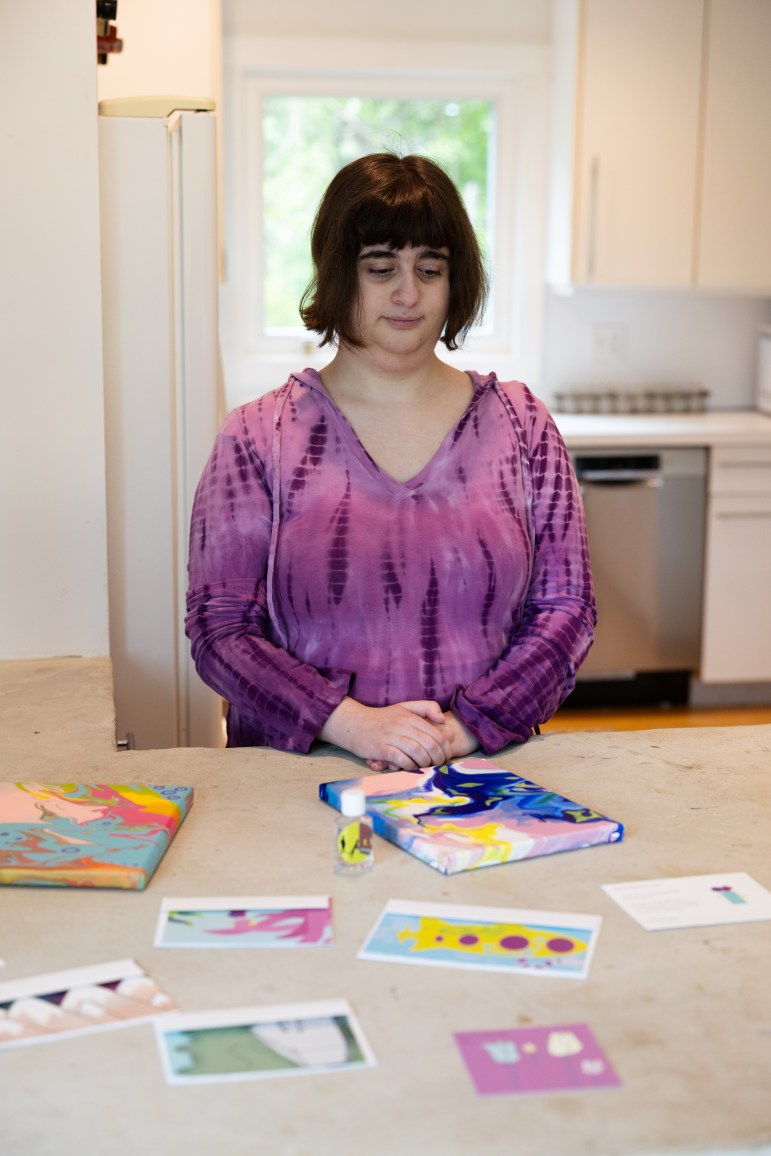
“But in the long run, I can’t imagine it any other way — she’s such a gift,” Pamela said.
That’s part of why Kennedy’s speech stung: he was presenting autism as a scourge. And for Pamela, that couldn’t be further from the truth.
“I think it’s so important to understand that in Emma’s world, her family, the people around her, we feel so lucky to have her in our lives,” Pamela said.
“I think that autistic people are just people,” Emma said. “I think they shouldn’t be treated like abominations.”
That’s not to say that the journey has been easy for the McKeevers. Emma has some symptoms of obsessive-compulsive disorder and some facial and vocal tics, which she says can make certain situations “a bit awkward.” Pamela is most concerned about Emma’s awareness of what’s going on around her and how that impedes her ability to connect with others.
“I think that that would be the No. 1 thing I would say that I’m worried about sometimes, is that she’s not in the moment.”
But to say that Emma is representative of the ASD community is to misunderstand the nature of the spectrum.
There’s a popular quote from Dr. Stephen Shore, a professor who studies autism: “If you’ve met one person with autism, you’ve met one person with autism.” It means the spectrum is wide, and the condition is highly individual. That’s partly because, unlike a condition with a clear genetic marker like Down Syndrome or trisomy 18, ASD encompasses a wide range of conditions that share some characteristics.
“This category that we call autism is a category based on clinician description of behavior, not on biology,” said Dr. James McPartland, who directs both the Yale Developmental Disabilities Clinic and the Yale Center for Brain and Mind Health. Diagnosticians have historically determined whether a person has autism not by looking at results they can see through a microscope or on a scan, but by observing and testing their behavior — including communication style and sensory sensitivities, he said.
McPartland is one of many scientists in the U.S. and around the world working to develop brain imaging techniques that might be able to more accurately differentiate between different types of autism in ways that could be useful for recommending therapies or even predicting a person’s long-term likelihood of accomplishing different milestones, like living independently.
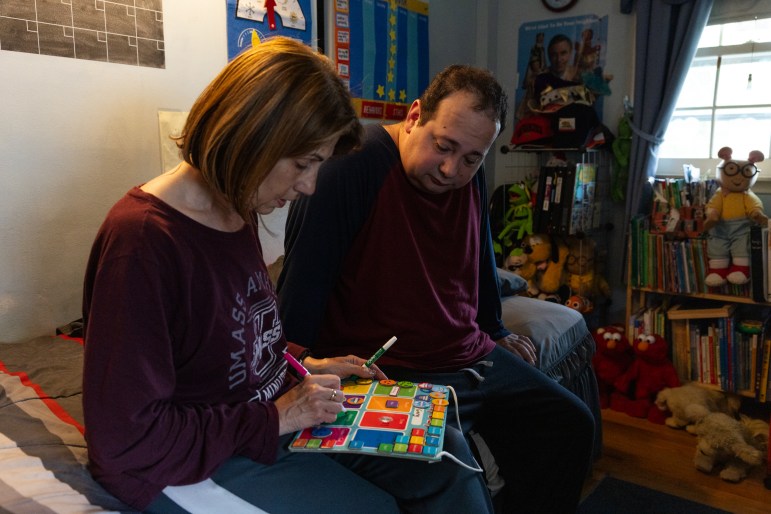
For Beth Katten, whose son Gary recently turned 30, Kennedy’s speech didn’t offend. Gary has what Katten terms “profound autism,” or the end of the spectrum at which people require the most assistance with tasks. (ASD is also clinically classified by levels, ranging from Level 1, which requires the least support, to Level 3, which requires the most support.) Gary doesn’t have much social speech, so Katten said she can’t have a meaningful conversation with him.
Gary can’t cook by himself or be left alone, and that meant Katten had to leave the workforce when he was young. Now, Gary has a caretaker for part of the day, but the question of what will happen when Katten and her husband are gone haunts her.
Katten has done a lot of research over the years into the causes of autism, and when she heard Kennedy’s speech she was dismissive of some of his ideas, but she also welcomed the renewed burst of attention to the issue from such a high ranking government official.
She also was hopeful about Kennedy’s effort to look for a cause for people with profound autism — something Kennedy announced would happen by the fall, an extraordinary timeline. “People in the profound community were saying, ‘He’s shedding light on it, and you know what, he’s talking about my kid. He’s not talking about the ones on ‘Love on the Spectrum,’” the popular Netflix reality series. “I can’t even watch that show because it’s too much the other way.”
Helen Taylor, whose son Chase has ASD, was deeply concerned about Kennedy’s remarks, in part because she thought what she heard revealed a person ignorant of the community’s wants and needs. As the founder of a Waterbury-based nonprofit called The Social Chase, which helps young people on the spectrum find social opportunities, Taylor has a lot of experience with the breadth of the spectrum.
“To make it seem like, ‘How horrible it is to have a child you were given’ — it was egregious,” she said. “Some parents who have an adult child, who are still diapering their child and have to wash them up, do they want a cure? Yes, they do. Some have a child who is high functioning, and do they want a cure for that child? No.”
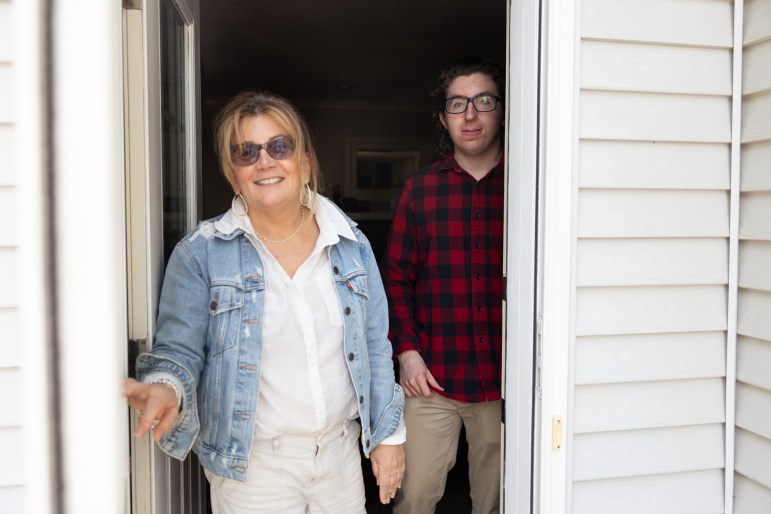
For some families, getting to acceptance has been a hard won battle. Anita Cella had her son Nick in 2001 and she noticed that he was completing his milestones later than his older siblings. “I kind of had to figure it out on my own, because pediatricians didn’t give a screening or anything,” she said.
Nick started with interventions from a speech therapist before seeing a neurologist who told Cella he likely had autism. At first, Cella was angry, and the doctor told her she should seek a second opinion.
“I followed up with another neurologist who, in no short order, told me Nick probably should, because of all his disabilities, be in an institution,” Cella recalled. “I mean, it was really a horrible time.” Finally, Cella found a developmental pediatrician who was more optimistic. “She’s like, ‘He’s in there. We’ll find him.’”
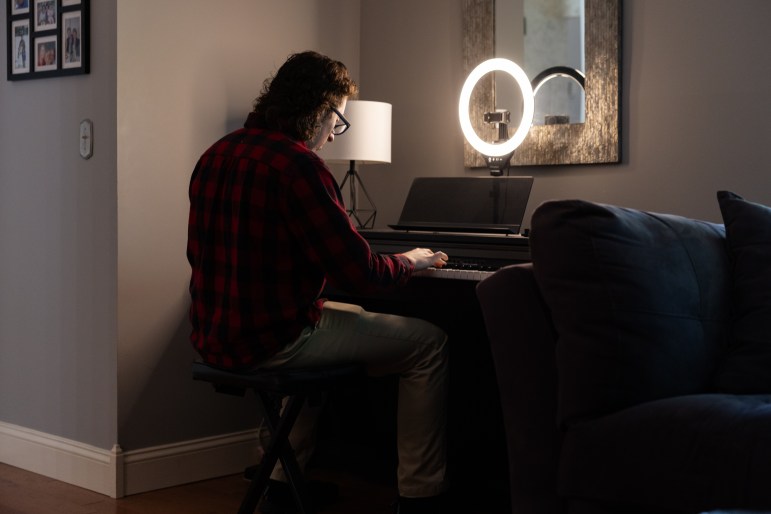
Today, Nick is an accomplished musician and performer. He earned his high school diploma and he’s planning to move to Florida to live with his brother and work at the gym that his brother owns.
Nick taught himself to play the piano by ear, and he shares videos of himself playing on TikTok. His account, @nickcellamusic, is called Autistic Piano Prodigy. For Nick, the line of Kennedy’s press conference that stuck out in his mind was the assertion that autism destroys families.
“In my opinion, that’s really false, because people who have autism, it’s not about what you have, it’s who you are on the inside, no matter what anyone says,” he said. “Like anyone who has any kind of ability, if you have Down syndrome or whatever they have, they have gifts for what they can achieve in life.”
‘Why track autistic people?’
Taylor’s concerns about Kennedy’s rhetoric center on his announcement on May 7, a few weeks after his speech, that he would create a “real world platform” that would use insurance claims, medical records from Medicare and Medicaid and even smart watches to search for root causes of autism.
“I don’t understand. Why track autistic people? What is the point?” Taylor said. “What are they going to do with the data? Now are we gonna have a cancer registry, an Alzheimer’s registry, a Black registry? Are you gonna have a reporter registry? That’s probably next, right? Usually when they have registries, I haven’t seen them do anything positive with it.”
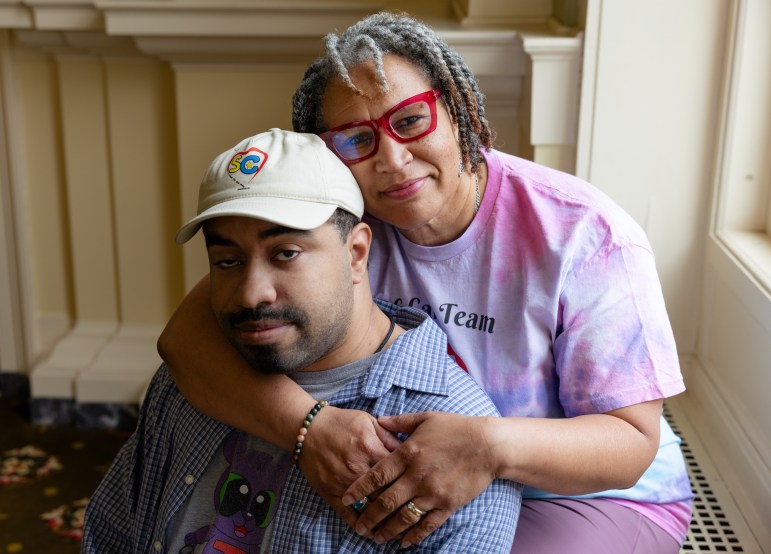
Emma and her mom Pamela are also worried about the database.
“To pull out this particular group of people and really threaten that there is going to be this national database feels like such a violation of their privacy. It’s so disrespectful. There are times I think back and worry, and I wish we didn’t have this diagnosis attached to her. It’s really been stressing me out, just the thought of this database,” Pamela said.
Kennedy says the database will help researchers quickly determine an environmental cause for autism. But according to McPartland, there is already a large database that provides researchers with information about people with ASD. That information is anonymized, and participants have to give permission for their data to be included at all. Kennedy’s announcement raises questions about how a new database would work and whether people would be able to opt out.
Currently, it’s against the law to share medical data without a patient’s consent.
“These are things that are laws, and so the presumption is that the same laws would govern everything,” McPartland said.
Dr. Marianne Barton, who directs the Psychological Services Clinic at the University of Connecticut, focuses primarily on identifying children with autism as early as possible in childhood.
“What matters is people are more tuned in to this earlier. That means that children can get identified and get evaluated earlier and get intervention services earlier,” Barton said.
In her research, Barton has followed people with ASD over a decade or two who received interventions early on.
“We have a number of children that we identified years ago who no longer meet criteria for the diagnosis because they got intensive early intervention, and now they are functioning indistinguishable from other developing teenagers,” Barton said.
Kennedy has insisted, including in his April speech, that there are many more incidences of autism, especially profound autism, and criticized the public and the media for attributing the rise in autism numbers to improvements in diagnosis.
“We need to move away from … this ideology, that the autism prevalence increases, the relentless increases, are simply artifacts of better diagnoses, better recognition, or changing diagnostic criteria,” Kennedy said.
Barton, who has focused much of her work at UConn on diagnosis, said the rise in autism cases can be attributed to three components. The first is the change in how the American Psychiatric Association defines autism, particularly in 2013 when their manual did away with subcategories like Asperger’s syndrome and a group of pervasive developmental disorders and instead categorized all of these as “autism,” raising the overall number substantially.
“It’s not the case that the majority of individuals with autism are nonfunctional, can’t support themselves, can’t hold jobs. In fact, the majority of individuals with autism, and these numbers are increasing, are very high-functioning, and that’s because of the changes in the diagnostic system,” Barton said.
The autism community has gone to great efforts to decrease stigma to make autism a more visible and accepted kind of diagnosis, and that is, undoubtedly, contributing to the rise as well.
Marianne Barton, of the Psychological Services Clinic at Uconn
Increased diagnosis has also played an important role in the rising numbers, which Barton says is a good thing.
“Fifty percent of pediatricians are now screening for autism in toddlers, which means that we can find kids earlier and get them effective intervention. It means we are finding many, many more kids because we’re systematically looking for them,” Barton said.
Finally, increased numbers can be attributed to improved awareness, she said.
“The autism community has gone to great efforts to decrease stigma to make autism a more visible and accepted kind of diagnosis, and that is, undoubtedly, contributing to the rise as well.”
The elephant in the room
Experts are worried about the potential resurgence of stigma, but Walter Glomb, the executive director of the Connecticut State Council on Developmental Disabilities, said there’s a less visible piece of the Trump administration’s actions that is likely more consequential: cuts to already anemic services for people with ASD.
“The elephant in the room is the shortage of services and support for people with autism generally, which existed before,” Glomb said. That includes a yearslong wait list for autism services for adults in Connecticut. “My concern is: what’s the material impact of not just this rhetoric, but of the actual budget and program decisions that they’re going to make to get people services? Because we’re already behind the curve.”
The Trump administration eliminated the Administration for Community Living in March, one of many programs cut by the Department of Government Efficiency (DOGE), which had served the elderly and disabled.
But the impact on other resources, from block grants to employment programs for people with disabilities, is still unclear, Glomb said.
“We’re still waiting for the dust to settle, right? What they’re going to do to Medicaid and the community services types of programs, we don’t know yet,” Glomb said.
Initial budget requests from President Donald Trump to Congress released last week show that some programs that benefit people with autism may be retained, which had Glomb feeling slightly more optimistic. But he said he was still uncertain how that budget would reconcile with the budget set by Congress.
Even before the budget becomes clear, Glomb said, there’s evidence that Kennedy’s rhetoric and moves by Congress are causing tremendous anxiety. After Kennedy’s speech, Glomb received phone calls from people in the autism community, and he recalled one from the mother of a man in his 20s who had read about Kennedy’s speech.
“He got very upset — and some individuals on the spectrum, when they get very upset, there’s physical acting out. It’s a bad thing. When he saw the registry, he immediately assumed they were going to be tracking him. That this wasn’t about compiling data, it’s about going after those people. ‘Let’s keep an eye on people with autism.’”
Like Glomb, Barton is concerned that there may be many more Trump administration cuts that impact people with autism. They range from the possibility that hundreds of millions of dollars from the Department of Education — much of it for special education — will be cut, to already announced cuts to grants for neurodivergent students who process information differently, which had been funded by the National Science Foundation, to cuts to autism research that had been funded by the Department of Defense and the National Institutes of Health.
Scores of vaccine-related research projects were also terminated, according to data collected by Grant Watch, as has work that would have studied how early intervention can best be used to benefit young children with ASD.
“This doesn’t even consider cuts to Medicaid, which will greatly reduce access to services,” Barton said. If that happens, she expects longer wait times for evaluations and higher costs that will disproportionately impact minority and under-resourced communities the most. “It’s not good.”
Dr. Lauren Herlihy, director of autism psychology at the Hospital for Special Care in New Britain, said that she is seeing a renewed skepticism in vaccines among patients, and is deeply concerned about the implications of fewer children getting vaccinated.
Recently, we have seen families saying, ‘I don’t want you to release this to the school. I don’t want to be on some registry of people with autism.
Dr. Marianne Barton, director of Psychological Services Clinic at Uconn
“It’s kind of come back in vogue to be concerned about vaccines and autism, and as someone who diagnoses autism in young children, but in folks of all ages, there are very unfortunate situations where a child has not had any of their childhood vaccinations and they can’t get access to school programs through the public school system,” Herlihy said. In Connecticut, vaccinations are mandatory for public school attendance.
Herlihy has seen patients who were not vaccinated and “then, they are diagnosed with autism anyway, because vaccines do not cause autism,” she said. “That to me is a major public health concern, and it puts a child at risk for some very significant medical complications related to preventable childhood illness. No patient that I’ve ever had has died from having autism, but children have died from preventable disease before vaccination.”
As to Kennedy’s claim that the database will enable researchers to pinpoint an environmental cause of autism within months, Barton said plenty of research has already been done. While many biological markers have been identified and some studies show toxins can increase the likelihood of autism in isolated circumstances, “we’re not going to find a smoking gun that is going to explain the incidence of autism. And it’s certainly not going to be vaccines.”
Barton spends a lot of time talking to parents and even adults as they embark on an autism diagnosis, which can be difficult news to hear, like it was for Pamela McKeever. But over decades of scientific and therapeutic progress and efforts to reduce stigma, the diagnosis is now greeted with relief by many families.
Suddenly, a parent struggling to find a way to help a child through a behavioral issue, a sleep disorder or a learning challenge might have a new paradigm that allows them to access tools and therapies that can actually help. “They understand why things have been so difficult,” Barton said.
But in the past few months, something has changed again.
“Recently, we have seen families saying, ‘I don’t want you to release this to the school. I don’t want to be on some registry of people with autism,’” she said.
Parents who don’t want the diagnosis to be public have asked Barton’s clinic to write a report that explains what the child needs and recommendations for treatment without discussing a diagnosis of autism.
“They are much more concerned about sharing this information,” Barton said. “That’s a direct effect of the current administration.”