



Higher education has been a critical part of Connecticut’s notoriety for the public good, despite state and now proposed federal cuts. Graduate education – in particular – has been a worthwhile investment and is hardly a luxury in Connecticut.
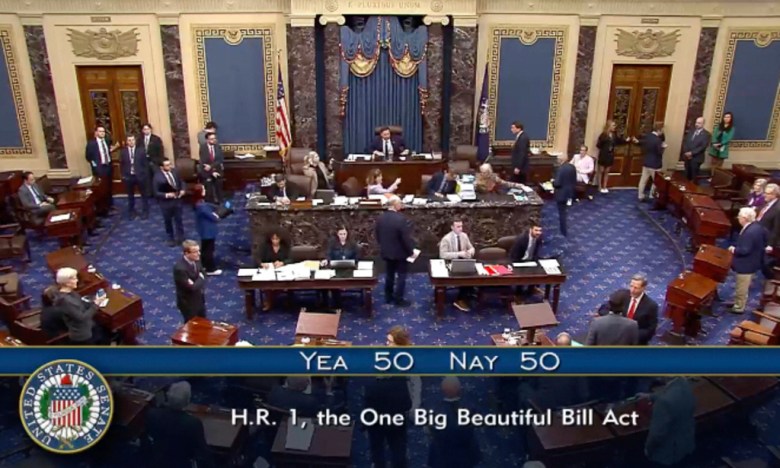
At Southern Connecticut State University (SCSU), we educate the professionals who staff our schools, clinics, hospitals, labs, and public agencies. Many of our graduate students are first-generation college graduates and working adults striving to uplift themselves, their families, and their communities. That’s why the “One Big Beautiful Bill Act” (H.R.1), recently passed by the U.S. House of Representatives and today by the Senate, is so deeply troubling.
The Council of Graduate Schools (CGS), which represents more than 400 institutions nationally, including many in New England, recently sent a letter to Senate leadership warning of the severe consequences of this bill for graduate education. The bill, as written, would:
- Terminate the Graduate PLUS Loan Program by 2026, which thousands of graduate and professional students rely on to bridge the gap between tuition and federal unsubsidized loan limits;
- Impose strict caps on student borrowing $100,000 for graduate students, $150,000 for professional students, and a $200,000 lifetime cap; ignoring the reality of advanced, high-cost programs;
- Require institutions to repay the federal government for student loan balances deemed “unrecoverable,” disproportionately impacting regional public universities;
- Cap financial aid based on the national median cost of programs, regardless of actual expenses;
- And dramatically increase taxes on university endowments, reducing scholarships, fellowships, and research funding.
Let’s be clear: these changes would not reduce costs; they would simply shift the burden to students and institutions, such as Southern that are already operating with limited resources.
The Connecticut impact
In Connecticut, approximately 17,000 students are enrolled in graduate or professional programs across public and private institutions. Many of them come from working- and middle-class backgrounds, and nearly 30% identify as students of color, reflecting our state’s commitment to equitable access to education.
According to the Connecticut Department of Labor, over 40% of jobs are projected to grow fastest through 2030, including in health care, education, and mental health services, require a graduate degree or specialized post-baccalaureate training.
Moreover, median student debt nationally among borrowers who pursue graduate education often exceeds $60,000. The Grad PLUS Loan program, targeted for elimination in the bill, provides essential financing to help these students enter critical fields without being forced into predatory private loans that carry interest rates up to 16%.
Connecticut’s regional public universities such as Southern Connecticut State University play a unique and vital role in training the state’s workforce. But the institutional “risk-sharing” measures in H.R.1 would penalize these institutions for serving non-traditional and first-generation students who are statistically more likely to face financial hardship after graduation, regardless of their ultimate success.
At SCSU, nearly 50% of our graduate students identify as students of color, and over 40% are first-generation college students. These students are not only succeeding academically, they are preparing to become Connecticut’s next generation of school counselors, nurses, educators, nonprofit leaders, and scientists. Most importantly, over 80% of our students remain in Connecticut after they graduate, contributing their skills and knowledge directly to our local communities.
These proposed federal changes would cut off their most reliable access to affordable financing, forcing them to turn to private loans with high interest rates. Meanwhile, capping loans based on median national cost will underfund programs that are more expensive to deliver, such as our STEM education, communication disorders, nursing, and counseling that require intensive clinical placements.
The consequences wouldn’t only be limited to students but would ripple through every sector in Connecticut. Our state, like nationwide trends, is already struggling with shortages in teaching, mental health, nursing, and health professions. Federal changes that make graduate education less affordable and accessible will further deepen these shortages, undermining efforts to recruit and retain talented and qualified professionals.
Future considerations will be lessened by the federal government while more interest and support must be considered by the state government. Connecticut officials, especially lawmakers, need to revisit the impact of federal cuts and reforms affecting graduate education and funding in the near future. As federal support declines, more interest and investment will be needed to protect opportunities for our residents and maintain a strong, competitive workforce.
Our state has long been a national leader in public education. Let’s not undermine that progress. Our region should be an exemplary model for higher education and Connecticut must lead the way. The future of our workforce, and the strength of our communities, depend on graduate education. Public universities like SCSU are mission-driven to serve local communities and advance social mobility. If these federal provisions pass as proposed, they will force institutions to make difficult choices about which programs can survive and more devastatingly–whom they can afford to serve. This threatens to widen inequities deprive universities of their flexibility in meet Connecticut’s ability to meet its workforce development goals.
Higher education should not become a field where working adults and aspiring professionals are collateral damage. We need policy solutions that expand opportunities, not limit them. We also need funding models that recognize the long-term value of investing in a graduate-educated workforce, especially in a state like ours where economic competitiveness depends on it and preventing a problematic brain drain.
Connecticut cannot afford to let shortsighted federal policy undermine the pipeline of skilled professionals we need. Graduate education is the backbone of a thriving, inclusive, and innovative workforce in Connecticut. Everyone who cares about our economy, our schools, our healthcare systems, and our communities should pay attention to what’s at stake. We must stay informed and ready to speak up for accessible, equitable, and affordable graduate education for all.
Rabia Hos is Dean of the School of Graduate and Professional Studies, and Jonathan L. Wharton, Professor of Political Science and Urban Affairs, both at Southern Connecticut State University.