


WASHINGTON (AP) — The Environmental Protection Agency on Thursday terminated a $7 billion grant program intended to help pay for residential solar projects for more than 900,000 lower-income U.S. households, in the latest Trump administration move hindering the nation’s shift to cleaner energy.
The funding, part of the Biden-era’s Solar for All program, was awarded to 60 recipients including states, tribes and regions for investments such as rooftop solar and community solar gardens. Solar, a renewable energy, is widely regarded as a way to introduce cleaner power onto the electrical grid and lower energy bills for American consumers.
The move would likely end Connecticut’s ambitious plans to provide solar to low-income and disadvantaged communities and lower their energy bills in the process, officials with the state Department of Energy and Environmental Protection said. Connecticut’s award under Solar for All was $62.45 million.
Under Republican President Donald J. Trump, officials have pursued dozens of deregulatory measures related to federal rules intended to protect clean air and water. Last week, the EPA proposed rescinding the agency’s “endangerment finding” which serves as the scientific and legal basis for regulating planet-warming greenhouse gas emissions.
The administration has taken steps to bolster fossil fuels such as coal, oil and natural gas as it pursues American “energy dominance” in the global market.
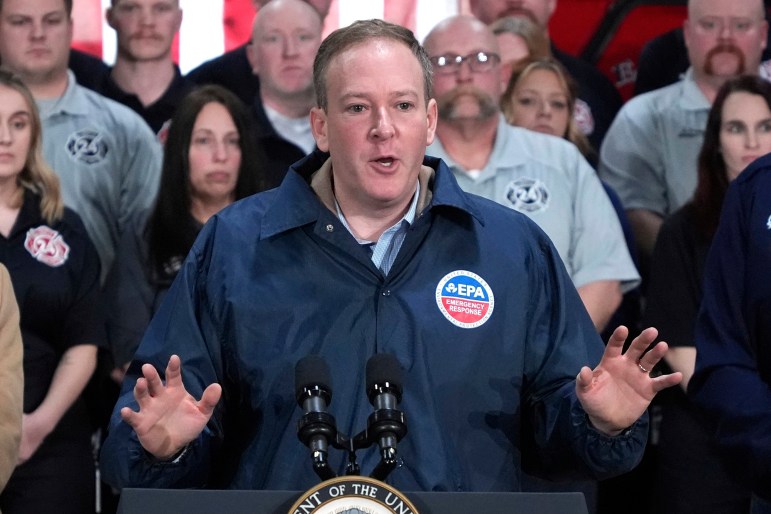
EPA Administrator Lee Zeldin said in a statement on social media that authority for the solar program was eliminated under the tax-and-spending law signed by Trump last month. It eliminated the Greenhouse Gas Reduction Fund, approved under the 2022 Inflation Reduction Act, that set aside $20 billion for community development projects to boost renewable energy and an additional $7 billion for the solar program.
“The bottom line is this: EPA no longer has the statutory authority to administer the program or the appropriated funds to keep this boondoggle alive,″ Zeldin said. “Today, the Trump EPA is announcing that we are ending Solar for All for good, saving US taxpayers ANOTHER $7 BILLION!”
In anticipation of the move, Connecticut DEEP spokesman James Fowler said in an email, “If federal support is withdrawn, states like Connecticut could be forced to halt or delay shovel-ready projects that are prepared to cut costs, clean the air, and make our grid more resilient.”
Fowler added: “It would come at a time of record energy prices, rising electricity demand, and growing strain on households and infrastructure.”
Only $53 million of the $7 billion awarded has been spent, according to a tally by the research firm Atlas Public Policy. Several grant recipients this week said their programs were in planning phases.
Fowler said Connecticut’s funds were fully obligated more than a year ago and DEEP had already received some funds from the award. “The award is a cornerstone of our affordability and energy justice efforts, and Connecticut is already well into the implementation process,” he said.
Late Thursday evening, DEEP received a termination notice from EPA.
“At a time when households could benefit from transitioning to solar energy now more than ever, the Trump administration is attempting to terminate a program that would lower energy costs for families and businesses while also delivering clean energy,” Gov. Ned Lamont said in a statement Friday afternoon. Lamont said Connecticut would be working with other states to evaluate legal recourse.
Led by DEEP, Connecticut developed a multi-department Solar For All program it calls “Project SunBridge – Connecting Communities to a Solar Future.” Its priority is to provide solar power to multi-family affordable housing that results in an energy savings of at least 20%.
The biggest funding recipient would have been the Connecticut Green Bank, which was slated to get $43.05 million to generate loans, grants and other financing products. The EPA approved the plan and budget on January 15, 2025, just days before Trump took office.
Stephanie Bosh, senior vice president of the Solar Energy Industries Association, said the EPA has no legal authority to terminate grants already appropriated by Congress.
“These grants are delivering billions of dollars of investment to red and blue states alike,″ she said. Bosh said solar was one of the cheapest energy sources at a time of growing demand for electricity.
“This administration is continuing to dig itself into a hole,” she said.
The EPA has argued that the tax and policy law allows the agency to rescind the money it has already obligated. The recipients of that money disagree, saying the bulk of the money had already been disbursed and is not affected by the law.
Southern Environmental Law Center litigation director Kym Meyer said if the administration wants to move forward with canceling Solar for All funds, “we will see them in court.”
Fowler indicated earlier that Connecticut would consider the same. “We will work closely with the Office of the Attorney General and the Governor’s Office to evaluate our options and determine the most appropriate next steps.”
Solar for All is part of a $27 billion Greenhouse Gas Reduction Fund. The administration has already targeted $20 million of that for claw-backs. Grant recipients have already challenged the administration’s actions, and a judge ruled in April the EPA cannot freeze the contracts.
Rhode Island Sen. Sheldon Whitehouse, the top Democrat on the Senate Environment Committee, called Zeldin’s elimination of the solar program a betrayal “that will further hike electricity costs and make our power grid less reliable.”
“Trump is — yet again — putting his fossil fuel megadonors first,” he added.