


Several Connecticut Jewish leaders and synagogues have signed on to a national letter denouncing new prohibitions on recipients of a federal security grant, which would ban nonprofits — including faith-based organizations — from conducting equity or “DEI” programming, staging some boycotts or helping undocumented immigrants. The new language would also require such institutions to cooperate with immigration enforcement.
The letter was signed by Temple Beth El in Stamford, the Mending Minyan Synagogue in New Haven and the Hartford Jewish Organizing Collective, in addition to dozens of other religious groups and leaders across the country.
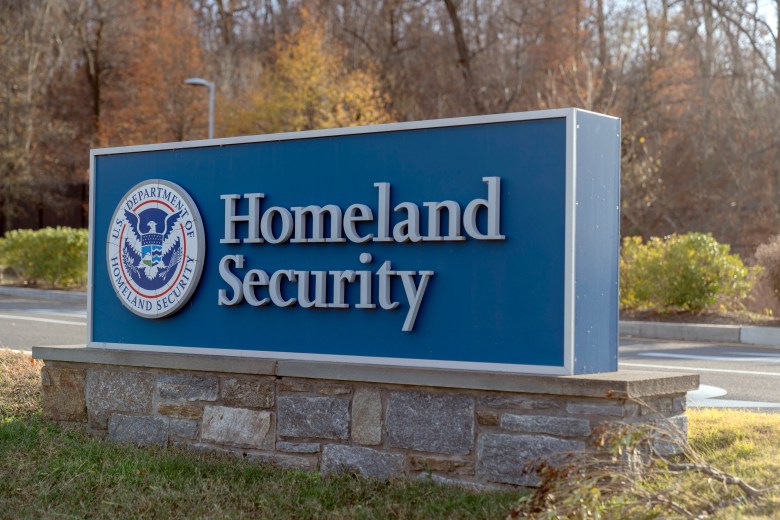
The Nonprofit Security Grant Program is run by the Department of Homeland Security and the Federal Emergency Management Agency. It helps nonprofits considered in high risk of a terrorist or extremist attack to pay for physical and cybersecurity. That funding can go toward security cameras, warning and alert systems, hired security services, perimeter security like gates and barriers, and screening systems like metal detectors.
Rabbi Debra Cantor, of the B’nai Tikvoh-Sholom synagogue in Bloomfield, also signed her name to the letter. She said that her congregation had benefitted from the grants in the past. “We were able to strengthen some of the areas that were vulnerable to someone coming in,” changes in infrastructure the congregation couldn’t have otherwise afforded to pay for. The congregation also did safety trainings that would prepare them in the event of a violent attack.
“It made us feel less vulnerable. Anything that puts that in jeopardy is quite upsetting. But here’s the thing, the new revised conditions completely go against our beliefs and our ethical values, so it’s a really terrible tradeoff.”
Alli Warshaw, co-leader of the Mending Minyan Synagogue in New Haven, said that the new contract is “traif,” or not kosher.
“This does not fit into our Jewish values,” Warshaw said. “It’s also fiscally unsafe — you could be sued or have your money taken away, even for something like having someone in the community do a sermon and talk about the rights of immigrants.”
While Jewish institutions are not the only religious groups eligible for the funds, Jewish institutions around the U.S. have pressed for access to the funding in recent months to protect against rising concerns about antisemitic attacks.
The new terms and conditions for all DHS financial assistance for fiscal year 2025 require that recipients won’t “operate any programs that advance or promote DEI, DEIA, or discriminatory equity ideology,” participate in “discriminatory prohibited boycott,” and run any program that “benefits illegal immigrants or incentivizes illegal immigration.” Those provisions are new and weren’t included in the standard terms and conditions for the previous year.
Recipients of DHS funding, like the security grants, would also be required to cooperate with agency and immigration officials, including requests for information sharing and participation in joint operations, access to detainees if an immigration officer wants to interview someone subject to removal and a restriction on publicly sharing details of an immigration enforcement operation.
A spokesperson with the Department of Homeland Security said in a statement that the agency won’t fund grant projects “that have alleged affiliations with terrorist activities,” though it did not elaborate on how they’d classify that or to which groups it may apply.
“Under the leadership of Secretary [Kristi] Noem, DHS and FEMA are conducting a comprehensive assessment of all grants to root out waste, fraud, and abuse,” a DHS spokesperson said in a statement. “Unlike the previous administration, grants will no longer be used to empower radical organizations with questionable ties that don’t serve the interest of the American People.”
According to Fox News, DHS has also been cancelling NSGP funding for Muslim groups with alleged terrorist ties.
Connecticut Attorney General William Tong, who has joined numerous lawsuits against the Trump administration in recent months, said that his office was “evaluating all legal options to keep Connecticut safe and protect access to our funding.
“The security of our religious institutions should not depend on their adherence to MAGA politics. Period. These arbitrary and unlawful conditions make us all less safe,” Tong told The Connecticut Mirror in a statement.
Zohar Berman, a social justice and cultural organizer for the Boston Workers Circle, which signed onto the letter, said DEI programming was not optional for the group.
“It’s always been a part of our history, and now we have this great term, ‘DEI,’ to describe a multicultural community, but DEI isn’t new,” Berman said.
The letter of protest was organized by the Community Safety Campaign, a Jewish organization that launched in 2022 in response to an attack on a Texas synagogue, “to build more coordinated and strategic approach to Jewish community safety practices.” That organization already encourages synagogues and other Jewish institutions to seek out safety practices that do not include the kind of surveillance technology paid for by the federal grant funds.
The Council on American Islamic Relations, or CAIR, first sent out a press release on Aug. 7, urging mosques, synagogues, schools and nonprofits to pause or withdraw applications to all grants administered by DHS and FEMA until the agency removes “two dangerous and unconstitutional conditions” for fiscal year 2025.
“CAIR is encouraging every nonprofit and house of worship to abstain from applying to the nonprofit security grant program and any other DHS grant that would essentially force you to silence your political speech or become a deputized enforcer of the department’s discriminatory immigration enforcement programs,” said Robert McCaw, the director of CAIR’s Government Affairs Department.
CAIR is among the organizations that have received NSGP funding in the past to “harden its facility and protect employees,” though for safety reasons McCaw did not go into the details of what it was used for.
McCaw said that grant has been an important resource.
“It protects people, it protects institutions and it creates safer spaces for nonprofits and houses of worship to serve our communities,” McCaw said. “But it seems this administration is dead set on limiting the amount of time to apply to this program and who can actually receive funding, and its purported review of Muslim applicants makes CAIR question whether there’s a discriminatory bias in the management of this program.”
Jewish and Christian communities have been the largest recipients of the grants in the past, according to McCaw. “And we applaud any organization that’s been able to enhance its community’s security. That said, we have always strived for Muslims to receive a more equal share.”
Amid some delays, the NSGP grant notice of funding opportunities for fiscal year 2025 was posted on July 28 with a deadline to submit applications of Aug. 11. The estimated total funding is around $274 million. The agency expects to make funding selections in the coming days with the award date scheduled for the end of September, according to a FEMA fact sheet.
The available funds are similar to previous years, though the funding for the previous fiscal year had a significant bump because of a $210 million boost provided through a national security supplemental approved by Congress last year. The first tranche of that supplemental funding was delivered in June to more than 500 Jewish faith-based organizations.
The remainder was doled out this week. DHS announced Tuesday it awarded $110 million across 600 faith-based organizations and nonprofits. The agency said the money will go to Christian, Muslim, Hindu, Buddhist, Sikh and Jewish-affiliated institutions.
The funding and application process for the NSGP security grants faced various delays over the course of the year.
Earlier this year, grantees were unable to draw down their funding to get reimbursements for their security enhancements. But the freeze on the funding was lifted in May after pressure from lawmakers in both parties and some Jewish organizations, according to Jewish Insider.
There was also a monthslong delay in opening the application for grants this year.
After Congress passed a bill to fund the government in March, eligible groups expected to be able to start applying for the new funds two months later, which was a requirement of the law. A group of organizations wrote a letter urging DHS to roll out the application process as soon as possible before the end of the federal fiscal year, fearing they would become unavailable by Sept. 30.
The Jewish Federations of North America played a major role in advocating for these security grants over the past few months.
After the deadly shooting in May at the Capital Jewish Museum in Washington, D.C, the group called for a significant bump to the federal security grant by asking Congress to approve $1 billion, noting the demand with 43% of applicants for NSGP receiving funding last year. The Jewish Federations of North America also estimated that the cost of security for those in the Jewish community is around $765 million a year.
But by July, FEMA publicized the notice of the grant funding for fiscal year 2025, alleviating concerns of the groups pushing for its immediate release.
“Jewish Federations of North America strongly encourage institutions in our communities to apply for critical, life-saving Nonprofit Security Grant Program funds,” Eric D. Fingerhut, president and CEO of Jewish Federations of North America, said. “We are working closely with DHS and stand ready to provide guidance to any institution seeking support around this process and raise any issues that come up along the way.”
But Rabbi Cantor of Bloomfield said that the new terms were setting up a terrible set of choices, especially at a time when security is needed.
“People feel safe when they come into a house of worship. If we are pressured to share information about people, that goes against our beliefs. That goes against our deeply shared values,” Cantor said. “Jews do not do well in autocracies, they do not do well in places that lean toward fascist hatred and beliefs. Jewish people, like others, do well in a free democracy. So anything that threatens that, that limits our basic rights under a democratic set of laws is bad. It’s bad for Jews — it’s bad for all of us.”