



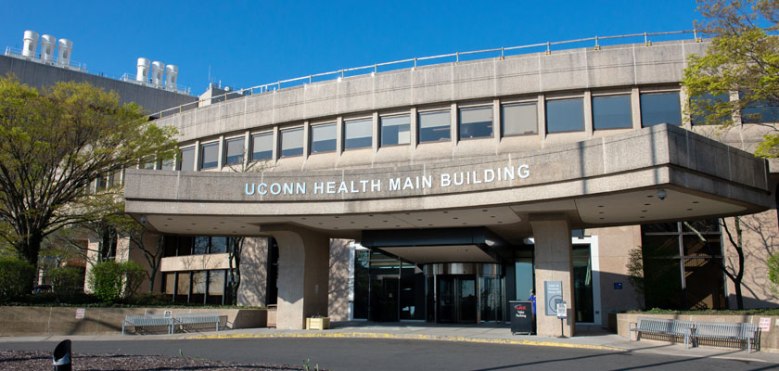
We write today to express deep concern over the recent White House executive orders and federal legislation elevating political appointees’ influence in grants, cutting funds for critical research, and slashing Medicaid funds.
These actions threaten academic freedom, higher education, healthcare, and Connecticut’s economy. They are compounded by the $61.5 million cut to UConn Health in the most recent state budget.
Our elected officials must take swift action to protect the public good by allocating the resources needed to shore up Connecticut’s only public medical academic center.
Academic freedom under siege
The new executive order replaces expert peer review with political oversight, jeopardizing expert scrutiny and credible science while dismissing dozens of National Institutes of Health (NIH) reviewers, thus replacing the integrity and autonomy of scientific merit as they navigate an ever-changing political agenda. Critical fields like health equity, vaccine studies, reproductive health, gender studies, and LGBTQ issues are being defunded, undermining research that serves our communities.
Impact on UConn Health and our students
The repercussions are already being felt at UConn Health. In April 2025, NIH cancelled $1.7 million in unspent UConn research grants, including mental health and LGBTQ+ projects. A proposed slash of indirect cost reimbursement to a flat 15% threatens $35 million annually. Infrastructure, administrative support, equipment and labs employing nearly 750 research positions, including graduate students, postdocs, and clinician-scientists, face immediate risk.
Impact of Medicaid/Medicare/ACA cuts on UConn Health and our patients
Federal legislation will cut or eliminate some Affordable Care Act (ACA) tax subsidies and reduce the number of eligible Medicaid/Medicare enrollees by as much as 20%, resulting in devastating losses for the University of Connecticut Health Center and our patients. Patients will lose access to primary care and rely more on costly emergency services – a devastating result for patient health and UCHC’s infrastructure. The anticipated direct loss from changes to Medicaid/Medicare to UCHC alone is $25 – $40 million. Additionally, this level of disenrollment jeopardizes UCHC’s 340B program eligibility, the loss of which could be between $49–$69 million.
Ripples through Connecticut’s economy
The stakes extend well beyond our campus. In fiscal year 2024, NIH funding awarded $787 million to Connecticut institutions, impacting 6,831 jobs, and $1.78 billion in economic activity. These cuts endanger our research infrastructure and talent pool, pushing researchers to go elsewhere, hindering our ability to recruit top talent which can lead to a “brain drain.” The consequences include dampening state-generated innovation, threatening as many as 2,650 jobs in our state that depend on federal research funding tied to UConn and UCHC.
These federal measures erode and disregard academic freedom, disciplines that promote equity and diversity and community health.
In closing, we strongly and passionately urge our lawmakers to act now and convene a special session of the General Assembly to:
- Support the University of Connecticut Health Center, the state’s only public hospital, as we step up to meet the growing demands of patients as more and more become uninsured; and
- Allocate funds to UConn and UCHC to offset state and federal cuts, especially for essential but stigmatized research and patient care to the most vulnerable.
The authors comprise the executive committee of the University of Connecticut Health Center – American Association of University Professors (UCHC-AAUP), AFT Local 6747, which represents nearly 700 faculty at UConn Health. They are: Ion Moraru, MD, PhD, UCHC-AAUP President; Neena Qasba, MD, MPH, Vice President; Mark Maciejewski, PhD, Secretary-Treasurer; Michael Baldwin, MD; Irina Bezsonova, PhD; Ruchir Trivedi, MD; Alix Deymier, PhD; and Laura Haynes, PhD.