


“What’s going on at PURA?”
The Connecticut Public Utilities Regulatory Authority has been in the news almost daily over the past year. I’m often asked what’s happening at an agency that, until recently, most people had never heard of.

Much of today’s dialogue around energy policy in our country has become disturbingly adversarial. At the federal level, the Trump administration reversed course on nearly every renewable energy initiative, instead doubling down on fossil fuels and even expressing interest in reviving coal as a major energy source. President Trump has taken particular umbrage with windmills, calling them “a con job.”
In Connecticut, it’s no secret that the state’s utilities and their regulator have been at loggerheads for years, leaving consumers caught in the middle. Some see the utilities as self-serving and unaccountable, while others argue they can still help build a fairer, more affordable energy future. Without casting aspersions on any of the parties – I generally assume good intent on the part of the people involved – the constant conflict has distracted from what really matters: delivering reliable, affordable service to the people who pay the bills.
You can’t both bully and persuade. Yes, utilities deserve tough scrutiny when they seek rate hikes or cost recovery. But regulation works best when it protects the public interest and encourages cooperation toward shared goals. If we’re serious about confronting the challenges we face, we need a process that puts consumers first and invites every party to the table.
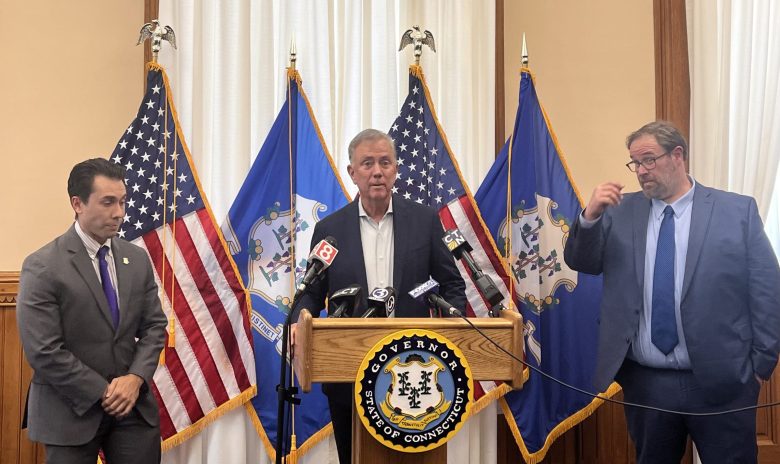
PURA is entering a period of transition just as a national crisis in energy affordability reaches a tipping point. In New Jersey, for example, Governor-elect Mikie Sherrill just won what has been dubbed the “Electricity Election,” pledging to declare a “state of emergency” on day one to curb utility costs. Gov. Ned Lamont has appointed a strong slate of commissioners who bring renewed attention to consumers and costs, especially PURA’s new chair, Tom Wiehl.
Wiehl’s experience as Legal and Regulatory Director at the Office of Consumer Counsel ensures that compassion for everyday ratepayers will be central to PURA’s decision-making. His appointment reflects a broader regional shift toward consumer-focused leadership at state utility commissions. In Massachusetts, new Department of Public Utilities Commissioner Liz Anderson previously led ratepayer advocacy at the Attorney General’s Office. In New Hampshire, Commissioner Pradip Chattopadhyay also came from the Office of the Consumer Advocate. And California Commissioner Matthew Baker previously led the Public Advocates Office. It’s a worthy and growing trend.
Other appointments will expand the agency’s depth. PURA Vice Chair David Arconti, appointed in August 2024, brings years of legislative experience as co-chair of the Energy & Technology Committee. New Commissioner Janice Beecher, longtime director of Michigan State University’s Institute of Public Utilities and editor of the Utilities Policy journal, literally wrote the book on regulation. New Commissioner Holly Cheeseman, another Energy & Technology alum, and incoming Commissioner Everett Smith, with expertise in finance, renewables, and telecom infrastructure, round out an impressive and diverse bench. It will be worth watching how they apply their individual strengths in shaping PURA’s future.
Meanwhile, consumers are struggling. According to the federal Energy Information Administration, electricity prices have risen faster than inflation since 2022, a trend that is expected to continue through 2026. However, Connecticut residents and businesses don’t need a federal agency to confirm what they already know: energy bills are straining household budgets.

Consumer ire over energy costs feels like it has easy villains. There is the monopoly company with the poles and wires and the pipelines to deliver energy to your house, and there is the regulator who oversees rates. In contrast, when the price of bread goes up, who do you blame? The farmer who grows the wheat, the baker who makes the loaf, the trucker that drives the product to market, or the grocer that sells the bread?
However, energy costs are just as much a mash-up of costs and inputs as loaves of bread. Solutions won’t be easy to craft. There are too many competing demands, particularly on our electric grid, including overdue investments for upgrading aging infrastructure like ancient utility poles and wires; costs associated with restoring power and “hardening” the grid against increasingly frequent storms and wildfires; clean energy investments needed to ensure cleaner air and water and address climate change; cybersecurity measures to protect against cyberattacks by foreign agents; low-income rates to assist those least able to pay their bills; and the impact of competition for electricity and water from the growing proliferation of AI data centers, just to name a few. The list of critical issues is long, but unfortunately, a “let’s do it all” approach is simply unaffordable.
We are facing tough, sometimes painful, decisions about what we must do, should do, and can’t afford not to do. To navigate these choices, regulators must prioritize transparency, explaining how rates are set, why decisions are made, and what tradeoffs are involved. Consumers deserve to understand what’s on their bills and how their dollars are spent. That also means ongoing public education and engagement.
With an experienced consumer advocate like Chairman Wiehl leading the way, I’m hopeful that future PURA actions will be guided by cost-consciousness, candor, and respect for all stakeholders. If the new PURA commission can rebuild trust and keep ratepayers at the center of every proceeding, it will not only restore confidence in the regulatory process but also set a new standard for integrating the public’s voice and wallet into its decisions.
Elin Swanson Katz is the founder of Blue Swan Energy Strategies, LLC. She has also served as Connecticut’s Consumer Counsel, as Chair of the Connecticut Siting Council, as the founding Director of the Office of Public Participation at the Federal Energy Regulatory Commission, and as a consumer protection expert at the U.S. Department of Energy.