


|
Getting your Trinity Audio player ready...
|
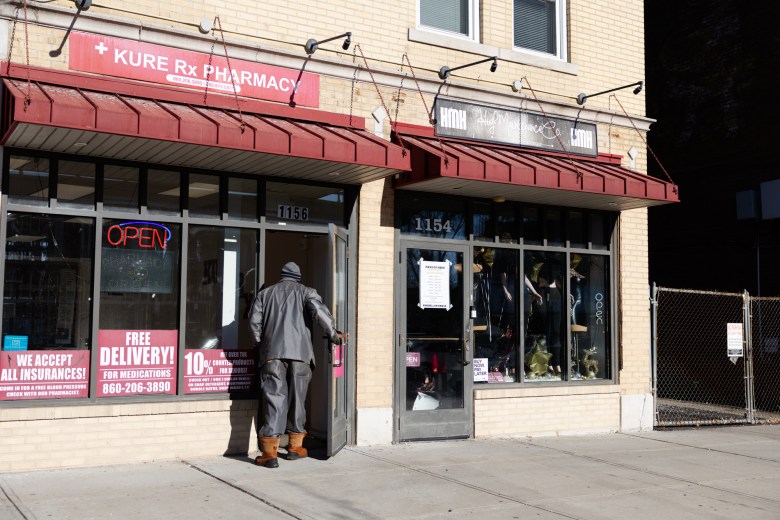
In October 2024, a group of elected officials gathered in Hartford to celebrate a new $1.7 million program that would provide assistance to small businesses along Albany Avenue, one of the city’s poorest neighborhoods.
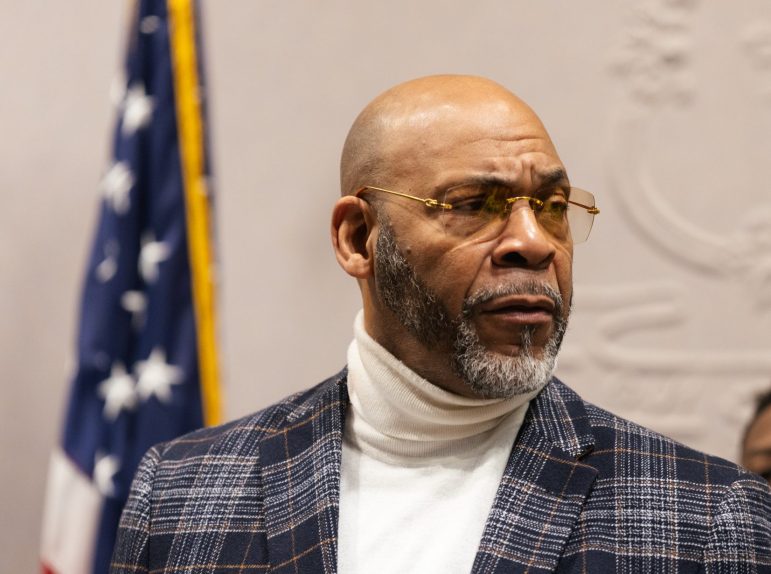
Sen. Doug McCrory, House Speaker Matt Ritter, Mayor Arunan Arulampalam and Hartford City Council President Shirley Surgeon were all in attendance, as was Sonserae Cicero, the director of a Hartford nonprofit who had just signed a $475,000 contract to help run the new economic development initiative.
The Democratic leaders said the program, which was launched in partnership with another nonprofit called Upper Albany Main Street, would serve as a lifeline for small minority-owned businesses in Hartford’s north end by providing them with training and up to $15,000 in grant money.
“These dollars will not only pave the path for new businesses to grow and thrive; it will ensure that our merchants have the support, technology and resources to stick around for years to come,” Surgeon, the council president, said.
Fast forward a year, however, and everything has changed.
Cicero’s contract with the city has been cancelled, the entire program is on hold and the roughly two dozen small businesses that signed up for training are left questioning whether they will receive any of the grant money that was promised.
All of the hopes that state and local officials had for the program quickly fell apart in August after it became apparent that a federal grand jury was examining the relationship between Cicero and McCrory and investigating several of Cicero’s businesses, which operate under different versions of the name SHEBA.
The small businesses that signed up for the program, meanwhile, have become collateral damage in the ongoing criminal probe.
Several entrepreneurs who completed the small business program this fall said they were still waiting to learn when they will receive their $15,000 grants.
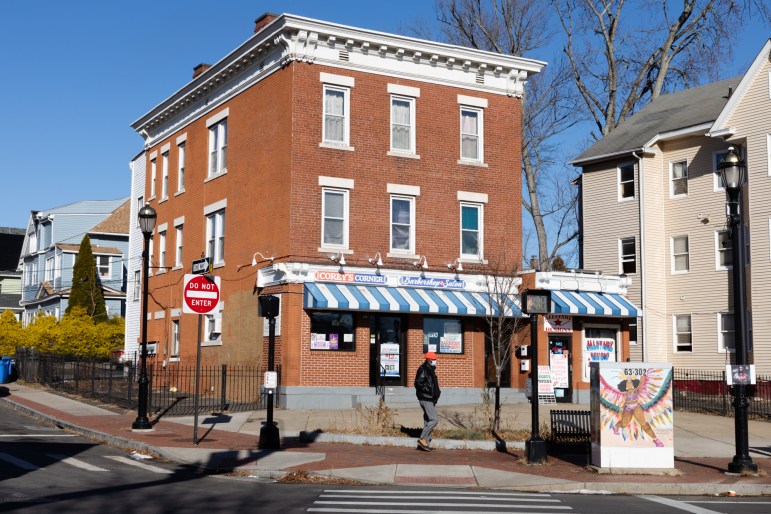
Tahara Chapman, the owner of a company called High Maintenance, a boutique clothing and hair shop along Albany Avenue, said she did everything that was asked of her during the program.
She attended courses led by Upper Albany Main Street about how to use Excel and Powerpoint. She created a business plan with SHEBA. And she ended the program by presenting that plan during a business “pitch” competition.
But since then, Chapman said, she’s been left in the dark.
“I don’t know what’s going on in the background, but I did what I was supposed to do,” she said.
Merice Bryan, who is trying to start her own health care business called Best Practices Home Care, said she is in the same position — left to wonder when, or if, the grant money will materialize.
“I worked very hard and spent a lot of hours going through the program, and I am counting on that money to build my business,” Bryan said.
How the SHEBA contract fell apart
How Cicero’s nonprofit ended up winning — and abruptly losing — the nearly half-million-dollar contract in Hartford is a complicated tale that stretches back more than three years.

Cicero did not respond to repeated emails, phone calls and text messages for this story. And McCrory has repeatedly declined to comment on the ongoing federal investigation.
But the Connecticut Mirror retraced the decisions that led to Hartford awarding the lucrative contract to SHEBA by combing through thousands of records that were seized by the FBI, interviewing officials who appropriated the federal funds and talking with several of the business owners that were supposed to benefit from that money.
The story that emerged from that reporting involves a defunct state agency, McCrory redirecting money behind the scenes, concerns about Cicero “double dipping” into public funds and a last-minute plan to finally provide aid to the small businesses in Hartford.
But it all starts in 2022 in the state legislature, where lawmakers were busy divvying up hundreds of millions of dollars in federal pandemic relief money.
A flood of federal money
That year, state legislators had the unenviable task of deciding how to split up Connecticut’s $20 billion state budget while spending an additional $1.7 billion in federal funds from the American Rescue Plan Act, which was passed in the wake of the COVID-19 pandemic.
Gov. Ned Lamont and legislators from around the state submitted proposals for how to spend the additional money, and in May 2022, they passed a bill distributing the federal aid.
Seventy million dollars was allocated to the governor’s workforce strategies. The state’s hospitality industry received $30 million. Another $10 million was budgeted for financial assistance to nursing homes. And a large number of smaller projects favored by state lawmakers were also bankrolled.
Among those smaller allocations was $2 million for CT Next, a quasi-public agency that was created in 2015 to foster startup businesses in Connecticut.
The bill didn’t specify how CT Next was supposed to use the money, but emails obtained by the CT Mirror show lawmakers, including Ritter, the House Speaker, earmarked the money for the Upper Albany Merchant’s Association, which operates under a nonprofit called Upper Albany Main Street.
Ritter told the CT Mirror that the $2 million was meant to provide sorely needed financial assistance to small businesses in the predominantly Black community along Albany Avenue, which had struggled through the first two years of the pandemic.
After the money was budgeted for CT Next, Ritter said, he was not involved in the discussions about how to structure the small business program. And, for a time, he heard very little about the $2 million that he helped to appropriate.
That was until June 2023, when the speaker’s office began to receive complaints that the businesses along Albany Avenue had still not received the financial support that was promised.
Redirecting the funds
At that point, Marilyn Risi, who was the executive director of Upper Albany Main Street in 2023, contacted Ritter to inform him that her request for the federal money had been held up by state officials after more than a year of waiting.
“The $2 million that you and Senator McCrory allocated for Upper Albany through CT Next was denied,” Marilyn Risi told Ritter in an email.
“Could you let us know where that funding is and if it will become available?” she added.
Risi’s email, which was forwarded to state officials by Ritter’s staff, set off a months-long conversation within several Connecticut agencies about what was prohibiting the state from releasing the money.
Staff at the Department of Economic and Community Development, which was helping CT Next put together a plan for the federal funds, assured everyone that the money would be paid out as lawmakers intended. But in several other emails, DECD employees explained that there were a couple issues that were holding things up.
The first problem was that CT Next initially planned to use the money to provide loans to the small businesses, which was considered a high-risk activity for the federal funds.
And the other issue was that CT Next wanted to subgrant a large portion of the $2 million to other nonprofits, one of which was SHEBA.
Records show that the leaders of CT Next’s board voted to award part of the $2 million to Cicero’s business shortly after the legislature appropriated the money in 2022, and by May 2023, CT Next’s executive director Onyeka Obiocha told state officials that McCrory authorized CT Next to allocate $350,000 of that money to SHEBA.
“Senator McCrory is aware of and approved of the use of funds,” he wrote.
Obiocha declined to comment for this story, and he referred any questions about CT Next’s intended use of the federal money to DECD.
McCrory told the CT Mirror during a brief phone conversation in November that he had never heard of CT Next.
But according to Risi, it was McCrory who introduced her to the staff at CT Next and proposed a partnership between SHEBA and Upper Albany Main Street.
She said McCrory showed up at one of Upper Albany Main Street’s monthly meetings with Cicero to pitch the plan for the small business program.
“Senator McCrory brought Sonserae Cicero to one of our meetings and stated we were going to be working with CT Next,” Risi told the CT Mirror in an interview. “We were supposed to contact small businesses that would be receiving loans and grants, provided that they would participate in seminars that (Cicero) was going to provide.”
Risi said she questioned, at the time, why Upper Albany Main Street needed to partner with Cicero on the small business training. And she pointed out that her organization already had an established relationship with the University of Hartford, which paired up college students with local businesses to help them with loan applications, creating business plans and budgeting.
But McCrory made it clear, Risi said, that Upper Albany Main Street would need to work with Cicero if they wanted to obtain the grant funding from the state.
Double-dipping?
The decision to subgrant part of the federal funds to SHEBA became a sticking point once state officials recognized that Cicero was already being paid $300,000 for the same type of work through another small business program, which McCrory also helped to approve.
That state-run program, which was overseen by the staff at DECD through its Minority Business Initiative, required small businesses to go through SHEBA’s so-called “accelerator” program before they could apply for a forgivable loan of up to $50,000.
The fact that Cicero would be paid to provide the same type of training through multiple taxpayer-funded programs, DECD officials explained, could lead people to question the state’s decision to award her more money.
“They received state funding to perform the exact same work that was outlined in the CT Next proposal,” Rhonda Olisky, an employee at DECD, told other state officials in July 2023. “I believe Onyeka was unaware of that funding, however, he did agree with us that we all want to avoid any appearance of ‘double-dipping.’”
Throughout the summer and into the fall of 2023, Ritter’s office continued to contact state officials to try to get answers about why the money for small businesses along Albany Avenue had yet to arrive.
But according to Ritter, nobody informed him or his staff about McCrory and Obiocha’s plans to shift hundreds of thousands of dollars in funding to SHEBA and another nonprofit.
“Our office took the lead in getting this program set up, but in terms of any involvement in sub grant recipients, my office had no involvement in that, nor any knowledge of any of those conversations” Ritter said.
In the end, none of the federal money ever made it through CT Next and out to the merchants along Albany Avenue.
Jim Watson, DECD’s spokesperson, said that is because CT Next’s director and staff never finalized an application for the money.
In an email, Olinsky, who raised the concerns about double dipping, said she asked Obiocha to revise CT Next’s plan for the funds during a conversation in July 2023. But she said she never heard anything back from him.
State leaders officially shut down CT Next the following year and folded the quasi-public agency’s remaining operations into DECD.
A last-minute pitch
With CT Next gone and all of its employees laid off, Ritter said he and his staff had to find another way to get the federal money to the convenience stores, barber shops and other businesses along Albany Avenue.
But as state legislators returned to Hartford in 2024, there was very little time left to formulate that new plan.
The rules for the pandemic relief funding required the state to have contracts in place for all of the federal money by the end of 2024. Otherwise, it would be forced to return the unallocated funds to Washington, D.C.
So as the time ticked down on another legislative session, Ritter said he and other lawmakers tapped the city of Hartford to come up with a way to spend roughly $1.7 million.
The legislature officially allocated the federal funds to the city in May 2024. And Arulampalam, who had just taken over as Hartford’s mayor earlier that year, said he received a call from state officials shortly after that asking him to draft a proposal for how to distribute the money.
Arulampalam, who was new to public office, said the opportunity to secure $1.7 million for one of the poorest areas of the city was too good of an opportunity to pass up.
“We knew the money was going to go away. We didn’t know the history of the other attempts” to distribute the money, Arulampalm said.
Arulampalam said it was Surgeon, Hartford’s council president, who ultimately brought forward a proposal for how to use the money.
“We trusted Shirley and had reason to trust Shirley because she is part of that Upper Albany neighborhood. She knows that neighborhood and the businesses really well,” Arulampalam said.
Hartford’s plan
As it turned out, Surgeon’s proposal closely mirrored the plan that was previously pitched by CT Next and approved by McCrory.
Upper Albany Main Street would receive $475,000 from the city to teach small business owners how to use technology and computer programs. SHEBA would get another $475,000 for taking the businesses through an 8-week class that included training and one-on-one business coaching. And the rest of the money would fund the $15,000 grants for roughly 50 qualifying small businesses along Albany Avenue.
Surgeon told the CT Mirror she did not speak to McCrory about how to allocate the $1.7 million that the legislature gave to the city and said she was unaware that Cicero had been in line to receive $350,000 when the money was earmarked for CT Next.
Surgeon, who has appeared as a guest on Cicero’s podcast, said she encouraged the city to hire Cicero because her nonprofit was based on Albany Avenue and because she had prior experience providing small business training to minority-owned companies.
The goal of the program, Surgeon said, was to make sure the small business along Albany Avenue could keep their doors open.
“I live here,” Surgeon said. “I want to make sure the businesses survive.”
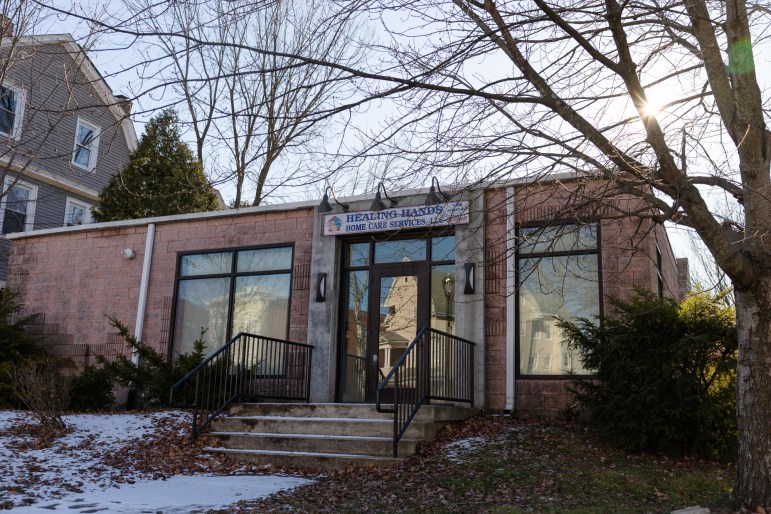
Arulampalam said the city ran its normal checks before the contract with SHEBA was finalized in October 2024, but he said state officials, who also reviewed the city’s proposal, never informed him of their earlier reservations about SHEBA being paid for similar services through multiple programs.
Watson, DECD’s spokesman, said that is because state officials no longer had any concerns at that point about SHEBA being paid from multiple sources of taxpayer money.
“Having done due diligence in vetting and attempting to contract the previous CTNext award, DECD staff was aware that the work proposed by the City of Hartford with the new ARPA allocation was not ‘double dipping,’ as it had a different scope and programmatic focus than the other SHEBA grant with DECD,” Watson said.
Pausing the program
All of the vetting that was done in 2024 did not prevent the city from freezing the small business program earlier this year, however.
Arulampalam told the CT Mirror that his administration cut off the city’s contract with SHEBA in late August as a direct result of the grand jury investigation and several subpoenas, which ordered the state to turn over any records detailing a “personal or non-professional relationship” between McCrory and Cicero.
By that point, 26 small business owners had already signed up for the digital literacy courses offered by Upper Albany Main Street. And six of those entrepreneurs had also gone through SHEBA’s portion of the training program in order to qualify for a $15,000 grant.
Hartford officials said they chose not to cancel the city’s contract with Upper Albany Main Street. But that didn’t really matter.
With SHEBA terminated, they said, the entire small business program had to be paused, while invoices and other records were sent to the state for review.
DECD officials confirmed last month that they were analyzing that information, and they said the agency also requested additional documentation.
According to Hartford officials, Cicero billed the city for roughly $72,000 before the program was officially halted.
But DECD said all of those expenditures will need to be scrutinized before any of that money can be paid out.
The same goes for the grants that the businesses along Albany Avenue have been waiting on for more than three years.
Editor’s note:
Onyeka Obiocha, the former executive director of CT Next, is a former member of CT Mirror’s board of directors.