


For years, Connecticut residents who receive benefits through the Department of Social Services have dealt with arduous wait times whenever they need support from the agency’s call centers.
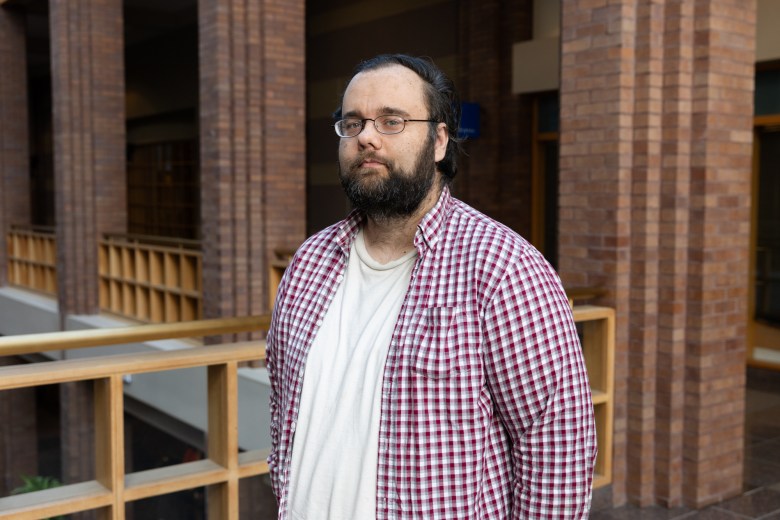
Bobby Berriault, who receives SNAP food assistance and Medicaid benefits, said he spent nearly two hours on hold one day in October trying to resolve a billing issue. His first call dropped after 41 minutes on hold. When he tried back later that day, he waited another 48 minutes before reaching someone.
Berriault considers himself luckier than most.
Many people don’t have two hours to spend on the phone, he said. Plus, Berriault lives in New Haven, where he said it’s easy enough to hop on the bus and head to the city’s DSS resource center if he can’t get through on the phone. But, he knows there are people who don’t live on bus lines or close to one of the agency’s physical locations.
“The only way that they’re going to be able to get the services that they need to survive is by connecting with someone on the phone. That’s why this issue is really important,” Berriault said.
The agency recently launched a new, modernized phone system meant to address the long wait times. Deputy commissioner Easha Canada said they’re already seeing results.
“Providing a dignified experience for the 1.2 million people in Connecticut who are serviced by DSS is really, really important to this administration,” Canada said. “We’re really excited about some of the improvements that we’re seeing already.”
In October, the average wait time to get a simple question answered — such as, “Did DSS receive my SNAP application?” or “When will my Medicaid eligibility be determined?” — was 43 minutes. In the first 10 days after the new phone system launched, average wait times fell to just under seven minutes at the nine locations where it was implemented. Call abandonment rates dropped from 48% to 22%.
The new system includes several features that the old system did not. Instead of sitting on hold, people can leave a voicemail and specify a convenient time to receive a call back. They can also use simplified menu options to indicate the issue they need addressed, so they don’t end up speaking to a Medicaid specialist if they need help with SNAP.
All 12 call centers will have the new system by the end of January, Canada said.
What took so long?
Berriault has been receiving DSS benefits since 2009 and he said wait times have been an issue since the state implemented a centralized call center in 2013. Before that, each enrollee worked with a dedicated case worker who was familiar with their situation.
“You didn’t call the main number for DSS. You just called your case worker,” Berriault said. “It was a much better system.”
Sheldon Toubman, an attorney with Disability Rights CT, said DSS has never managed to find a sustainable solution for the wait times. Whenever the issue hits a crisis point, the agency hires more staff. But the call center positions have high attrition rates, and the issue inevitably arises again once people leave those roles.
Advocates are encouraged by the new phone system but they want to see quality assurances guaranteed by law. Some are calling for lawmakers to establish performance metrics for the call centers during the 2026 legislative session.
Ahead of November’s special session of the General Assembly, Toubman sent a letter on behalf of 24 organizations to legislative leadership calling for statutory requirements to be set at 90% of calls answered within 60 seconds by a human — a metric that mirrors the department’s standards for its contractors.
DSS spokesperson Jalmar De Dios said the agency “supports transparency and accountability,” but that vendors can rapidly scale operations in a way that a state agency cannot.
“Any expansion of performance metrics should be to meaningfully improve service delivery and the client experience rather than creating expectations that do not reflect the operational realities of a public service agency,” De Dios said in an emailed statement.
Rep. Jillian Gilchrest, D-West Hartford, who heads up the Human Services Committee with Sen. Matt Lesser, D-Middletown, said the two haven’t yet discussed such legislation. But she said she’s interested in a long-term fix for the problem, which she said Gov. Ned Lamont and his budget staff at the Office of Policy and Management have failed to provide.
During the COVID-19 emergency, Connecticut used federal funds from the American Rescue Plan Act to staff up the call centers, and wait times improved, Gilchrest said. But when that funding lapsed, the state didn’t replace it, and DSS had to cut call center staff from 125 employees to 40.
Gilchrest said she’s appreciative of recent improvements but wants to see the issue remain a priority.
“Many of us were beating that drum and OPM did not put the money in,” Gilchrest said. “We needed this for a while, and I don’t want it to go away.”
De Dios said the ARPA funding was specifically meant to assist with a temporary projected uptake in call center volume as a result of Medicaid “unwinding,” a period beginning in March 2023 where COVID-era eligibility expansions expired and many people were expected to lose coverage.
Both Toubman and Gilchrest want DSS to establish the number of staff it needs for the call centers to run efficiently and then regularly report how many staff they have, including government employees and vendor partners.
DSS currently has 59 staff members to handle simpler requests, known as “tier 1,” up from 40 at the beginning of last year, according to De Dios.
Toubman said a permanent fix is particularly important given the new burdens that new federal legislation, H.R. 1 — also known as the One Big Beautiful Bill — places on DSS. New SNAP eligibility requirements began in November. In 2027, Medicaid work requirements and more frequent eligibility checks will also go into effect.
“It’s going to be imperative that there’s a good system where scared people, or people who get terrible notices, can go for help to understand what’s going on,” Toubman said.
Canada said the agency is working to meet these demands. It’s already contracted with a vendor to help with increased call volume following the SNAP changes. Staff are updating systems to be able to perform streamlined income verification for gig workers, as well as pull in education enrollment data to verify future community engagement requirements for Medicaid.
And in response to Berriault’s recommendation that the call center return to a case worker model, Canada said nothing is off the table.
“As we’re looking at the One Big Beautiful Bill, we’re evaluating new ways of working,” Canada said, including new technologies and processes. But the agency hasn’t yet “landed on what that should look like,” she said.