



We need bold climate action and a clean energy transition.
Yet, in his Nov. 24 opinion, “Time for Connecticut to rethink its climate strategies,” Noah Kaufman includes this quote: “The difficulty lies not so much in developing new ideas but in escaping from old ones. ” The opinion’s subtitle, “A lot has changed in climate policy over the last few years — meriting a new path,” tips off the reader to the “old is new, up is down” nature of his essay.
Kaufman’s “new idea” is for Connecticut to be less ambitious in its climate strategies and goals that are described in the Governor’s 2021 Executive Order but are now, apparently, an “old idea.” It’s hard to believe that plans laid out less than five years ago are old. But the approach becomes clearer in Kaufman’s statements: “Under Trump, the U.S. is retreating from domestic decarbonization and actively undermining global efforts,” and Connecticut should “recalibrate its goals to better align with today’s economic and political realities.”
In other words, retreat from the path forward because it has encountered bumps in the road. Instead, Kaufman recommends that Connecticut stick with the actual old and familiar habit of using fossil fuels no matter how sick they make us (cancer, asthma, worsening of other respiratory diseases) and what the cost (destruction of forests and wildlife, pipeline leaks, increased cost of natural gas).
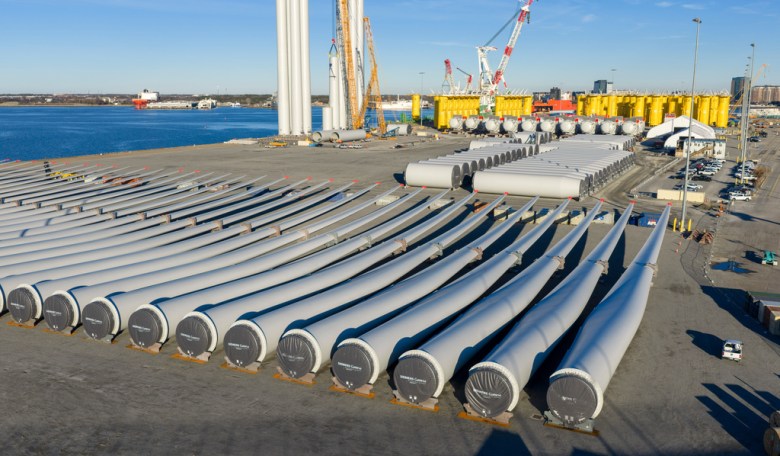
Should Connecticut, along with Rhode Island, have accepted the stop-work order from the Trump administration for the Revolution Wind project, a 704-megawatt wind farm, even though the project was fully permitted and 80 percent complete? Would the loss of wind energy and all the construction and operating jobs have been a wise decision? Does Kaufman disagree with the state’s evaluation that “Strategic investment in our port assets, a history of advanced manufacturing, innovative technology and research and development capabilities, have uniquely positioned Connecticut to serve as a first-mover in this new industry, already serving as a launchpad for three offshore wind projects supporting three states?”
No, to Connecticut’s credit (for example), it didn’t fall for Trump’s “I hate wind,” approach and instead pursued and won a federal judge’s decision ordering work to resume on the Revolution Wind project. Work resumed on September 22, and the U.S. Bureau of Ocean Energy Management did not appeal the restart. Connecticut refusing to bow to today’s supposed economic and political realities. On December 22, the Trump administration again halted construction of the project, along with pauses against four other offshore wind farms on the East Coast, for the reported purpose of evaluating national security concerns.
Once again, Connecticut is fighting back. The governors of Connecticut, New York, Massachusetts, and Rhode Island “are demanding either a briefing on purported security threats or an immediate lifting of stop work orders on five offshore wind projects under construction, including the Revolution Wind project.” In addition, Attorney General William Tong released a statement objecting to the stop work order and declaring that, “We are evaluating all legal options, and this will be stopped just like last time.” These actions show what the “new idea” really is – for Connecticut to be bold and courageous in pursuing a clean energy future.
The state should move rapidly to adopt other clean technologies that are being aggressively pursued by other states, such as solar in many forms, solar plus battery storage and geothermal networks. The U.S. Energy Information Administration (EIA) reported that solar is expected to contribute more than half of new electric generating capacity planned for 2025, with battery storage accounting for almost 20% of the remaining capacity additions. These increases reported year over year will build the solar and battery capacity quickly.
Connecticut should also move promptly to build its geothermal network capacity. Connecticut has been cautious and slow to move forward with geothermal networks, which are considered one of the most efficient ways to heat and cool buildings. Our neighboring states are ahead of us, and we can learn from their experiences. In fact, even in “today’s economic and political realities,” Massachusetts and New York are moving forward on several geothermal projects. The nation’s first utility-led geothermal heating and cooling network in Framingham, MA, whose first section was completed in 2024, recently announced that an $8.6 million grant from the US Department of Energy will provide funding for the network to double in size. A Boston-based nonprofit is the lead recipient of the funding, and Eversource and the city of Framingham are co-recipients.
Connecticut should also move rapidly from “studying” solar canopies (required by 2025 legislation) to building them. Tremendous capacity is available on parking lots and other usable spaces near transmission connections. Solar canopies can provide other benefits such as battery storage, reducing heat islands, protecting cars, and directing the flow of rainwater.
So yes, we should be clear about what are “new” ideas and what are “old” ideas, and we should work hard to develop the true new ideas for clean and renewable energy instead of backsliding on our climate goals and commitments.
Christine Feely is a volunteer with the Connecticut Chapter of Sierra Club.