


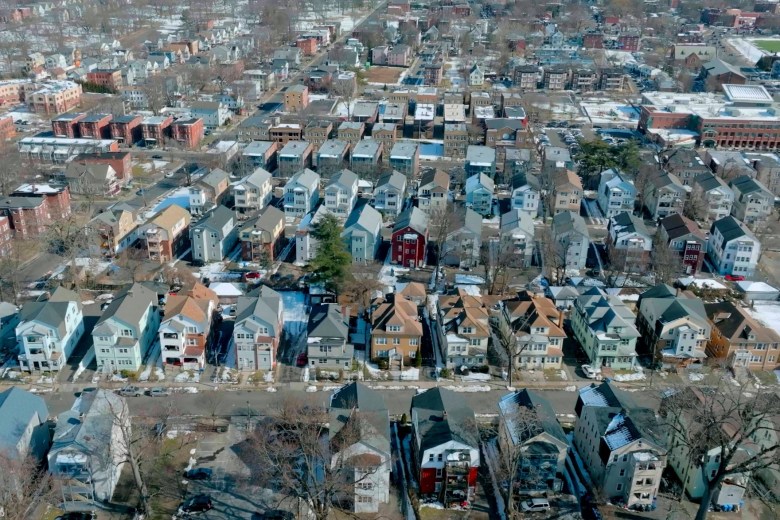
Connecticut families are often spending too much on housing, don’t have sufficient choice in where they live and are often overcrowded into apartments, according to a housing data report released Friday.
The report from the Partnership for Strong Communities, a housing research and advocacy organization, says that although Connecticut is building more housing, particularly multifamily housing, than in past years, it would still take decades to meet the need if construction continued at the current rate.
The report examines data on housing to paint a picture of the state of housing in 2025 across several factors including housing stability, affordability and choice.
“Connecticut needs to build more homes. We need to remove barriers that make housing feasible. We need to protect renters and homeowners from displacement,” said Chelsea Ross, executive director at the partnership.
A lack of housing — particularly housing that’s affordable to people with low incomes — has long been a problem in Connecticut, and the pandemic exacerbated those existing problems.
Half of Connecticut’s renters are paying more than a third of their income to housing costs, and about 1 in 4 rental households pay more than half their income to housing costs. The problem also exists for homeowners.
About a quarter of homeowners pay more than a third of their income to housing costs, and just over 10% pay more than half their income to housing costs. This means that Connecticut residents may struggle to pay other expenses such as electricity, health care or transportation costs.
“It’s always going to be one of the big topics constituents bring up, as long as it’s such a huge part of their budget,” said Housing Committee co-chair Rep. Antonio Felipe, D-Bridgeport. “It’s not at the 30% that people recommend. People have to choose between paying the rent or their electric bill or buying an adequate amount of groceries.”
People of color are disproportionately likely to be burdened by their housing costs, the report says.
The report notes that although state spending on housing has been high, particularly through bonding funds, construction isn’t keeping up with need. In 2024, developers built nearly 6,000 units of housing across the state.
But, the report says, estimates show that the state needs between 120,000 and 380,000 units of housing to meet the need. Thousands of units need to be designated affordable, according to the report. The idea is that building more housing will increase supply, reducing price increases because of heightened demand.
Connecticut residents also don’t have sufficient choice in where they live, according to the report. Most of the state’s rental housing is concentrated in urban areas while suburbs and rural areas typically have single-family housing. This means that for people who can’t afford a down payment on a home, they often have few housing options outside the cities.
It’s particularly hard for families to find housing because about 70% of all the state’s rental housing has two or fewer bedrooms, according to the report. The state also lacks “starter homes,” or smaller, cheaper homes for sale that have historically been a first real estate purchase.
The lack of housing also means that many families are overcrowded in small apartments, the report says.
“Where you can live in Connecticut is really constrained by zoning, our historical zoning policies, and it pushes up costs for everybody,” Ross said.
Experts have long tied the lack of multifamily housing to zoning practices that only allow single-family homes on the vast majority of Connecticut’s residential land.
Housing stability has also worsened for many families, according to the report. Homelessness has increased over the past few years. The report also found that about 35% of the people who called the state’s 211 system for help from November 2024 to November 2025 were looking for information about housing or shelter.
Ross said the number of affordable units needed — about 92,000 — doesn’t necessarily mean building that number of units, but that some existing units could be designated affordable. The state could also increase support for rental aid programs to help meet the need, she said.
The bottom line is that the state needs more housing, she said.
“Data is important, but what’s more important is that we do something,” she said. “A really great data report doesn’t alleviate someone’s housing instability. It doesn’t create stability for a family who needs to be in a community where their kids can access education, and they can be near their jobs.”
During the last legislative session, lawmakers passed a wide-ranging bill that addressed zoning, parking regulations and homelessness, among other topics. Gov. Ned Lamont vetoed that bill, then worked with municipal leaders to create a new bill that requires towns to create plans for how they’ll grow their housing stock.
That bill passed during a special session, and Lamont signed it into law in November.
Felipe said during the next session, which starts in February, he wants to expand on that work by focusing on housing stability for families. He wants to push a measure that would require landlords to provide a reason when they file for eviction. He also wants to find other ways to prevent homelessness, he said.
“We need to figure out how to mitigate the homelessness issue, do some prevention around it, and also make sure that renters aren’t taken out of their homes for small reasons,” Felipe said.