


Gov. Ned Lamont ordered his administration to hold off on issuing new valuations for agricultural land Monday, bowing to pressure from farmers who argued that the changes would lead to huge tax hikes and force some families to sell their land.
Lamont said that the canceled assessments — which in some cases would have caused the taxable value of farmland to double — were the result of an “unforeseen lack of data” the state had attempted to collect in an effort to determine the going rate for Connecticut’s dwindling amount of available farmland.
The decision will keep in place, for now, recommended land values that were last adjusted in 2020.
In addition to halting the proposed reassessments, the governor also convened a working group of farmers, municipal leaders, assessors and officials with the state’s Department of Agriculture to propose reforms to the process by which the state collects data and assesses the value of farmland, in an effort to avoid large price spikes in the future.
“Family farms are vital to Connecticut’s economy and are an essential part of our heritage,” Lamont said in a statement announcing his decision Monday.
“Our work to address concerns around rising land use values demonstrates our understanding of the challenges farmers face,” he continued. “Preserving these lands is about more than economics, it’s about sustaining a way of life that defines Connecticut, and we look forward to continuing our partnership with the farming community to keep Connecticut agriculture strong.”
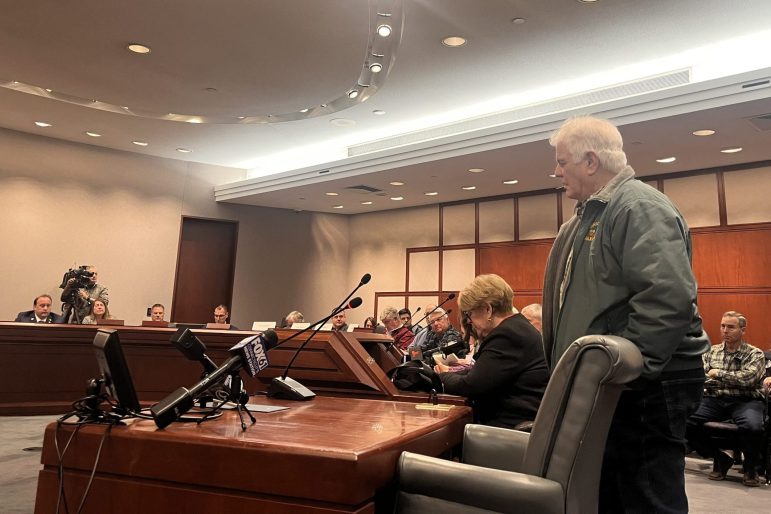
Lamont’s announcement met with an immediate sense of relief among farmers, dozens of whom gathered in Hartford’s Legislative Office Building on Tuesday for a forum on the issue hosted by Senate Republicans. While the event was announced prior to the shift in policy, lawmakers went ahead with a round table discussion to hear from farmers about their concerns over taxes and other economic issues.
“That is a huge step forward, and it takes a lot of the the anxiety out of the room, I’m sure, for the short term,” said Paul Larson, the president of the Connecticut Farm Bureau.
“But that’s just it,” Larson added. “It’s for the short term.”
Efforts to draw attention to the proposed assessment levels and their likely impact on taxes had ratcheted up in recent weeks ahead of the Jan. 31 deadline for municipal assessors to finalize their grand lists. An online petition calling on the state to stop the new assessments on farms from taking effect had gathered more than 20,000 signatures as of Monday, according to organizers.
Senate Minority Leader Stephen Harding, R-Brookfield, praised the decision not to move forward with the new assessments, which he said would have driven many smaller family farms out of business.
“I think the governor realized that in an election year, that he couldn’t have that,” Harding said. “I think it was the result of farmers putting pressure on their government to do the right thing.”
The controversy was the result of recent assessments undertaken as part of a decades-old state law known as Public Act 490, which was intended to help preserve farmland and open spaces by taxing the value of the land under its agricultural use — rather than its fair market value for development.
The law requires state officials to create a list of recommended land values that’s updated every five years, which local assessors can use to determine property taxes. The values are set by the state Office of Policy and Management, in consultation with the Department of Agriculture. As part of a regular revaluation period last year, the agencies partnered with the University of Connecticut to conduct a survey of farmers who either leased or rented out their land.
The survey was plagued by low response rates and incomplete data from farms used in prior surveys, according to findings from the survey’s researchers. When the updated assessments were released in October, some farmers were shocked to see the value of their land had increased dramatically.
For example, the taxable value of an acre of Tillable A farmland — which includes the most productive soils for growing crops — increased from $1,880 to $3,250, an increase of 72%. (Some of the values were even higher in the Connecticut River Valley region, where farmland is generally more expensive.)
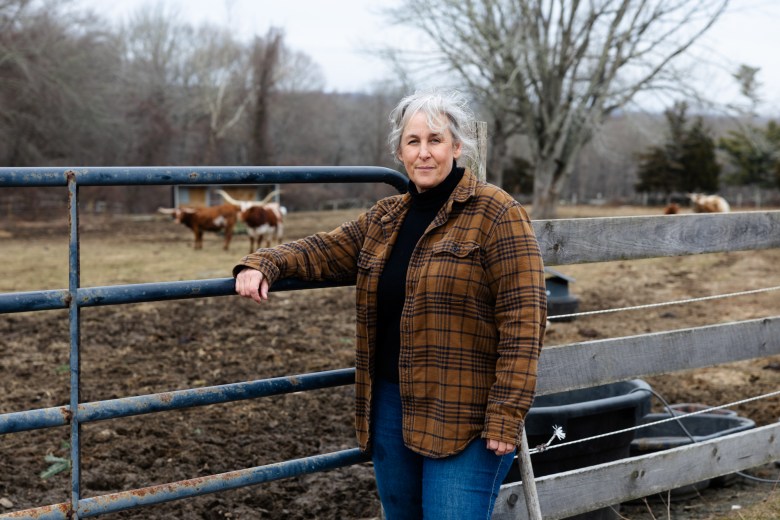
Kim Grijalva, who operates a 100-acre cattle farm with her family in North Stonington, said the value of the pastures on which she grazes her herd of 38 Texas Longhorn cattle had grown four-fold under the state’s initial assessments. Even worse, she said, was the sudden spike in value for bits of land composed of rocky outcroppings and creek — known as “ledge” and previously valued at just $40 an acre — to $970 an acre.
After Grijalva and other farmers protested the initial increases, OPM announced a series of revisions in January that eased some of the most dramatic price hikes. Still, Grijalva said her farm had faced a potential property tax increase of several thousand dollars before the revisions were put on hold Monday.
“We would quit cattle ranching, it would make no financial sense,” she said.
Among the methods used by UConn was mailing more than 1,000 postcards to farmers with a QR code that would allow them to fill out a survey online. The postcards yielded only 42 responses. The university’s researchers also emailed farmers who had participated in previous surveys, and sent copies of the surveys directly to local assessors, who shared them with farmers, which yielded better results.
The researchers received information about just 145 rental or lease agreements, out of an estimated 5,000 farms in Connecticut. Even among those who did respond to the survey, nearly half reported bartering or relying on other forms of no-cash agreements in exchange for land.
Shannon Chatfield, who owns the Stead Farm in Barkhamsted, said she was among those who never received notice of the survey. She was critical of the methods officials used to reach farmers.
“A lot of [farmers] are older, they’re not going to use QR codes, they’re not going to go online,” Chatfield said. “We don’t even read our emails half the time, so unless it comes in paper form, directly in the mail, we’re not going to see it.”
At Tuesday’s forum, Grijalva — the cattle farmer — was one of several speakers who said the controversy had shaken trust among farmers in the Department of Agriculture and its leader, Commissioner Bryan Hurlburt.
“Farms should not have to hire a lobbying agency like the Farm Bureau to protect them from the agency created to support them,” she said.
Hurlburt, who did not attend the forum Tuesday, later acknowledged flaws in the survey despite what he said were extra efforts by the agency to boost response rates. When asked about the criticism of his leadership, he said the agency had worked hard to build a rapport with farmers and expand the amount of grant funding available to develop agriculture.
“I think the reality is that we were listening and we heard, and we took the only corrective action that we could,” Hurlburt said, referring to the decision to rescind the proposed assessments.
A spokesman for Lamont’s office said Tuesday that the governor remains supportive of Hurlburt and has no plans to make a change in leadership at the agency.
Larson, the Farm Bureau president, also expressed support for Hurlburt and said the agency and OPM had engaged in lengthy discussions with the Farm Bureau that resulted in both the January revisions and, ultimately, the decision to forgo any changes this year.
Looking forward, he said the state would have to reexamine its methodology for reaching out to farmers and using self-reported information to calculate assessments under PA-490.
“Can we actually rely on the old system of farmers actually having the time to sit down and fill out a fairly extensive survey? Probably not,” Larson said. “So we have to probably come up with other mechanisms for getting that data.”
Hurlburt said it would likely take up to two years for the working group to come up with its recommendations for improving the assessment process. Depending on what they propose, he said that lawmakers may need to codify those changes through legislation.
Harding, the Republican leader, said he would like to see the working group move more quickly, something he said could be achieved by leaning more heavily on the input from working farmers.
“I think if we listened to [farmers] more we would have a good result for everybody, a fair result for everybody and, frankly, a quicker result,” he said.