


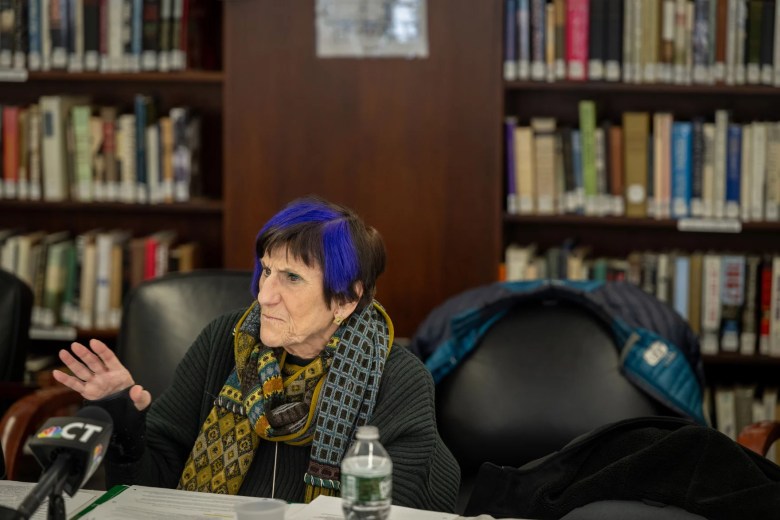
A Friday roundtable discussion with faith leaders and Connecticut Congresswoman Rosa DeLauro grew contentious at times, with some clergy calling for the abolishment of Immigration and Customs Enforcement, or ICE, and DeLauro dismissing that call in favor of her preference to reform the agency.
The meeting at Congregation Mishkan Israel in Hamden drew nearly 20 Connecticut faith leaders. It was billed as a “roundtable to denounce ICE lawlessness.” DeLauro, a Democrat, opened the conversation by listing reforms she believes are necessary at the Department of Homeland Security, including a requirement that federal immigration agents wear body cameras and a policy banning their use of masks.
“I’m not calling for abolishing ICE,” DeLauro said. “We need enforcement.”
DeLauro acknowledged the two January killings of civilians by ICE and Customs and Border Protection.
“Renee Goodman [sic], Alex Pretti – there are no words,” DeLauro said. “There is rage and outrage, which is well founded, on what’s happening. We have to, in my view, have a major overhaul.”
Upon opening the floor to comments and questions, DeLauro drew pushback from the very first speaker.
“I’m concerned that reform is not enough,” said Rabbi Daniel Schaefer of Congregation Mishkan Israel. “This agency has really proven itself to be rotten to the core, and I don’t know that it’s something that you can reshape in a way that is going to make sense for our country.”
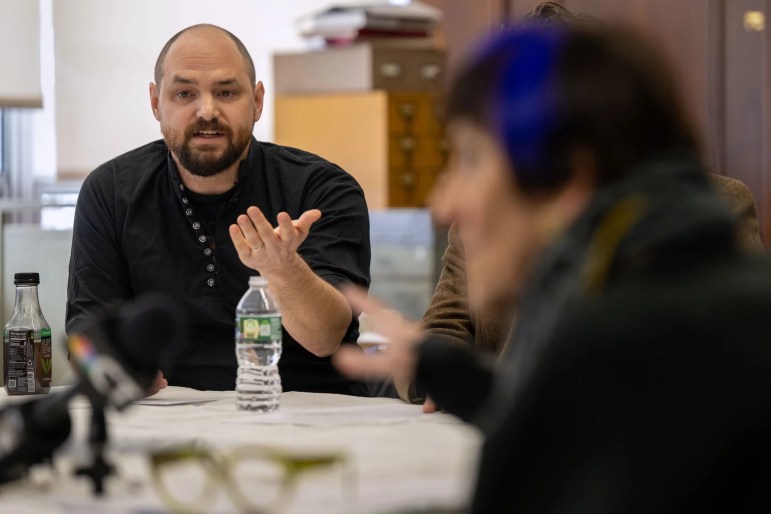
Rev. Jack Perkins Davidson of Hamden’s Spring Glen Church followed.
“You said there were no words after the murder of those two individuals,” Davidson said. “I think the words are ‘Abolish ICE.’”
“It is very disappointing to hear you say that there is some version of ICE that can be saved after everything we’ve seen happen,” Davidson said.
“I understand where you’re coming from,” DeLauro told him. “The fact of the matter is, [ICE] facilitates legitimate trade and travel. They collect duties. They stop trafficking of illegal arms, drugs, counterfeit goods. They investigate human, child trafficking.”
DeLauro said, as a legislator in the minority of a large body, she has to thread the needle carefully with what she supports and votes for.
“I would rather you vote for what is morally correct,” Davidson said.
“Don’t talk to me about my own morality,” DeLauro shot back.
“Don’t tell your constituents what they can and can’t talk to you about,” replied Rev. Nathan Empsall of the Episcopal Church of St. Paul and St. James in New Haven. “What you are voting for is not moral.”
Empsall said he believed reforming ICE was impossible.
“When your office invited us here, the description of this meeting referred to ICE as a ‘lawless agency,’ and that’s so true,” Empsall said. “If they ignore the cameras around them filming them murdering citizens, they’ll ignore the cameras on their body. If they ignore moral law, and if they ignore the supreme law of the land, the Fourth Amendment of the Constitution, they’ll ignore these laws. The cruelty is the point.”

Sister Mary Ellen Burns of Apostle Immigrant Services in New Haven agreed that ICE is “rotten to the core” and questioned whether “bargaining with the devil” was the right course of action.
“Do we want to stand on principle and then let the Republicans pass a bill with no changes?” Burns said. “Because they’re not going to vote to abolish ICE.”
“We need an exorcism of our government, and I don’t know what position is best,” Burns said.
Cantor Sierra Fox with Congregation Mishkan Israel said she recognized DeLauro was in a “complicated political environment,” but said, “As faith leaders, we do have an obligation to be calling out for the changes that we see are necessary.”
“We have to be calling out for the abolishment of ICE,” Fox said. “We have no other choice.”

Rev. Dr. Stephen Ray of United Church on the Green in New Haven said elected leaders need to take a stand even when they’re in the minority.
“You have right-wing paramilitary groups operating under the color of law,” Ray said. “It’s not enough for you or any other representative or senator or what have you to say, ‘Well, we don’t have the votes.’”
“We can still do things even when we don’t have the votes,” Ray said. “I’m a student and teacher of American history. For most of the battle against slavery, they didn’t have the votes, and it wasn’t until after the South lost the war that the reconstruction government found the votes.”
Rev. Dr. Jerry Streets of Yale Divinity School said elected leaders should speak more strongly against the White House.
“These people in ICE and the Trump administration seem to be people without conscience,” Streets said. “There’s little there to appeal to. The only thing they know is a force equal or greater than the force that they think that they have. Power has to meet power.”
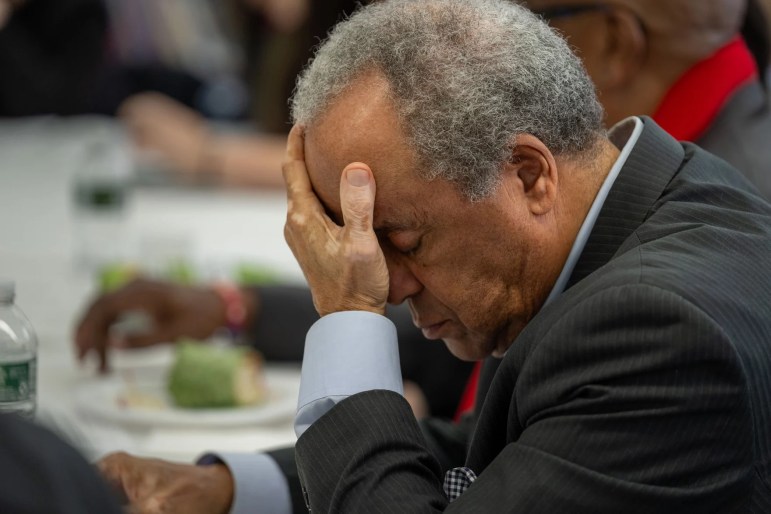
“We want more of a voice, more of a language about ICE ought to be abolished,” he said. “I know what that means politically, but maybe there are other ways that that can also be said within the culture of the legislative world that you occupy.”
DeLauro told the group this matter was personal to her.
“I have a grandson who is now 18. We adopted him from Guatemala 18 years ago. Dark skin. I call him and tell him to carry his passport,” DeLauro said. “So it is personal. It is very personal.”
“I want to have an agency that is overhauled,” DeLauro said. “That is what I will work for. I will continue to work for and speak loud and clear about it, which I believe I have. I believe I have. Some of you may not think I’ve spoken loud enough, but it’s not a question of loud or strong enough.”
But, on the issue of abolishing ICE?
“It’s not doable,” DeLauro said.
This story was first published on Feb. 6, 2026 by Connecticut Public.