



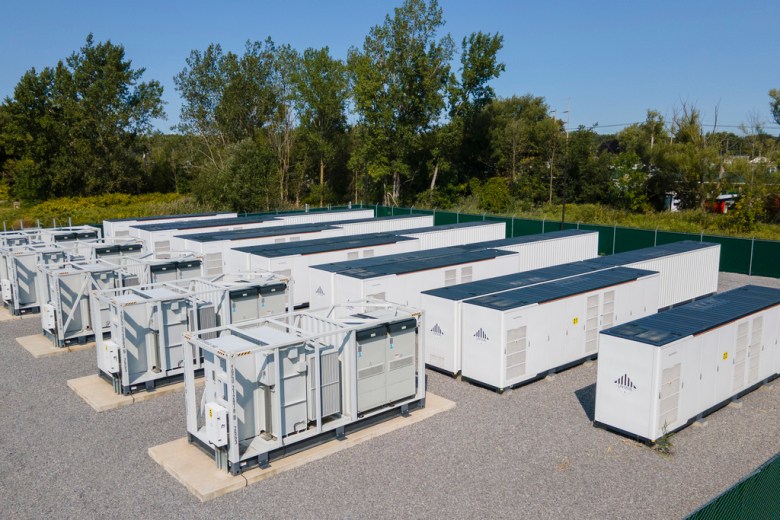
Connecticut residents are in a terrible bind. We need energy storage but the technology that developers want to use, lithium ion batteries, is far too risky for our state with its high population density and lots of forested regions.
There is legislation being considered that would put a moratorium on using lithium ion batteries for BESS (battery energy storage systems) in the state. It’s a very good idea.
Here’s why we need storage.
Connecticut exports close to 30% of the electricity generated in the state, has very high electric rates, too many emissions from fossil fueled power plants, and not enough electricity from renewable sources. Connecticut gets only 7% of its electricity from renewables while nationally, the average for the country is over 25%.
Yes, not having enough electricity from renewable sources is one of the reasons our rates are so high. Electricity from renewables is now inexpensive (this is a recent change- prices have fallen dramatically in the last few years and are coming down further!) and has always been environmentally responsible.
The obvious solution is to utilize more storage so that we export less electricity and don’t need to use peak-period plants (which just happened earlier this month during the cold snap) as often, which are very expensive. Adding storage can also help stabilize the grid, reducing the risks of blackouts. In 2021 Gov. Ned Lamont proposed that the state should commit to having 1 GW of storage by 2030 which was ratified by the legislature. Economically and environmentally, storage is a win as it both saves money and reduces emissions.
Why do we need a moratorium on lithium ion batteries?
The technology that’s now used for BESS in the utility industry is based on the same type of lithium ion batteries (lithium iron phosphate or LFP) that can catch fire in cars or power tools.
When a BESS installation catches fire (there have been over 100 fires since 2021), there are two sources of heat, the combustion and the battery shorting out. Even if the fire can temporarily be smothered, the whole mess stays hot from the heat of the electricity stored in the battery that’s being released. When air gets back in, what’s left of the battery catches fire again. This means that these batteries are like the trick birthday candles that light back up once you blow them out. There was a major fire at the Vistra facility in Moss Landing, California in January of last year that reignited over a month later!
Needless to say, the possibility of these fires raises issues from insurance to environmental justice.
While California led with legislation that strongly favored lithium ion batteries in BESS installations paving the way for development in the state, Texas soon caught up. Most BESS installations in the U.S. have been in these two states, which, not coincidentally, have deserts where these installations are often sited. They also have regions with pretty mild winters, which reduces the HVAC requirements of lithium ion batteries. (They don’t charge well below freezing and don’t like excessive heat either). This year, Connecticut is having a real winter, which makes the economics of lithium ion battery BESS installations less attractive.
Most companies in the utility industry do not like using technology that does not have proven economics. The success of lithium ion battery BESS installations have demonstrated the financials to utilities, so this has now become their technology of choice: 98% of BESS installations globally are based on lithium ion batteries.
In New Milford, a developer, Flatiron, proposed building a 140 MW lithium ion battery BESS facility very close to both a wetlands and residences. Opposition to this plan was quickly mounted by groups such as the New Milford Clean Water Coalition. (I volunteered my services to this group.)
The Coalition hosted a webinar discussing the risks of this installation that a representative from Flatiron attended. At the end of the discussion, he announced that Flatiron had decided to pause the project. This was a very reasonable response from Flatiron. If only….unfortunately, Flatiron subsequently requested a meeting with State Rep. Bill Buckbee and Sen. Stephen Harding to discuss the proposed moratorium. Do you think they supported it?
There’s a false choice being presented to legislators and residents of Connecticut: that lithium ion batteries are the only option for battery storage, so if Connecticut is going to have BESS, it’s going to be lithium ion.
The reason for this choice is simple. Utilities haven’t been willing to consider other battery technologies. The reality is that there are choices of safer technologies which will be cheaper in the long run ranging from flow batteries to zinc manganese batteries. (There are other choices as well.)
Connecticut has some pumped hydro installations. Why not take another look at expanding them?
The argument for lithium ion batteries really boils down to laziness and salesmanship. It’s the least expensive solution for the initial installation when relatively short durations (four hours and under) are needed and there’s now a body of knowledge of their economics in service. Hence it’s an easy choice if you just want to be a lemming. But one of the issues that isn’t being addressed is that as these batteries age, fires become more likely. If Flatiron has plans to turn the facility over to another entity, that’s not their concern.
That’s why this moratorium is needed. Towns are dealing with developers looking at projects in the hundreds of millions of dollars. (The cost of the proposed New Milford project is probably between $300 to $400 million.) These developers are very savvy at getting what they want. Connecticut residents should be frightened that a developer may put a large battery installation nearby that could catch fire — and can’t be put out.
The NFPA (National Fire Protection Association) recommendations on dealing with these fires are simple: just let them burn out. The only thing firefighters can do is to try and protect the blaze from spreading. Let’s be clear, these fires are way beyond what a typical volunteer firefighting organization can handle. And if there is a fire, then first responders and residents are going to have to deal with the hydrofluoric acid (HF) that’s generated when the battery burns.
Hydrofluoric acid is nasty stuff. It causes both severe burns in the short term and organ damage in the long term. It is not good to drink it either, so you don’t want it in your water supply. (There’s no hydrofluoric acid in an intact lithium ion battery. they’re actually pretty benign. It’s something that forms when they burn.)
Connecticut could become a leader in developing safer battery storage technology. While it might be a bit more expensive in initial costs (these are not apples to apples comparisons. Longer duration storage, i.e. more than four hours, might be cheaper with different technology than lithium ion), but it wouldn’t take long for the savings to show up in reduced operating expenses and far lower insurance costs.
That 1 GW of storage that’s been mandated for the state is roughly a $1 billion market, but most other states need better technology as well. Passing this moratorium could help Connecticut take the lead in this industry that’s vital to our future.
Samuel Brauer lives in Shelton.