



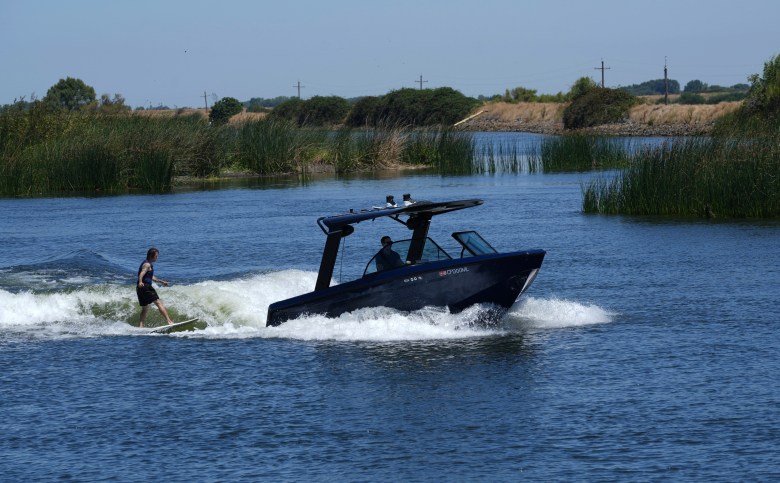
Over the past two years, as the First Selectmen of Warren, Washington and Kent in western Connecticut, we have been addressing an avalanche of complaints about “wake surfing” on Lake Waramaug—a beautiful natural glacial lake and one of our local treasures.
Now, advocates for wake surfing and the boating industry are trying to take away our right to do our job.
Our lake attracts residents and visitors to its public beaches and for all kinds of boating: paddlers, canoers, sailors, fishermen, kayakers. It was an environmental mess 50 years ago, green with algae, but concerned citizens, environmental groups and local representatives have partnered for decades to clean it up and bring it to today’s pristine state.
“Wake surfing” came to our lake in recent years. The boats that create the surfing waves have ballast tanks that fill with lake water, which weigh down their stern and create huge waves on which you can surf without a rope. These artificially enhanced waves are times the size and ten times more powerful than regular motor boat waves. They routinely overwhelm swimmers and other boaters, stir up dangerous toxins on the lake bottom, damage docks, and threaten the introduction of invasive plants from their ballast tanks to the delicate lake environment.
As responsible elected officials, we undertook to study the issue. We met with concerned citizens on all sides. We engaged an independent environmental consultant. And we unanimously concluded that, given the topography of Lake Waramaug, the harms and dangers of wake surfing threatened the environmental health of the lake and the safety of those who use it. So we proposed an ordinance banning wake surfing—similar to hundreds of bans enacted by lake communities all around the country. (Wake boat owners can still operate their boats in motorboat mode, like all other motorboats on the lake.)
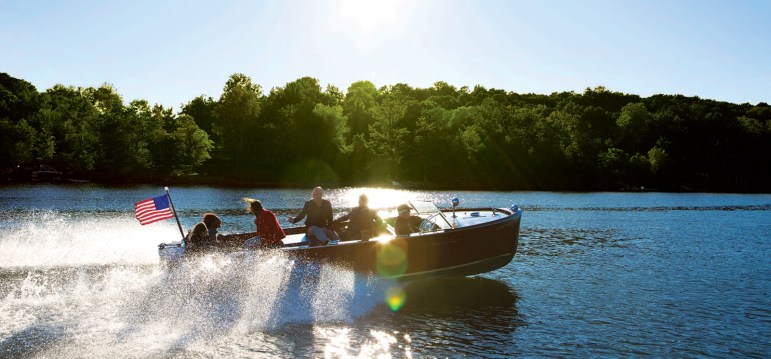
We then held public hearings in all three towns. All interested parties participated. Every issue was discussed, including alternatives to the ordinance. The opponents engaged their own experts. Our communities were fully engaged, alive with discussion and debate. Yard signs, mailings, phone banking, voter canvassing; one of the most significant referendum campaigns in years.
When we voted last summer, the answer was crystal clear: The overwhelming majority did not want wake surfing on Lake Waramaug. The ordinance passed by over 78%, an unprecedented endorsement.
The ordinance was then reviewed by DEEP, the state agency responsible for environmental regulation. DEEP approved it in the face of strong opposition from wake surfers. Unhappy that the vote did not go their way, the surfers then went back to DEEP to again ask it to throw out the. After another review, DEEP again approved the ordinance.
Still unhappy, the wake surfers have now joined forces with boat manufacturers to ask our state legislators to overturn the ordinance under the guise of “reasonable uniform wake surf regulation”—an issue they never cared about until passage of the ordinance.
Hartford should not fall for this back-door, disingenuous effort to overturn the years of work and the will of our towns’ voters. Local control over Connecticut’s lakes is our tradition. There is no factual or scientific basis to impose a “one size fits all” regulatory scheme on every lake in the state. Lakes differ in size, shape, depth and configuration. What works on one lake may not work on another.
That’s why we spent the time and effort to study the problem and devise an appropriate solution for our lake.
Control over our lakes should remain with local elected officials and the voters, subject to appropriate DEEP review, and the Lake Waramaug Ordinance must remain intact. Overturning the ordinance would be an affront to the hard working elected officials and interested organizations that have studied the issues and tended to our lakes for decades—and it would be a stick in the eyes of the voters, who listened to the facts and arguments and did what they believed was best. Local officials and voters don’t need Hartford dictating the rules of the road for our lakes.
We urge our state representatives to vote “no” on any legislation that overrides or preempts properly enacted local regulation and seeks to impose “uniform” regulation where it does not belong.
Gregory LaCava, James L. Brinton, and Eric Epstein are the First Selectmen of Warren, Washington and Kent, respectively.