


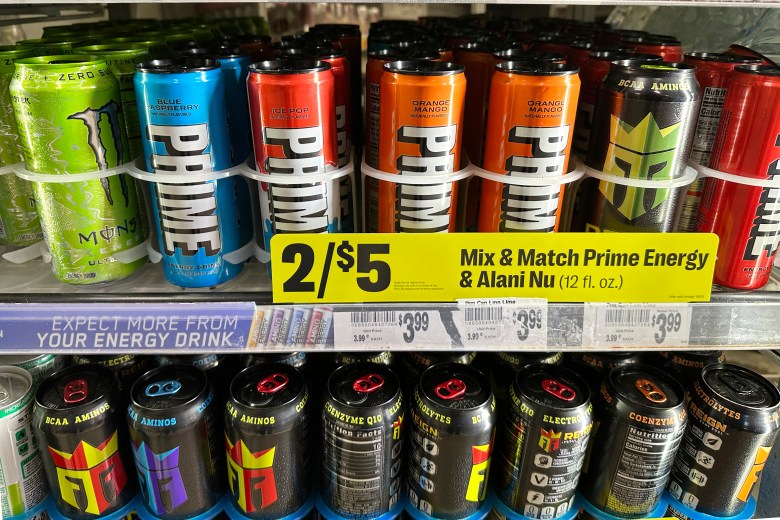
Lawmakers are weighing whether Connecticut should require signage warning of the dangers of energy drinks for children and teens.
In a public hearing on Tuesday, lawmakers on the legislature’s Committee on Children heard testimony on House Bill 5269, which would establish a working group made up of lawmakers, experts and parents to study how energy drinks affect children.
The legislation is of particular interest to Rep. Liz Linehan, D-Cheshire. Linehan testified to the committee — of which she is a former co-chair — to the dangers energy drinks pose to young people.
“Between 2011 and 2023, 32,482 calls to poison control centers have been made by people under 20 years of age regarding the consumption and the adverse effects of energy drinks,” Linehan said. “Multiple scientific studies have shown [that] the combination of caffeine and other unlabeled stimulants in these drinks give consumers increased heart rate, arrhythmia, increased blood pressure, panic attacks and in some cases, have been known to trigger cardiac events.”
Linehan clarified repeatedly that the legislation wouldn’t ban energy drinks. The bill aims to boost awareness of the effects of energy drinks on youth through increased signage at the point of sale.
The bill convenes a working group that would be required to produce a report and recommendations by Nov. 1. It also asks the state Department of Consumer Protection to create and provide printable versions of signage describing the risks of energy drink consumption by children. Businesses would have until 2027 to post the signage “in a conspicuous place at the point of sale,” according to the bill.
Tim Phelan, president of Connecticut Retail Network, said that was not a reasonable timeline for retail companies — especially small businesses. He said the proposed requirements pose “unnecessary compliance burdens.”
“We think this bill reaches a conclusion before the work has even begun,” Phelan told lawmakers at the public hearing. “The legislation pre-supposes that warning signage is necessary before the proposed working group has convened, reviewed data or issued findings. A working group is intended to study an issue and make recommendations.”
Phelan also said that the bill wrongly singles out energy drinks and ignores other sources of caffeine, like coffee, soda and tea.
Committee on Children Ranking Member Rep. Anne Dauphinais, R-Killingly, seemed to agree, citing young people’s fondness for coffee. “I’ll use Starbucks for an example, where [children] will go in with their computer and sit for hours and have these sugary, tall caffeine drinks, which have far more caffeine than, say, a Red Bull.”
Phelan said he thought lawmakers should be examining all caffeine sources and the effects on children. “The idea of a task force to look at this issue broadly, including not just energy drinks but caffeine and herbal teas and other things,” he said.
Linehan called this a “false equivalency.” In a text message to the Connecticut Mirror, she said, “Energy drinks are defined as such not solely by their caffeine content. It’s the caffeine PLUS additional stimulants that exponentially cause more harm.” For example, she cited, “taurine, guarana, ginseng, L-Carnatine, gluconolactone, and more.”
Energy drinks are often marketed toward young people, sold in flavors and packaging that appeal to “pre-adolescent children” and stocked adjacent to sports drinks and sodas, said Dr. Frances Fleming-Milici, director of marketing initiatives at the University of Connecticut’s Rudd Center for Food Policy and Health.
Video game streamers promote some products; Others boast that they can help users lose weight, which Fleming-Milici said can appeal to girls’ vulnerabilities.
“It creates a need. You know? If you need more focus, this is for you. If you want an edge while you’re playing the video games, this is for you. You want a better workout, this is for you,” Fleming-Milici told lawmakers during Tuesday’s hearing. “It’s just a completely different landscape than it was when these drinks first came out.”