


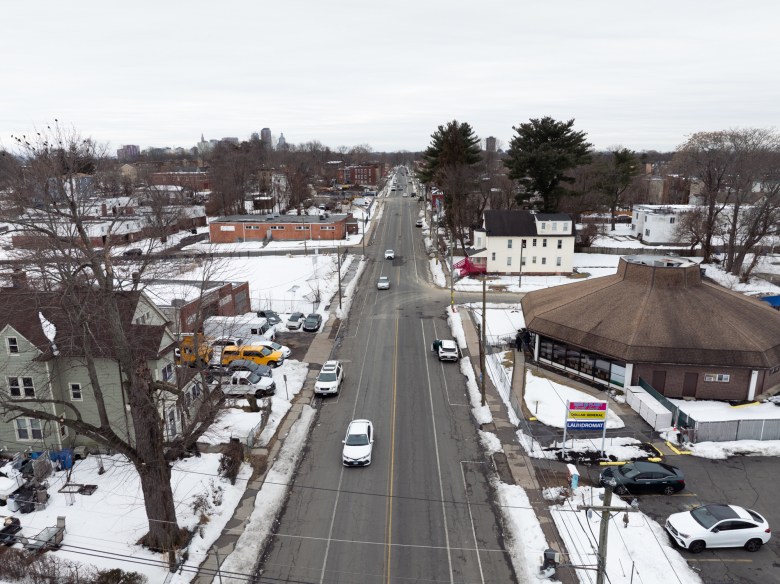
In the summer of 2024, more than a dozen people gathered inside a home in Hartford’s north end to learn about an enticing new opportunity.
A newly established nonprofit called the Hartford Renaissance District was offering to use state money to pay for home renovations for low-income property owners living near Barbour Street, one of the state’s poorest communities.
The small group of homeowners invited to the meeting were told that if they provided the nonprofit with their names, personal income statements and photos of what needed to be upgraded on their properties, they could qualify for up to $50,000 in home improvements.
But more than a year and a half after that meeting, none of the promised renovations have been completed, despite the state providing the Hartford Renaissance District with more than $400,000 in startup funding and the nonprofit spending $70,000 on a North Carolina real estate developer to lead the program.
Emails and other records obtained by the Connecticut Mirror show the home renovations were repeatedly delayed in 2024 and early 2025 as the Renaissance District struggled to comply with state requirements that it set up a competitive process for selecting eligible homeowners and a construction manager.
The nonprofit’s problems have only grown since then, however.
In July 2025, a federal grand jury subpoenaed a large number of records related to Howard Hill, the founder of the Renaissance District, as part of an FBI investigation into state Sen. Douglas McCrory, D-Hartford, and a number of local nonprofits.
And earlier this year, officials at the Connecticut Department of Economic and Community Development demanded the Hartford Renaissance District return more than $300,000 to the state after the Connecticut Mirror began inquiring about the status of the home renovation program.
At that point, the leaders of the Renaissance District were asked to provide the state with financial records showing how they’d utilized the $400,000 they received in March 2024, and the records the nonprofit turned over showed it spent $5,000 of that money on a DJ, among other expenses that were questioned by the state.
Officials with the Renaissance District told the state they inadvertently paid for the DJ out of the wrong bank account, and they quickly reimbursed the money.
But DECD responded by ordering the Renaissance District to turn over all of the remaining funding to the state until they could confirm whether the nonprofit could manage the money responsibly.
That means that the Renaissance District might not obtain the full $2.3 million that it was eligible to receive through the state’s Community Investment Fund.
The state’s decision to claw back the money was a serious disappointment to some of the Hartford residents who applied to have their homes renovated back in 2024, but none of them were willing to say so publicly for fear that they miss out on funding if and when the time comes for the program to resume.
One homeowner, who asked to have their plumbing and several other parts of their home fixed, said officials with the Renaissance District recently shared the news that the district no longer had the money to start the program.
“We got a raw deal,” the homeowner said. “It’s frustrating, because we’ve been waiting for this for almost two years.”
The loss of funding for the home renovation program is just the latest example of money intended for residents and businesses in Hartford’s north end being disrupted by the ongoing federal investigation and concerns about lax financial controls at several local nonprofits.
State officials similarly froze funding to the Blue Hills Civic Association, another community nonprofit, early last year after it failed to inform the state about a wire theft of more than $300,000.
City officials in Hartford also cancelled a contract with another nonprofit that was supposed to provide training to small businesses in the north end after that entity became a focus in the ongoing federal criminal investigation.
A vision for Barbour Street
The Renaissance District’s home renovation program was meant to be the initial phase in a much broader plan to revitalize Barbour Street and the surrounding area.
Documents reviewed by the Connecticut Mirror show the Hartford Renaissance District also intended to use part of the $2.3 million it was awarded to purchase and restore up to 30 unoccupied properties in the predominantly Black community.
The nonprofit also had ambitions of obtaining public funding to help redevelop several larger properties in the area, including the former Clark Elementary School, a pair of vacant lots owned by the City of Hartford, and Unity Plaza, one of the area’s few commercial shopping plazas.
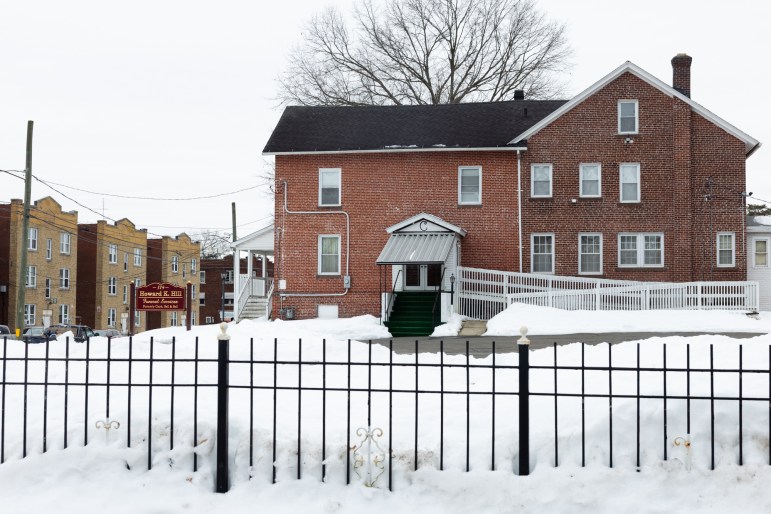
The primary driver behind all of those plans was Hill, a local funeral home director who has become a leading advocate for Black businesses in Connecticut.
The Hartford Renaissance District was founded by Hill, and the nonprofit is headquartered at one of his three funeral homes on Barbour Street.
Hill, who sits on the state’s Minority Business Initiative Advisory Council with McCrory and is a close acquaintance of the senator, according to emails and other records, declined multiple interview requests for this story.
But in a promotional video, Hill described his goal of redeveloping a large portion of the Barbour Street neighborhood, where the median annual income is below $30,000 and an estimated 40% of the community lives under the federal poverty level.
“This is where I decided to start the Hartford Renaissance District. It’s a vision to redevelop this whole entire neighborhood, create economic development, stable housing and a place where people can thrive where they live,” Hill explained in the video.
McCrory, who is also featured in one the videos alongside U.S. Rep. John Larson, described Hill’s plans for Barbour Street as an opportunity to “revitalize a community that has been vacant and dormant for a very long time.” And he said they would seek to expand their work to other areas of Hartford as well.
Records show Hill, who grew up in Windsor, pursued public funds from a variety of sources in recent years in order to fulfill that vision.
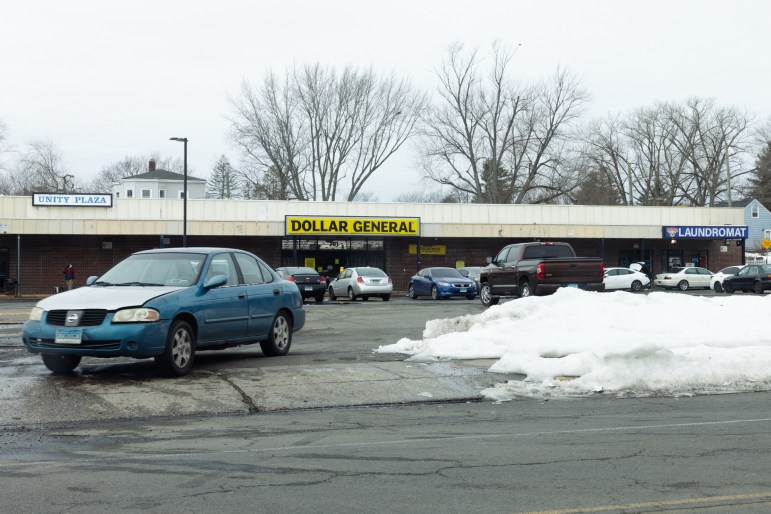
Last year, before the federal criminal investigation into McCrory became public, the state was preparing to provide several million dollars to complete the purchase and redevelopment of Unity Plaza, which Hill spearheaded.
Records show the city of Hartford also discussed plans in recent years to give the Renaissance District $5 million to redevelop two other properties along Barbour Street, though the city never committed that money.
And in one email from 2024, Hill pitched McCrory on a much grander plan to spend millions more over 10 years to revitalize and redevelop Black communities throughout Connecticut, including millions for a private retirement fund for Black-led organizations.
“Our liberation will be expensive,” Hill wrote.
That type of public funding may be harder to come by with so many questions now swirling around Hill and McCrory.
Ayana Taylor, who is running against McCrory in this year’s Democratic primary, said the fact that the state ripped back the money from the Renaissance District is not a positive sign for the north end of Hartford.
Taylor, a Windsor resident who grew up on Baltic Street in Hartford’s north end, said the $2.3 million that the Renaissance District was eligible to receive could have done a lot of good in the northeast corner of Hartford, where many people can’t afford new roofs or new windows on their aging homes.
But she said misappropriating state money on things like a DJ creates a lot of distrust and could make it more difficult for other groups serving the area to obtain state funding in the future.
“This is a huge missed opportunity for the area,” Taylor said.
An ongoing audit
The Renaissance District is not the only nonprofit tied to Hill that the state is currently reviewing the finances of.
DECD is also reviewing the financial records of the Prosperity Foundation, a local community foundation, headquartered in New Haven, that Hill founded and helps to lead.
That organization, which issues grants for health, education and economic development initiatives in Black communities, was also subpoenaed last summer as part of the ongoing federal criminal investigation.
And this year, it became the focus of a state forensic audit after DECD officials learned that the foundation obtained more than $1 million in legislative funding through the Blue Hills Civic Association with the help of McCrory.
An outside auditing firm hired by DECD confirmed that the Blue Hills Civic Association subgranted at least $1.1 million to the Prosperity Foundation in 2023 at the direction of McCrory. But the auditors said they could not determine what the Prosperity Foundation did with more than $700,000 of that money.
As a result, the Prosperity Foundation’s financial records are now being examined directly by the auditors to try to confirm what happened to that state taxpayer money.
Officials at DECD said the fate of the Renaissance District’s home renovation program is now directly linked to the outcome of that ongoing audit, as well.
That’s because the money for the home renovation program also flowed through the Prosperity Foundation before it was turned over to the Renaissance District.
Jim Watson, a spokesman for DECD, said the Renaissance District could be eligible to reclaim the money for the home renovations if auditors don’t find any issues with either organization’s accounting records.
But until the audit is finished, Watson said, the money for the home renovations will remain frozen in an account controlled by the state.