



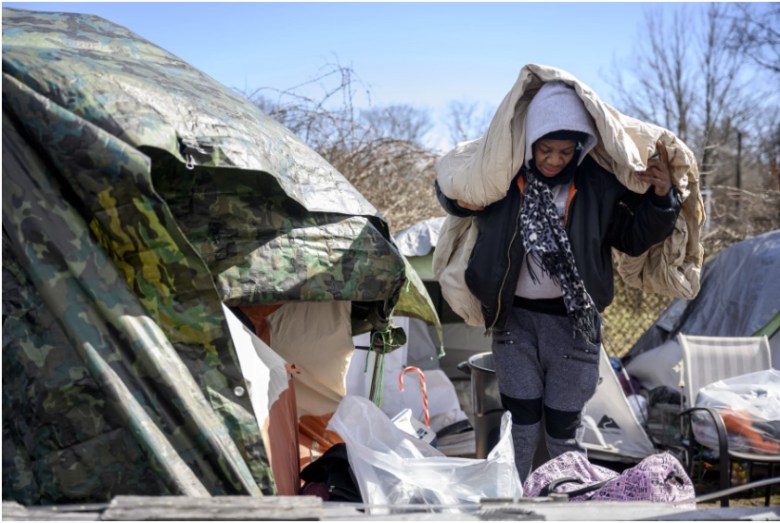
According to a recently released report, the prevalence of unsheltered homelessness – people sleeping in places not meant for human habitation, such as sidewalks, parks, or abandoned buildings – has nearly tripled in Connecticut communities over the last five years, from 294 individuals on a given night in 2022 to 833 in 2025.
This 183% increase is poised to triple again if proposed federal funding cuts to permanent supportive housing are passed.
These proposed cuts threaten housing for 6,000 current Connecticut residents of permanent supportive housing, an established and evidence-based approach to preventing and treating homelessness. Indeed, at the end of the day, Connecticut’s current rise in homelessness is a housing problem. Solving it requires investments in safe, stable, affordable housing, as well as subsidies that help keep people housed in an increasingly unaffordable housing market.
In our own research with individuals experiencing homelessness in New Haven, we see time and time again how unaffordable housing can trigger homelessness, which in turn spirals into other problems that further impede a person’s ability to get back on their feet.
One person we recently spoke with described how becoming homeless after losing her job led to the dramatic exacerbation of an existing knee problem and the emergence of a now chronic sinus problem. She attributed this to having to carry around her possessions all day, spending extended periods of time outside in the cold, and lack of sleep and healthy food.
Indeed, research from Benioff Homelessness and Housing Initiative, shows how homelessness is a ‘toxic’ event that can precipitate or exacerbate chronic and acute health conditions. An episode of homelessness can also precipitate the loss of one’s belongings, job loss and strain on social networks. All of these consequences of homelessness point to the critical importance of prevention through affordable housing.
Here in Connecticut, recent data confirm that unaffordable housing is a key driver of unsheltered homelessness. The recent report cited above indicates that affordability was a primary cause of homelessness for the majority of individuals entering Connecticut shelters last year. Close to 30% of those entering Connecticut shelters reported that the primary cause of losing housing was “expenses exceeded their income.” Close to 25% reported that they became homeless after exhausting their options to stay with other people (doubling up). Another 13% reported that eviction was the primary cause, suggesting a need to enhance eviction protections for Connecticut tenants through rental assistance programs and policies that expand just cause eviction such as the recently discussed bill, SB257.
The numbers of people currently experiencing homelessness due to affordability constraints are only the tip of a much larger iceberg. According to a recent report 48% of renter households in Connecticut are rent-cost burdened – meaning that they spend more than 30% of their monthly income on rent – and 25% are severely cost-burdened, spending more than 50% of their income on rent.
These numbers are not surprising given the increasingly untenable gap between wages and income in the state. According to the National Low Income Housing Coalition, a Connecticut resident would need to work 88 hours a week at minimum wage to affordably rent a 2-bedroom apartment. At the same time, subsidies that can make housing affordable are in short supply.
Nationally, fewer than 1 in 4 eligible households receive HUD rental subsidies such as vouchers or project-based housing that reduce a tenant’s rent to 30% of their income. In Connecticut, tens of thousands of households are waiting for these subsidies with wait times often stretching more than 5 years. While households wait for subsidies and struggle with unaffordable rents, even a temporary financial shock (a medical bill, reduced hours at work, or childcare disruption) can push them into homelessness. And when individuals do fall into homelessness, as many as 1 in 4 are turned away from services due to capacity constraints.
If we accept that homelessness is fundamentally driven by housing affordability, the immediate solutions are clear: expand permanent supportive housing; invest in rental assistance; strengthen eviction protections, and fully fund our homelessness response system, so that temporary hardship does not become prolonged homelessness. What remains is the political will to act.
Danya Keene is a professor of Social and Behavioral Sciences at the Yale School of Public Health. Annie Harper is an assistant professor of Psychiatry at the Yale School of Medicine. Caitlin Ryus is an assistant professor of Emergency Medicine at the Yale School of Medicine.