


This story has been updated.
Over 200 people, including incarcerated individuals and their family members, submitted testimony supporting a proposal under which people who committed crimes when they were under the age of 26 could become eligible for parole after serving a certain portion of their sentences.
In 2015, Connecticut eliminated sentences of life without parole for people convicted of crimes committed at age 17 or younger and created new rules around parole eligibility for young people based on the length of their sentence.
In 2023, lawmakers raised the age to 21. But in order to get that legislation passed, supporters agreed to a compromise whereby parole eligibility would only be available for people sentenced before Oct. 1, 2005. This year, several lawmakers and advocates want the legislature to eliminate that sentencing cutoff date and raise the eligible age to 25.
Under the proposed bill, a person who committed a crime when they were younger than 26 would become eligible for parole after having served 60% of a sentence of less than 50 years, or 30 years of a sentence of more than 50 years. The bill would also require judges to consider scientific evidence around the brain development of people in their 20s when sentencing someone who committed an A or B felony as a young adult.
[RELATED: Adults sentenced for crimes as youth want CT to expand early parole]
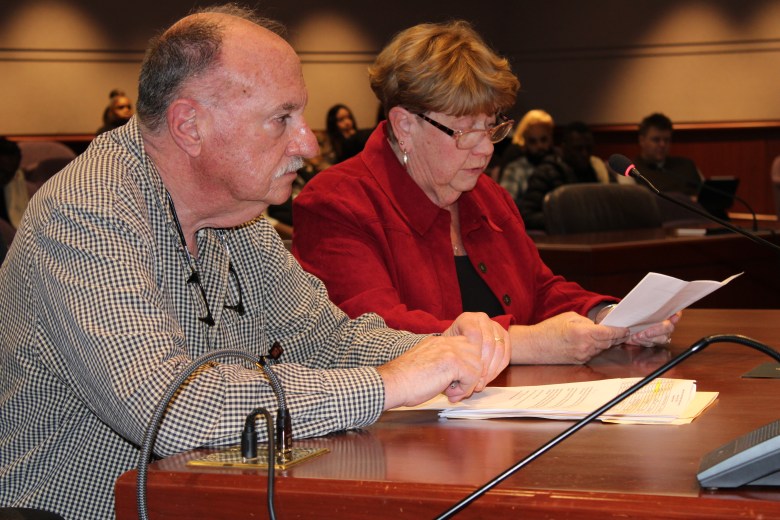
Multiple people at Wednesday’s hearing read testimony submitted by incarcerated men and women. Over and over, in both spoken and written testimony, individuals recounted how they had committed crimes through a foolish and impulsive act at a young age. Some described having been raised in difficult circumstances with little guidance. They all recounted how, in prison, they had made efforts to further their education and participated in rehabilitative programs.
Shaquan Armour, who was sentenced in 2014 for manslaughter committed at age 20, said his time in prison had transformed him, and he took responsibility for the crime he committed. He said he has taken classes through Quinnipiac University and was pursuing an associate degree.
“I can truly say I am not the same 20-year-old that thought it was cool to carry a gun, that end[ed] up taking someone’s life,” Armour said. “I was 20 years old when this crime occurred — young, impulsive, and unaware of the consequences of my choices. Education has been a lifeline for me, giving me purpose and hope … These achievements remind me that I can still make something of my life, even from where I stand now.”
Some people who committed crimes at a young age talked about growing up in households with drug abuse, incarcerated parents or in foster care.
Zackery Cody Franklin, who was incarcerated for four murders that he committed between the ages of 17 and 21, said his parents were both in and out of prison as he grew up. His grandmother, who took him in, along with his brothers, was also struggling with addiction, and he said that as the oldest child he felt responsible for providing for them. By age 14, he was selling drugs to make money.
“I’m not saying this was right, but it was all I knew. I never felt like I had a real fighting chance in life,” he said.
Since being incarcerated, he said, he has completed a fatherhood program, anger management and earned a GED. He said his greatest fear is that his own son could choose the same path that he did.
Linda Cusano told lawmakers that her son, who was incarcerated at age 18 and has spent 20 years in prison, just completed an associate degree through Wesleyan University’s Center for Prison Education and is part of the H.O.N.O.R. program in Cheshire.
“He made some bad decisions and not a day goes by that he does not live with the weight of those decisions. I have watched him grow from an impulsive 18-year‑old into a thoughtful, mature young man,” Cusano said. Her son, she said, would have been eligible for early parole under the 2023 bill if he had committed the crime before October 2005.
The Division of Public Defenders also submitted testimony in favor of the bill.
‘Behaviors can change’
Multiple people brought up findings in neuroscience showing that the brain does not fully develop until the age of 25.
Arielle Baskin-Sommers, a professor of psychology at Yale University, said that certain areas of the brain, such as those that regulate impulse control, planning, weighing long-term consequences and delayed gratification continue to develop into a person’s mid-20s. As a result, young people are more vulnerable to making bad decisions in situations that involve strong emotions, peer pressure and immediate gratification — characteristics that often define moments when criminal acts occur. She added that trauma and unstable environments can affect brain development.
But Baskin-Sommers also noted that the same brain qualities that make impulse control and long-term planning difficult for young people also make it possible for them to grow, learn and change.
“ The brain during these years remains highly responsive to experience, showing strong evidence that when young people are provided with supportive environments, stable relationships, appropriate interventions and access to effective mental health treatment behaviors can change, and developmental trajectories can improve,” she said.
Corrie Betts, president of the Greater Hartford chapter of the NAACP, noted that the bill would not allow for an automatic release — the Board of Pardons and Paroles would still have to determine whether the person was rehabilitated and could reenter society.
“I have sat across from men who have committed serious misconduct when they were young, often coming from environments filled with trauma, instability and violence. But when you meet them years later, you are not meeting the same person. You meet someone who has educated themselves, mentored others, overcome addiction and taking responsibility for the harm they fall,” Betts said.
It is not clear how many people would become eligible for parole if the bill were to pass. Advocates have estimated around 450 could become eligible, but a spreadsheet from the Board of Pardons and Paroles lists about 750 people who the board says would become eligible if the law passed.
Jennifer Zaccagnini, the board’s chairperson, said in testimony that since the bill would make more people eligible for parole, the board would need more resources, like pay for part-time board members.
Who’s ‘not in this room’
The state’s Office of the Victim Advocate and the Division of Criminal Justice both testified against the proposal.
Victim Advocate Natasha Pierre said that courts already consider factors like neuroscience when sentencing. She raised concerns that this could confer additional benefits on the defendants and pointed out that the legislature had raised the age to 21 just a few years ago.
“I urge the Committee to pause on further criminal justice reforms until an in-depth study may be conducted on the effectiveness of the recent criminal justice reforms, including recidivism rates,” Pierre said in written testimony.
Chief State’s Attorney Patrick Griffin pushed back against the idea that neuroscience supported raising the age of early parole eligibility to 26. He referred to the cutoff of age 26 as “arbitrary line-drawing.” He said the raised age could also undermine plea bargains, which he said were already frequently lowered based on age and psychological development.
“Increasing the age of eligible offenders to include non-adolescents up to the age of 26 at the time the offense was committed, is neither constitutionally required, nor apparently based on any credible and compelling scientific or psychological evidence,” Griffin wrote in testimony. “Parole eligibility should not be conferred equally upon the barely 18-year old burglar who is a first-time offender, and the 25-five-year-old rapist who is a multiple felony offender.”
During the Wednesday hearing, Sen. John Kissel, R-Enfield, said he understood what the bill’s proponents were arguing, but he said there also needed to be consideration of the victims. And he said while he understands the arguments about brain development, not all young people make a decision to commit crimes.
“I just hope people realize there’s the victims that are not here on this planet anymore because they were murdered. There’s the families of those victims, families of the people that have been victimized in other ways that are not in this room,” Kissel said. “I believe in second chances, but there’s also an element of justice that has to be achieved as well, to try to make sure that people do not misbehave in the first instance.”
‘Living proof’
Several of those who testified on Wednesday were formerly incarcerated people who had gone to prison at a young age. They talked about how they had grown while in prison and successfully rehabilitated.
Shannon Sampieri, who said she spent more than 20 years incarcerated in York Correctional Institution for a crime she committed at age 19, said that she received disciplinary tickets for poor conduct at York in her early 20s, but that this stopped once she turned 25. She began seeking out educational opportunities.
“ I exhausted all groups, all educational pathways, and everything that I could to better myself. I made the right choices, the right decisions because as science shows, my brain had fully developed, so my decision making process is going to be different,” Sampieri said.
In her last three years of incarceration, Sampieri said, she became a mentor to younger women incarcerated at York. Since leaving prison three years ago, she has graduated from Wesleyan University and is working on creating a pipeline to train people recently released from prison in machining. She says she still struggles with human connection, an after-effect of her time incarcerated.
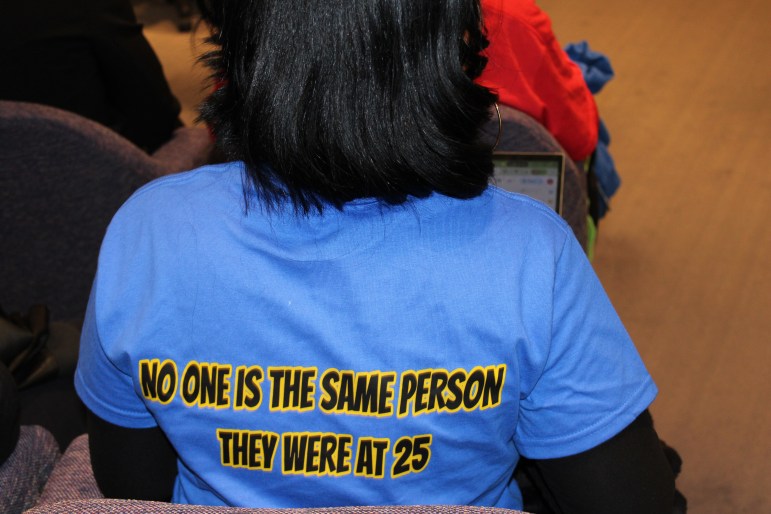
“ To lock children up and think that we can never change, I think, goes against what we as society should stand for when we say, ‘It takes a village’ or, ‘No child should be left behind,’” she said.
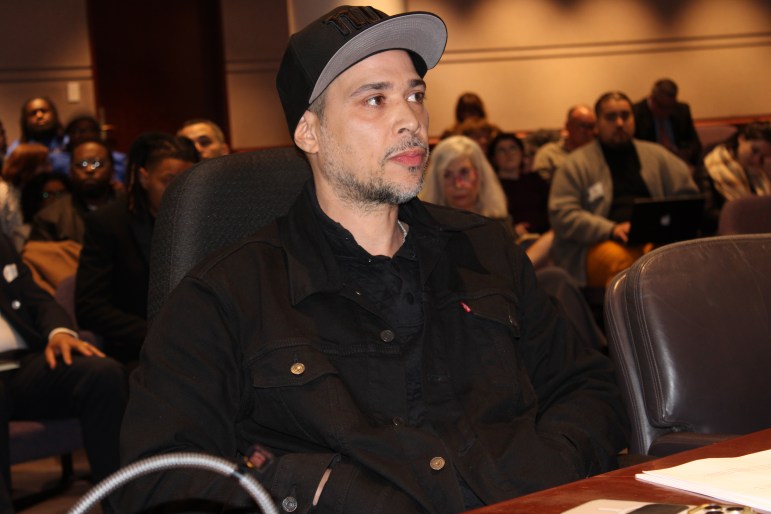
Ruperto Lugo told lawmakers that he was first incarcerated at 12 years old for stealing baseball cards. As a teenager, he said, he was “caught in that pipeline” until he was found guilty of felony murder and incarcerated for 24 years. The incident occurred a few weeks after his 19th birthday.
“ I watched people who went in at 18, 19 and 20 years old grow into completely different human beings. Many of them have spent 20 to 30 years proving they changed, but many are still sitting in prison today, not because they are the same people they were as teenagers, but because the law has not caught up with what we now know about youth and human development,” he said.
Lugo told lawmakers that he was “living proof” that people could change.
“ This bill is not charity. It is justice catching up with reality,” he said.
Correction:
An earlier version of this story misattributed an estimate of the number of people who could become eligible for early parole if the legislation were to pass.