



The pace of innovation is accelerating. The demand for new skills is immediate. And the traditional timelines of higher education can no longer afford to lag behind changes that are already reshaping the workforce.
Across the Connecticut State Colleges and Universities System, our colleges and universities are responding with urgency by designing programs and learning environments that prepare students not just for the future of work, but to help define it.
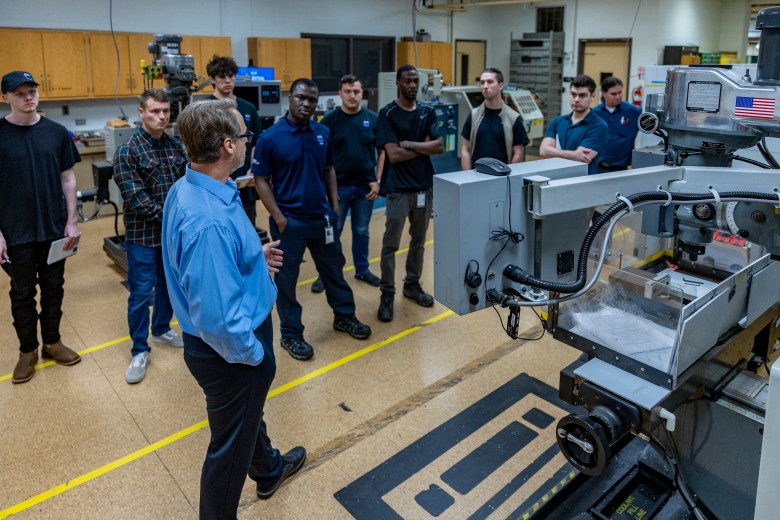
At Central Connecticut State University, innovation is taking shape through a new Robotics and Mechatronics Technician Apprenticeship program launched in partnership with TRUMPF, Inc. Nine apprentices employed by TRUMPF are completing an undergraduate certificate in robotics and mechatronics designed by Central’s School of Engineering, Science & Technology faculty. The coursework aims to prepare apprentices to work with robotic systems, mechatronic devices, and automation technologies used in manufacturing.
“This partnership with TRUMPF exemplifies our commitment at Central to aligning our educational offerings directly with the evolving needs of industry. We understand the critical demand for highly skilled professionals in advanced manufacturing, and this program is a direct response to that need,” said Central President Zulma R. Toro.
Charter Oak State College, in partnership with the Business-Higher Education Forum and Axim Collaborative, recently announced the significant expansion of its AI Academy.
Through this partnership, Charter Oak learners, job seekers, educators, and employees of small and mid-sized businesses will gain new pathways to in-demand careers. The AI Academy expansion addresses a critical economic need: ensuring that a significant portion of the business community isn’t left behind in the AI revolution. Simultaneously, the Academy is launching a dedicated pathway for K-12 school districts, focusing on an AI mindset and strategic deployment rather than specific software, allowing educators to build sustainable, future-proof AI policies regardless of the AI tools they adopt.
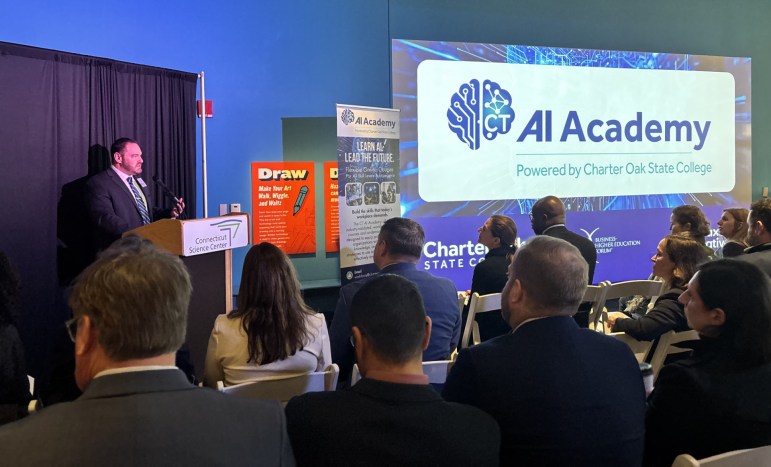
“Connecticut’s economic strength lies in its small and medium-sized businesses. The expansion of the AI Academy is a direct investment in those businesses, providing them with the high-level AI fluency typically reserved for large corporations. Furthermore, by bringing a tool-agnostic, mindset-first approach to our K-12 districts, we are helping educators move past the ‘hype’ and focus on the strategic deployment of AI. We aren’t just teaching people how to use AI; we are empowering Connecticut’s schools and businesses to lead with it,” said Dr. Dave Ferreira, Provost, Charter Oak State College.
CT State Community College is bringing AI learning to communities statewide through its non-credit AI Certificate program, which is offered at 10 campuses. The three-course curriculum is designed for AI novices, as well as those wishing to harness the power of generative AI in their professional endeavors.
CT State is also preparing faculty and staff to bring these tools into both the classrooms and student support offices. Their AI fellowship program has already trained 35 faculty and staff – with another round underway – and an advanced cohort just formed is charged with shaping CT State’s AI strategy, proving that access and innovation can advance hand-in-hand.
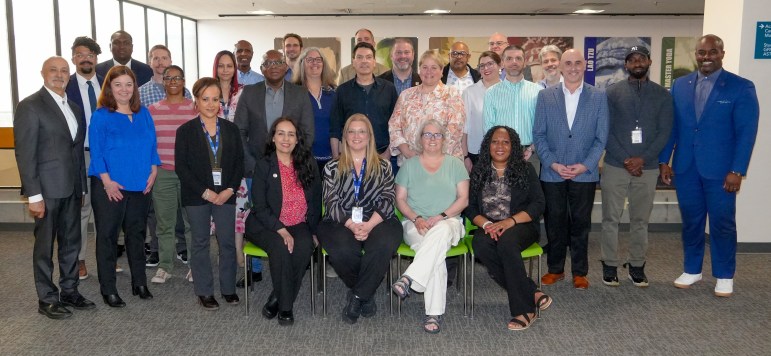
“CT State’s AI Certificate program equips our students with both technical proficiency and ethical frameworks to navigate AI-driven workplaces, giving them a competitive advantage in industries where AI literacy is rapidly becoming as fundamental as digital literacy. As a result, higher education must lead this transformation, not follow it. By upskilling our faculty and staff to leverage AI innovations in teaching, learning, and curriculum development through our Presidential AI Fellows and Master Trainers professional development programs, we’re ensuring Connecticut’s workforce remains competitive while addressing the critical ethical considerations that will shape how these technologies impact society,” said Dr. Carey Hawkins Ash, Interim Executive Director of Presidential Project Management at CT State.
Eastern Connecticut State University is advancing healthcare education through a new 6,500-square-foot, high-tech nursing simulation lab, the largest of its kind in eastern Connecticut and the region’s only hospital-based nursing training facility. The lab, which is the final piece to Eastern’s new Bachelor of Science in Nursing program, immerses students in realistic clinical environments, including an ICU, labor and delivery room, standardized patient rooms, and a large tasks/training skills room with hospital beds, stretchers, and high-fidelity manikins.
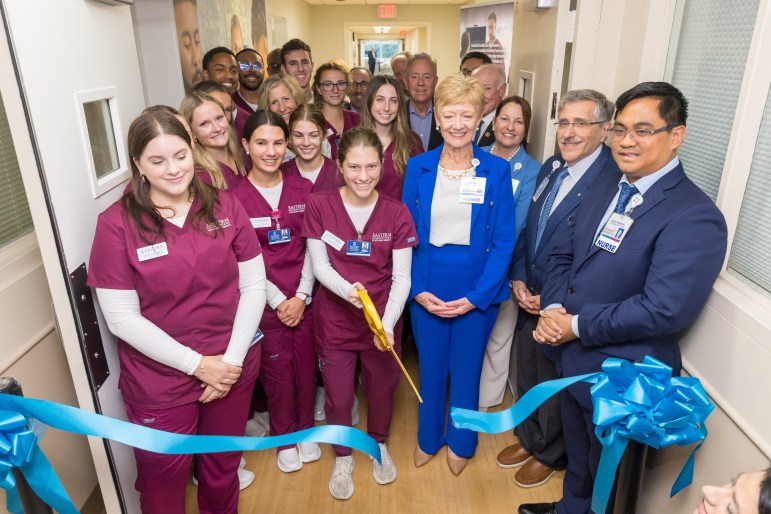
“The opening of the nursing simulation lab at Windham Hospital marks an important step forward for Eastern’s nursing program,” said Eastern President Dr. Karim Ismaili. “In this space, our students will learn, practice, and gain confidence in a setting that mirrors the realities of modern healthcare. Thanks to the partnership of Hartford HealthCare, this state-of-the-art training environment will prepare students with the technical skills, judgment, and compassion needed to transform lives and address the urgent nursing shortage in Connecticut.”
At Southern Connecticut State University, workforce innovation extends into emerging fields like quantum computing. Through Connecticut’s Tech Talent Accelerator (TTA 3.0), Southern is expanding its AI in Manufacturing program to incorporate foundational quantum computing concepts and launching a new non-credit micro-credential for working professionals in the manufacturing sector. This project is led by Southern’s Office of Workforce and Lifelong Learning (OWLL) and builds on the university’s existing non-credit AI in Manufacturing certificate.

“At Southern’s Innovation Hub, we are intentionally moving students beyond theory and into real-world application. Through our spiraled experiential learning model, students develop industry-informed skills that directly translate into workforce readiness, with results that speak for themselves. More than 98 percent of our Werth Industry Academic Fellows are now employed in STEM fields or pursuing advanced degrees. Higher education must serve as an active innovation engine, anticipating workforce needs through strategic partnerships, integrating emerging technologies including quantum and nanotechnology into interdisciplinary tracks, and expanding access strategies to ensure underrepresented students are part of this next generation of innovators,” said Christine Broadbridge, professor of physics, executive director of research and innovation, and director of the CSCU Center for Quantum and Nanotechnology.
Through a $3.3 million gift from Dr. Carol A. Hawkes, Western Connecticut State University will establish the Dr. Carol A. Hawkes Center for Excellence in Learning and Teaching. The gift honors Dr. Hawkes’ 24-year legacy of leadership and innovation at Western and supports key strategic investments: expanded funding for applied learning experiences; a $1.3 million foundation-designated endowment to help faculty and staff upskill in emerging technologies and digital competencies; and seed funding for high-impact innovation pilots. Together, these investments will accelerate Western institutional priorities by driving student success, advancing academic transformation, and strengthening long-term financial sustainability.

“In my first year as president, I’ve been exploring all the ways Western can grow, experiment, and celebrate its successes for the benefit of students,” said Western President Dr. Jesse Bernal. “I’ve been happy to learn also that longstanding relationships are available to help us move forward in this community.”
Together, these initiatives reflect a shared commitment across CSCU to act with agility and intention. As emerging technologies reshape industries and classrooms alike, CSCU’s colleges and universities are not simply responding to change — they are helping create it.