



This story has been updated.
In a blow to Connecticut’s ongoing efforts to procure new sources of clean, carbon-free electricity, Eversource informed state officials last month that the utility company was opting out of three publicly-bid contracts to purchase 54 megawatts of solar power on behalf of its customers.
Eversource Deputy General Counsel Duncan R. MacKay sent a letter to the Department of Energy and Environmental Protection and legislative leaders on March 27, slamming the agency’s latest round of clean-energy purchases as overpriced and likely to result in an increase of the public benefits charge.
For those reasons — as well as what he described as the lack of “comprehensive” energy strategy in Connecticut — MacKay said the company would decline to enter into the contracts.
“The prospect of committing another $238 million of customer money over the next 20 years is concerning to Eversource and is a clear divergence from a much-needed affordability lens,” MacKay wrote. “Because the pricing for the contracts is over-market and the contracts do not add value to customers in terms of materially increasing available generation supply and offering a pathway to lower generation costs, contract execution does not appear to be in the customer interest.”
The Connecticut Mirror obtained the letter from several of its recipients, as well as from Eversource.
In an emailed statement on Monday, DEEP spokesman Will Healey called the company’s decision to back out of the contracts “surprising” given the need for new power supplies to meet growing demand on the regional electric grid.
“The solar projects selected in this procurement will lower costs for Connecticut ratepayers and scored the highest in our evaluation during the bid review process. Eversource was part of that bid review process and had voiced no concerns or objections at any point of the evaluation and selection process,” Healey said. “Additionally, Eversource has raised no objection to signing contracts with Massachusetts for the very same projects they claim are unaffordable or unsupportable in Connecticut.”
He added, “DEEP is in contact with Eversource to further understand the nature of its concerns and is exploring options to ensure these projects and other current and future procurements can continue to deliver cost effective energy resources to Connecticut ratepayers.”
An Eversource spokesperson declined to comment further on the letter.
The contracts, also known as power-purchase agreements, were selected through a multistate bidding process established in 2013 to promote the development of renewable energy projects. The latest round of winners was announced in December, following an expedited bidding process that was designed to take advantage of solar tax credits that are being phased out by the Trump administration.
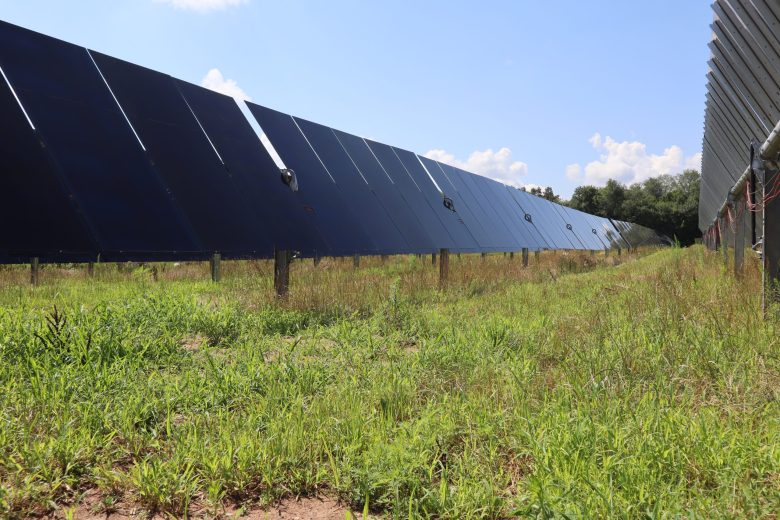
DEEP selected bids from three projects under development: Husky Solar in Plainfield and Viridis Solar and Fair Haven Solar, both in Vermont.
As part of the next step in the process, DEEP directed the the state’s two electric utilities, Eversource and United Illuminating, to finalize power-purchase agreements with the project developers at the cost determined through the bidding process. The utilities are not allowed to earn any profits off of those contracts, and instead must pass along any proceeds or losses to their customers through the public benefits charge.
Together, the three projects have a total capacity of 120 megawatts of electricity, enough to power roughly 12,000 homes. Connecticut’s share accounted for 67 megawatts, split between the state’s two utilities. Officials in Massachusetts and Maine agreed to purchase the remainder of those projects’ output.
Officials said it is still unclear what impact Eversource’s decision to forgo the contracts might have on the feasibility of the three projects moving forward.
Verogy, the developer behind the Husky Solar project, released a statement from Chief Executive William Herchel Tuesday saying the company is still investigating the situation in hopes of keeping the project on track.
“We are concerned by Eversource’s indication that it does not intend to sign contracts under DEEP’s Expedited Zero Carbon procurement, a process designed to deliver the clean, cost effective energy Connecticut and New England urgently needs,” Herchel said. “We are confident that state leaders and Eversource can find a path forward.”
Representatives of SunEast Development and Freepoint Solar, the developers behind both Vermont projects, did not respond to requests for comment.
UI has not announced any plans to withdraw from its share of the contracts, which totals about 13 megawatts of electricity. In a emailed statement Tuesday, UI spokesperson Angela Baccaro said the company supports “constructive dialogue” regarding clean-energy procurements.
“Regional energy procurement can deliver value to Connecticut by increasing electric supply across New England, particularly as we face a growing need for additional resources to maintain reliability and affordability,” Baccaro said. “For that reason, we remain engaged in ongoing discussions with developers and other stakeholders and continue to evaluate opportunities that include ‘all of the above’ forms of energy generation.”
While Eversource’s letter to state officials valued the total cost of its contracts at $238 million over 20 years, it did not reveal the per-megawatt hour price of the electricity produced by the three projects.
That price is used to determine the net-cost that ends up getting passed on to customers through the public benefits charge. Whenever the fixed per-megawatt hour price of those contracts is higher than the going rate for wholesale electricity — which is usually determined by the price of natural gas — customers pay the difference. When the contracted price is lower than the wholesale price, customers receive a credit on their bills.
The long-term contracts also offer developers a guaranteed source of revenue, allowing them sell their power to the electrical grid at a negligible cost, lowering the overall price of electricity. In determining the cost effectiveness of power-purchase agreements, DEEP has typically sought to have any increases in the public benefits charge offset by lower supply costs.
Before they can take effect, the contracts must also be reviewed and approved by the Public Utilities Regulatory Authority.
Connecticut already has similar agreements in place to purchase electricity from the Seabrook and Millstone nuclear power plants, as well as the Revolution Wind project off the coast of Rhode Island.
While the net costs of those contracts has fluctuated over the years — the Millstone deal, in particular, was widely blamed for a sudden spike in electric bills during the summer of 2024 — DEEP has estimated they are likely to save customers hundreds of millions of dollars over their lifetime.
Similar savings are anticipated from the solar projects Eversource is seeking to opt out of, Healey said.
“While Eversource has asserted the solar projects cited in their letter will cost ratepayers hundreds of millions of dollars, these projects are expected to provide over $80M in lifetime net ratepayer bill savings,” Healey wrote in an email. “The gross cost number cited by Eversource is misleading because it does not count the benefits from energy sales as well as the market impacts of lower energy and capacity prices.”
In addition to DEEP, Duncan’s letter was sent to leaders of both parties within the Connecticut General Assembly. The letter also included a lengthy critique of the state’s current energy policies.
Specifically, the letter compared Connecticut’s approach to neighboring Massachussetts, where Duncan noted officials have enacted a statewide Clean Energy and Climate Plan and well as a “roadmap” outlining strategies for slashing the state’s emissions by 2050.
By contrast, Duncan said Connecticut lacks a clear strategy for the rollout of its clean energy programs, making it harder for utility companies to participate.
“This is not to say that Eversource does not have concerns with the affordability of clean-energy policies in Massachusetts — and it does,” Duncan wrote in a footnote. “It is clear that energy policy across the region is at a crossroads where tough policy choices will have to be made in order to stay aligned with the demands and expectations of customers to have safe reliable and affordable energy services, while continuing on the inevitable path of a clean energy transition.”
State Sen. Norm Needleman, D-Essex, questioned Eversource’s motivation for sending the letter, which he said comes after the company’s prolonged fight against utility regulators in Connecticut that resulted in last year’s resignation of former PURA Chair Marissa Gillett.
“It feels very much like they’re putting their finger on the scale of the political conversation going on right now,” said Needleman, who serves as co-chair of the legislature’s Energy and Technology Committee. “I think it’s ill conceived, ill timed, and I’m very concerned about our long-term partnership with Eversource as utility in the state of Connecticut.”
After this story published Wednesday, Needleman released a statement noting that in Massachusetts, Eversource can collect a 2.25% fee on the total value of power contracts selected by the commonwealth. Connecticut does not allow utilities to collect such a fee.
Senate Minority Leader Stephen Harding, R- Brookfield, said he thinks Eversource’s decision is understandable, given widespread consumer backlash over rising electricity prices. Republicans in the legislature have repeatedly sought to eliminate the public benefits charge by shifting the cost of those programs onto the state’s budget.
“They’re no angel in any of this,” Harding said of Eversource. “But I understand their perspective, which is essentially they are the tax collector for all of the policies coming out of Hartford, and these [power-purchase agreements] are an example of that.”
Democrats, including Gov. Ned Lamont, have resisted calls to have the state pay for the public benefits charge, including the cost of power-purchase agreements, citing its estimated annual price tag of $1 billion.
Later this month, PURA is expected to finalize adjustments to electric utility rates that could save a typical customer between $26 and $30 a month, as reported by the Hartford Courant. Much of the expected savings are attributable to the state’s existing power-purchase agreements, including the Millstone contract, according to the regulator’s draft decisions.