



Have you ever known someone or cared for someone suffering from substance use disorder? As a registered nurse in the state of Connecticut I care for people every day who struggle with this disease. A patient is admitted to hospital to be monitored and have a plan of care in place to better their health. During the admission process I assess my patient, ask them questions to better understand their background and what led them to coming into the hospital. Some patient admissions are more hazardous than others. On one summer day at work in the hospital a patient had belongings with them that included syringes, pills, and a powder substance.

What if I was stuck by one of these needles? Or what if I ingested this unknown powder substance when moving this patient’s belongings? Believe it or not, right now, as a frontline health care worker I do not have access to the nasal spray form of the overdose reversal drug naloxone, or training in how to use it. This interaction started me on a journey to make a change within the hospital.
The drug overdose epidemic continues to intensify in the United States. The Connecticut Department of Public Health reported that from January to December 2022 there were 1,467 confirmed fatal overdoses. The 2023 data available reports that as of the 1st week of March there were 210 deaths, approximately 81.8% involving fentanyl. The statistics above show that in 2022, there were 1,173 opportunities for a first responder or frontline healthcare provider to face the risk of a secondary exposure to fentanyl or a fentanyl analogue.

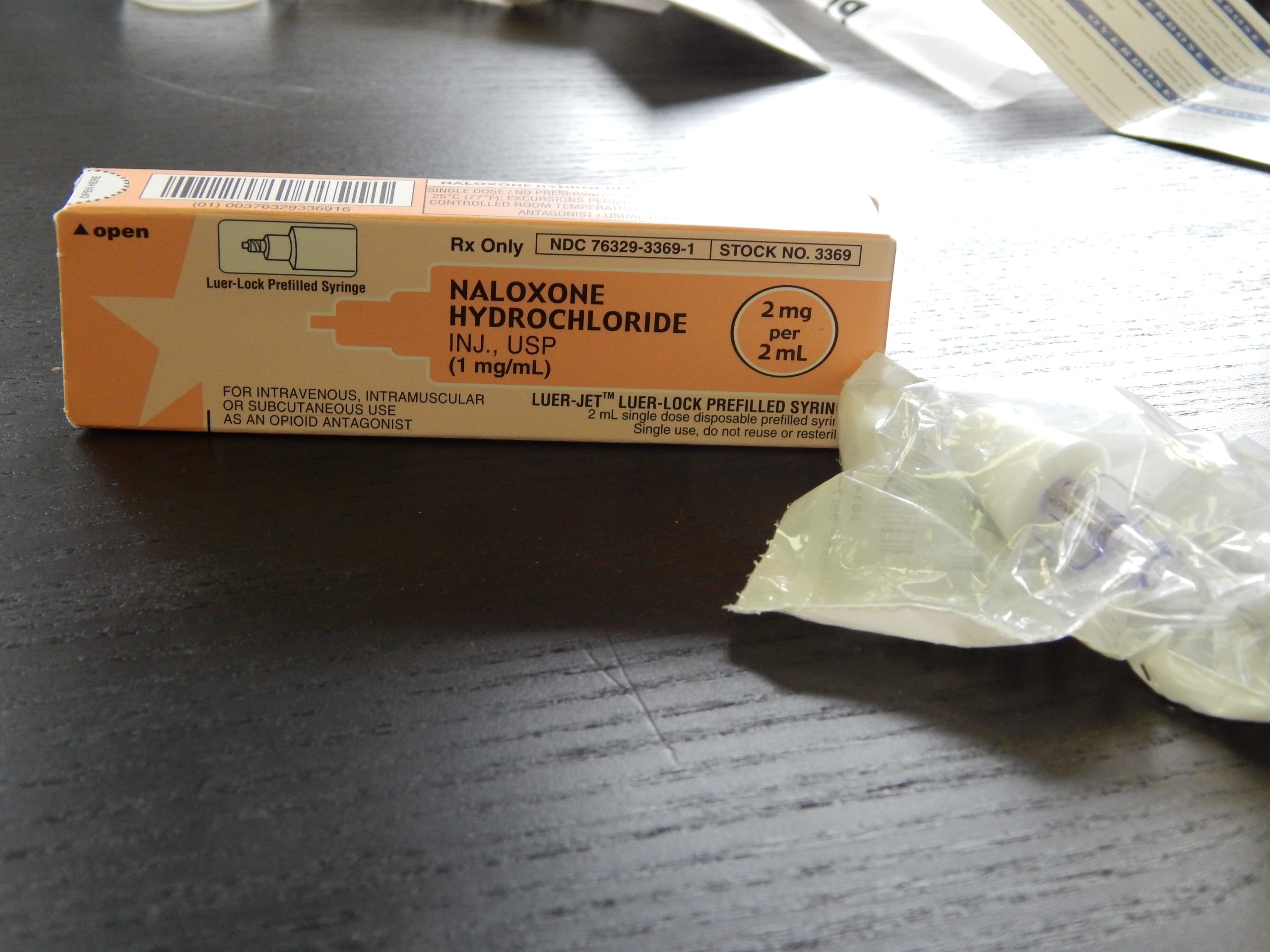
Naloxone is an opioid antagonist medication used to reverse an opioid overdose. In 2014, through the approval of the Connecticut EMS Medical Advisory Committee and the Commissioner the Department of Public Health, the Connecticut EMS provider scope of practice was expanded to include the administration of naloxone. Connecticut state troopers were the first law enforcement officers in Connecticut to carry this life-saving medication, with the added benefit that intranasal naloxone can be used to protect officers’ four-legged partners if exposed to an opioid in the line of duty. In January 2023, State Rep. John-Michael Parker proposed bill No. 5941 to the Connecticut General Assembly. The bill would have provided training on secondary exposure to fentanyl and required all first responders to carry naloxone. But so far, this bill has not been passed.
[RELATED: Over-the-counter Narcan to be available in CT in the coming weeks]
First responders transfer patient care when necessary to frontline health care providers like me in the inpatient hospital setting. In addition to and support of proposed Bill No. 5941, because first responders and health care personnel work in unison providing patient care, it should be a requirement for health care personnel in the inpatient hospital setting to have access to intranasal naloxone and receive annual training on preventing exposures to illicit drugs.
The Centers for Disease Control and Prevention with the National Institute for Occupational Health and Safety (NIOSH) provide education on preventing health care personnel exposures to illicit drugs. The information includes standard safe operating procedures, potential exposures, PPE recommendations, training topics and decontamination steps. The CDC and NIOSH propose that employers provide training on the department’s internal procedures along with NIOSH’s recommended Standard Safe Operation Procedure, so why is this not being done, particularly in a high-risk hospital setting?
In the 2022 Connecticut legislative session, Public Act 22-48 implementing the Governor’s budget recommendations regarding the use of opioid litigation proceeds was passed into law. The Act established an advisory committee, co-chaired by the Department of Mental Health and Addiction Services, and a representative from the municipalities. The public now has a guarantee that the proceeds received by the state from the opioid litigation settlement are distributed appropriately. The Act states that the proceeds will be spent on substance use disorder abatement infrastructure, programs, services, supports, and resources for prevention, treatment, recovery, and harm reduction with public involvement, transparency, and accountability.
With the CT Opioid Settlement, state representatives like John-Michael Parker advocating for change, and the voices of health care personnel in the state of Connecticut I want our state to use this funding to support the safety of first responders, health care personnel and the public. There is not enough education provided to us in health care surrounding the drug overdose epidemic. It begins with each of us; let us work toward the solution to this continued fight. The start is with these changes: access to intranasal naloxone and training to prevent exposures to illicit drugs in the inpatient hospital setting.
Francesca Annunziato-Royer is a Registered Nurse at Yale New Haven Hospital. She is advancing her education at Sacred Heart University in the Doctorate of Nursing Practice – Family Nurse Practitioner Program.