



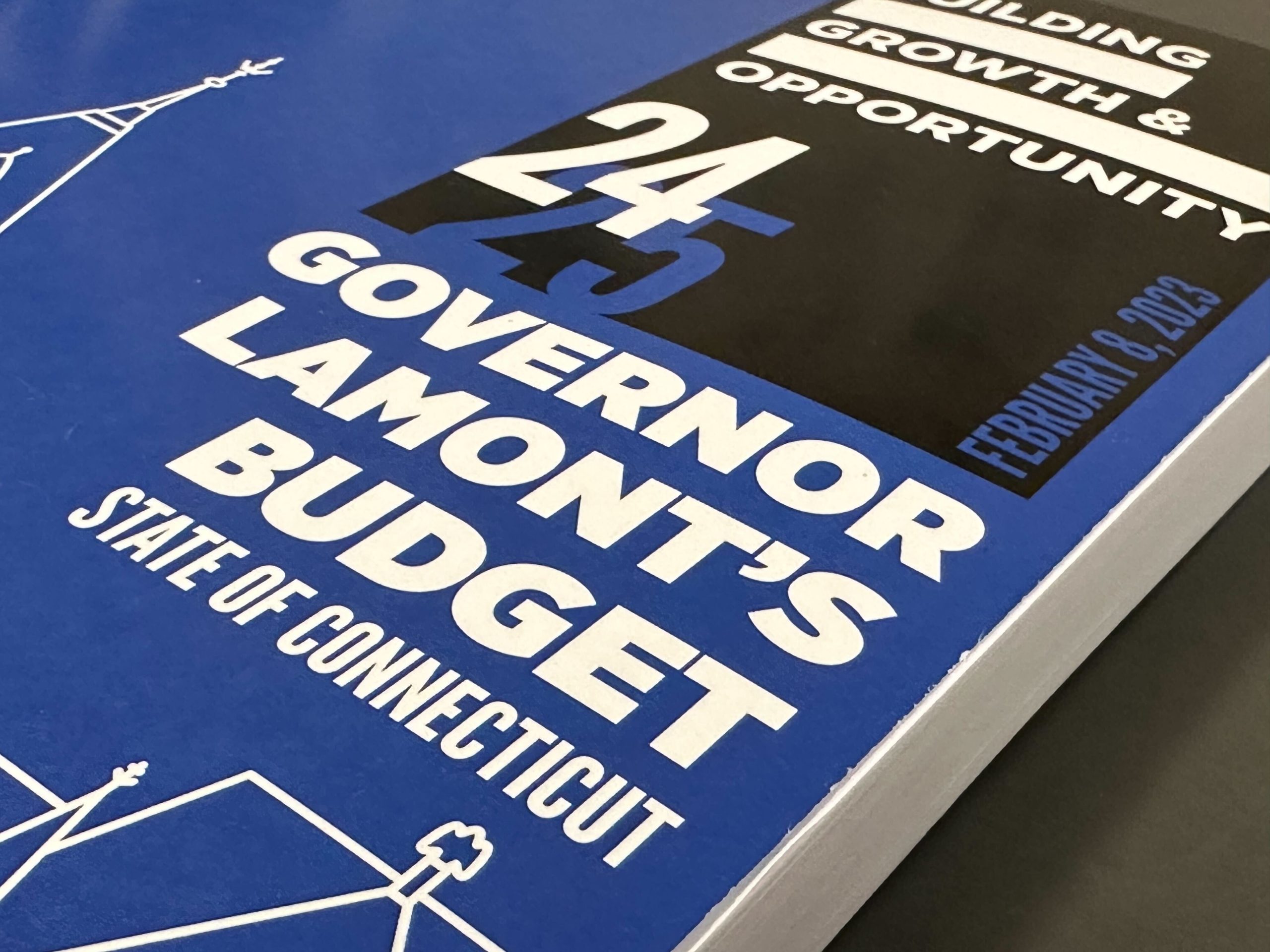
If your state were home to the nation’s highest income per capita and imposed one of the country’s most burdensome tax systems, you would consider it nearly impossible for your state to also have the highest debt per resident. And yet, that’s precisely where Connecticut was before the bipartisan implementation of the “fiscal guardrails” in 2017.
These positive reforms have stabilized the budget process, helped us pay down burdensome debt, and made it possible for your income taxes to come down for the first time in decades.

A recent three-part series — written by CT Mirror budget reporter Keith Phaneuf, one of the go-to sources for information on state finances — offers a sharp criticism of the guardrails. Ultimately, the report largely blames the reforms for insufficient funding of everything from nonprofits to health care, higher education and more despite continued increases in spending.
Comptroller of Connecticut Sean Scanlon quickly defended the guardrails and highlighted a key point that undermines criticisms from dissenters: “Because of our adherence to the guardrails, we freed up almost $650 million this year that would have gone to debt service, but now can go to social programs or to help pay for the historic tax cut that took effect on Jan. 1.”
Fiscal guardrail dissenters seem to think everything that could have received more taxpayer money over the past few years deserved to have it. This is clearly not the case. In fact, the CT Mirror’s report highlights where the real problem lies: our state’s high cost of living and stagnant economic growth.
When you read about the retiree with medical payments and a mortgage to make or the single mother working to earn a degree, every one of us wants that person to have what they need — not just to make ends meet — but to thrive. Of course, we could just spend even more money taken from taxpayers and recreate the cycle of overspending and budget chaos, or we could work to break down the barriers that drive up costs for us all.
The list of barriers to prosperity is long, but policy changes can empower the people who need financial assistance the most. We could repeal costly certificate-of-need laws and expand telehealth capabilities; lower business regulations and reduce zoning restrictions; stop proposing bad policies like “one fair wage” and get the federal government to repeal the Jones Act.
Additionally, Connecticut is one of the most expensive states in which to retire. We have some of the highest costs in the nation to build a home. Our energy costs are routinely the highest in the country, with the state’s Renewable Portfolio Standard costing Connecticut millions. We have burdensome occupational licensing requirements which, thankfully, Gov. Ned Lamont has now made a priority for reform.
Inflation also weighed heavily upon all of us over the past few years. Profligate spending at the federal level and supply constraints exacerbated by pandemic-related policies may be the problem, but more government spending is hardly the solution. Rather than dismantling the fiscal guardrails, which include inflation adjustments already, we could pare back excessive spending.
The film tax credit has largely wasted millions, and organizations like Yankee Institute, CT Voices for Children, and the Office of Policy and Management have all argued against its expansion. Labor negotiations with the State Employee Bargaining Agent Coalition (SEBAC) should be improved so that outcomes for government workers become better aligned with taxpayers.
[RELATED: Spotlight on film tax credit as DECD reports to legislature]
Higher education continues to receive millions of tax dollars every year, yet they claim they are “losing” money from the expiration of temporary pandemic funding. Counting this a “loss” is the type of math that only works in government and in massively subsidized industries. As they mismanage their funding, these institutions continue to saddle students with large debts with less and less to show for it.
We could also ease tax burdens on Connecticut residents and businesses. The “temporary” corporate business tax surcharge could finally become a policy of the past. We could adopt a de minimis exemption for tangible personal property that benefits small businesses, among other reforms that build on the recent income tax reduction.
As Phaneuf notes, Connecticut’s state budget increased by 24% since the adoption of the fiscal guardrails; they’re hardly draconian measures. A 24% increase to our paychecks over the same period would leave most of us ecstatic.
The fiscal guardrails are helping the private sector consider Connecticut as a place to do business again, giving us a chance to shake off the economic malaise that’s plagued us since the Great Recession, once and for all.
Last year, the General Assembly made a wise — and unanimous — decision to recommit to the fiscal guardrails for another five years. Rather than looking to undermine that decision, let’s focus on how we can truly make it in Connecticut.
Bryce N.Y. Chinault is the Director of External Affairs at Yankee Institute for Public Policy.