



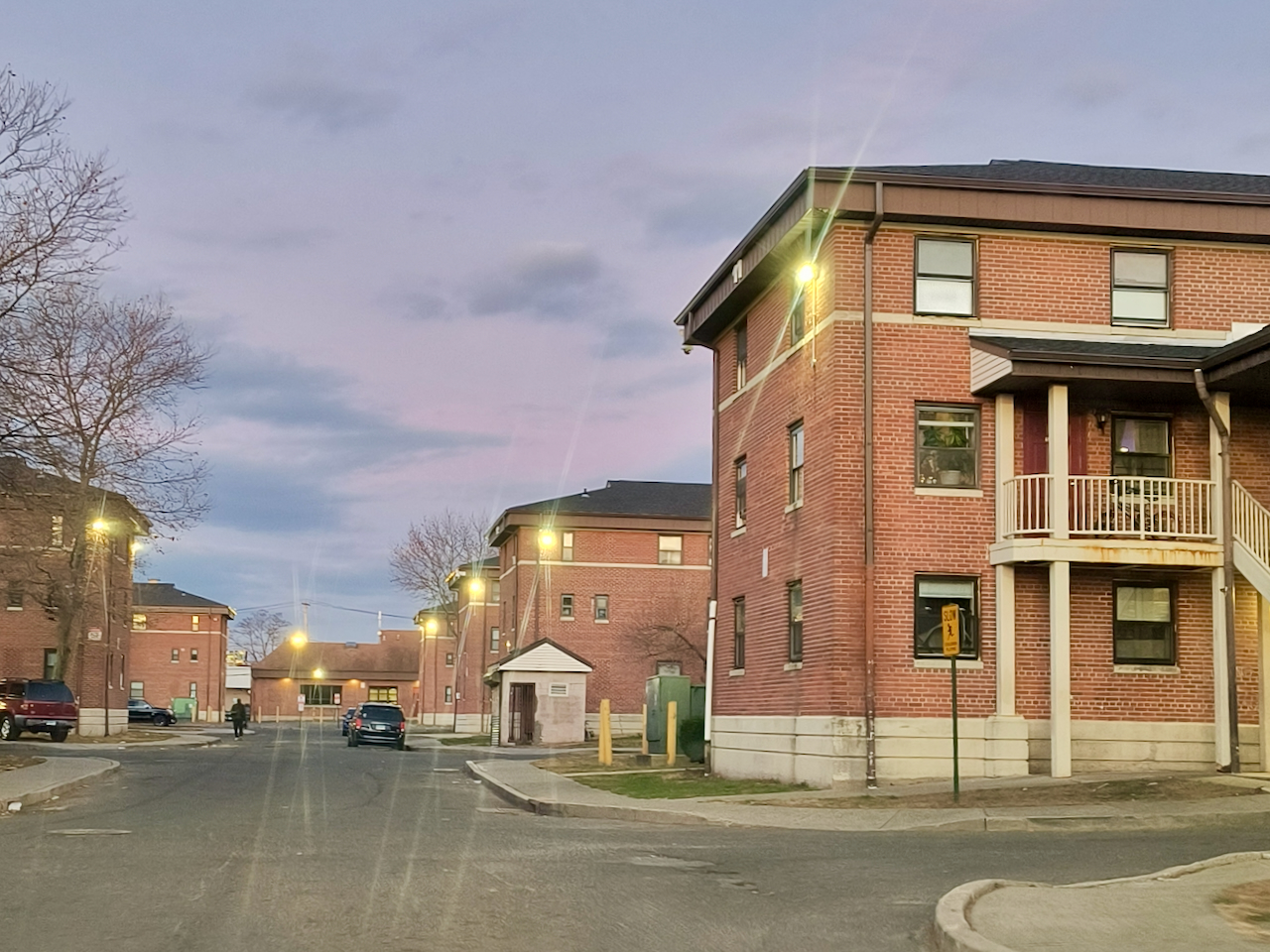
We know that having access to a decent and comfortable living space is a basic human right. When it comes to actual housing, somehow we as human beings have managed to separate that as something to be earned, and a luxury to be had. This in turn becomes segregated into classism, racism, socialism, geography, and so much more. It’s like there’s set rules to a game, and exceptions to those rules, that some of us have no clue we’re playing.
I live in low-income public housing, aka the projects, aka the ghetto. It causes people like myself to be looked down upon, when we have to apply and obtain public assistance living, such as subsidized housing, or Section 8 vouchers or a senior living apartment dwelling. These seniors are the people who are on fixed income. Someone’s mother or grandmother, looked down upon, as less than humans, by people who think of themselves as better off, and more deserving. Superior to the folks that live in these places.

We are real people that live here! The cornerstone of the community, if not the city. We are the people that when COVID-19 struck, the same society that had looked down upon us, started calling us “essential workers.” The majority of us that live here are the ones that have those service jobs that they needed us to keep during COVID. The ones they called heroes because we are food service workers, or school bus drivers and monitors, or working in the medical field in some way shape or form. home health aides, certified nurses assistants and more.
This kind of division draws the focus too much from what’s really happening. That these complexes of dwelling were really put in place, by the system that was supposed to help, but only ends up doing harm instead. Instead of helping it adds to whatever crisis that brought the people who are in need to this point of their life and situation to begin with.
When it comes to low-income public housing, not many people understand why it looks the way it does, sounds the way it does, or even feels the way it does. They may even wonder why we are still here, for that matter. It’s a place that is supposed to be for a temporary placement, a help up, if you will, to set you in a better position, until you can get back on your feet and be on your way to the journey you first started for your life to begin with.
As this is subsidized housing, your rent is income based. The way the system for this part is set up, it calculates your rent according to your income. The math that is used for that, we have yet to figure out.
As a person who lives here, you don’t really get to know all of the inner workings of these things, especially when you’re going through the application process. They may even just merely mention some things that they have to, such as the level of rent payment, especially because that is information you have to provide in all the paperwork you start with. Some other things they may mention if you have to sign for, such as when to notify them of changes.
The implication of these procedures don’t really come across to you and how the process really works, until you’re going through it yourself. This is when you find out it doesn’t really work in your favor either. It always falls on their side. The calculation of your rent is made on 30% of your gross and not your net income. If your income increases, and you notify them of this change, they will immediately go ahead and make sure those changes take effect ASAP. This will also mean that your payment will now increase. But when the opposite happens, if there is a decrease in your work hours or income, the change process is not immediate, and therefore does not take immediate effect, which then means, if you’re supposed to be paying less, this will not be happening soon enough, and that isn’t retroactive either. This is how things tend to work in their favor rather than the people who are living the life that wraps them up in these processes and procedures.
And there are other nuances one has to deal with coming and going and trying to live as normal in our daily lives. Such as catching a taxi when coming from a grocery store, or getting food delivered, or anything else delivered for that matter. It’s not exactly a place that looks or feels welcoming to outsiders who aren’t a part of the community. Getting food or maybe a mail order product delivered is a job in itself. Making sure that the address is very complete on the company’s end is hard. The building and apartment numbers can be confusing, and there is no “front desk”/ office to drop off these products or food at. Food delivery doesn’t happen after a certain time. It’s like they have a cut off time in the evenings, usually when one really needs that service. Sending over food by the famous Uber Eats, or a local Pizza place can get into the weeds – at times you might not get your food at all. Sometimes when ordering the food for delivery, when they hear the address they will tell you right after that, they don’t do delivery at that address. When asked why they will give some excuse that might sound reasonable to them, but of course all kinds of inconvenience for you, that it’s because they don’t have enough drivers, or that their drivers won’t’ go to that area.
Getting a ride share isn’t any better — it can be just as bad if not worse, when they refuse to enter the complex to do any pick ups. And sometimes you don’t even accept the kind offer of a ride from a co-worker, because you already know how it will end.
I once had to take a job that was so far away from where I lived, it took two buses and about two hours to get to work on time. The shift hours that were available for a good pay was at a time that took me away from picking up my daughters at the time from school, and also put me at risk of being stranded if I couldn’t afford a taxi. This was a constant battle with my work schedule.
I remember the day I knew I couldn’t do it anymore was one winter, when I was pregnant and having health problems. The snow fall started while at work, so it couldn’t really be avoided. A co-worker, someone I like to think of as a good samaritan, was kind enough to take me home. What happened that night had me feeling so horrible that I did consider either quitting or just not asking anyone else to take me home anymore. Driving home in it was dangerous. The plows and sanders were out, but they didn’t get it all as no one was really prepared for that much snow. So by the time we got to where I lived the roads were clogged with snow, and to be as careful as possible the person that was taking me home decided not to go all the way into the complex. But when they dropped me off at the gates, and made that turn to leave, all we heard was the tires spinning in the snow. I felt badly for having them come all this way just for me, and now they got stuck.
As I’ve mentioned before, there are also elderly people that live within this community, and they have health issues that require frequent doctor visits and even others that aren’t elderly. Because our health is our wealth, and is always an issue in our neck of the woods. Where I live, we are right next to an industrial complex and a Water Pollution Control Authority – in other words a sewage plant. A company that is just one of the eight industrial plants that is right next to the housing authority of our community. We didn’t come upon these industries by moving ourselves right next door to them. They were built there after the community was established. It’s just one more indication that no one considered that real people live here, and that we would eventually be affected by all of the effects of having those industries so close to our homes. It didn’t even occur that this kind of living just wouldn’t be healthy for us at all.
So the next time people of our society, people from the outside world of our community complex living, look in, do not judge us without knowing the full truth. Do not bring in more polluting industries just because you think we have the space for it, when in reality it can bring more harm than help to us.
It’s time the legislators use their efforts and power to make the change and shift the narratives, on how the government set these communities up, for real people, to live real lives in, then proceeds to neglect them as a normal part of society. Our political leaders need to start making sure that this community they build is on solid ground, and by solid I mean not on waste lands, not in an industrial complex, to deal with all the afterthoughts and wastes that the whole city uses and flushes our way, which can become detrimental to our health.
Don’t put stumbling blocks in our way, and then ask us to keep moving forward to progress in life. We are still dedicated to what we do – our essential workers jobs – because we were always doing it. It was our livelihood, the bread and butter that feeds our family. And that is all we want to do and keep doing, without roadblocks, or extra hurdles to jump over, just so we can only end up surviving instead of living.
Dione Dwyer is a member of the Connecticut Mirror’s Community Editorial Board.