



As an elected Democrat, it is not often I find myself aligned with Republican U.S. Sen. Mitch McConnell. This week, however, we found rare common ground on the subject of U.S. elections.
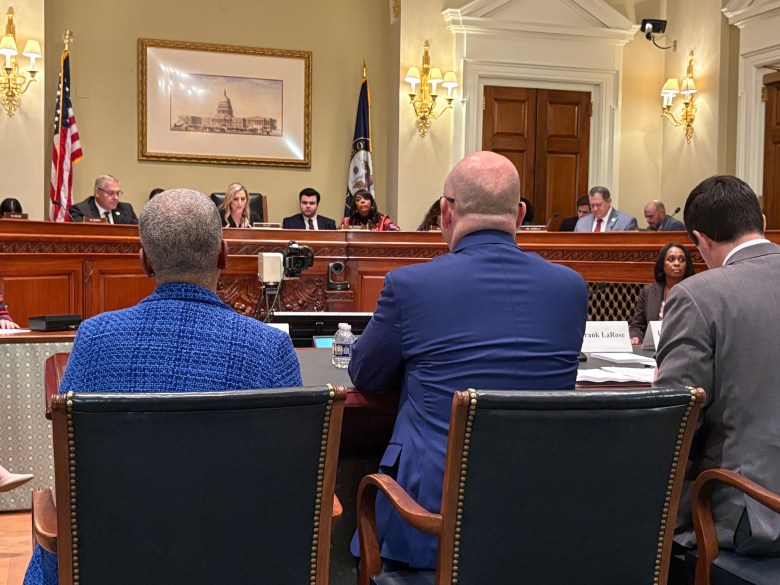
On Tuesday, I testified in Washington, D.C., before the congressional Subcommittee on Elections, where in addition to sharing the process Connecticut undertook to successfully implement Early Voting in 2024, I implored House members on the Committee to leave the authority to run elections to states.

Sen. McConnell told the Wall Street Journal that even though elections have national consequences, “the power to conduct them rests in state capitols. No public mandate, real or perceived, lets Washington tamper with this authority.
I couldn’t agree more. Centralized control of elections by the federal government would impose a one-size-fits-all policy that would actively undermine, rather the support, the ballot box access and security states like Connecticut provide.
There are currently two federal items that should be of interest to every Connecticut resident:
- The SAVE Act, which passed the U.S. House of Representatives on Thursday, April 10.
- The “Preserving and Protecting the Integrity of American Elections” executive order issued by the President last month and due to take effect on April 26.
Both the SAVE Act and the executive order would be bad for Connecticut, bad for voters, and bad for taxpayers.
And as your Secretary of the State, it is important for me to explain why.
On paper, the measures sound simple enough. Both require producing documents that prove citizenship before voting in person, penalties for getting it wrong, and use of federal databases to aid in verification, among other measures. But unfortunately, it is not that easy.
In Connecticut, only a handful of towns have full-time registrars of voters, so it is hard to imagine how towns will staff in-person voter registration. Over 30 percent of our current registrations come through the DMV, and even more through the mail, but these would be eradicated. No more registration drives on college campuses or making an address change the same time you visit the DMV. Every registration and change would require you to prove your citizenship status.
Your local election worker would also need to become an expert and trained in verifying documents. Passports and birth certificates sound fairly easy, but what about marriage licenses, divorce papers, adoption papers, and the plethora of other documents that may need to be produced to prove your identity? And yes, it’s confusing because the executive order doesn’t actually say that a birth certificate is valid evidence of citizenship, because that would conflict with the January executive order about birthright citizenship. And no, you cannot use the REAL ID you just spent so much effort to procure.
Starting to get the gist about the complexity? Similar laws in other states have led to a plethora of issues: mistakenly blocking people who were later proven to be citizens; a woman married three times, who had long ago lost the divorce papers from her first marriage, and was unable to vote because of it; an elderly parent moving into a nursing home and unable to locate their birth certificate; a military member overseas and suddenly unable to use their military ID as proof.
Our election workforce would also need to become proficient in several federal databases. In addition to the data privacy issue of EVERY local election worker around the country having access to the SAVE database, the Social Security Death Index, and “any federal database” needed, we have the practical consideration that many of these databases only allow for one-by-one lookups, utilizing information that election workers don’t always have. Training in usage and staff time for the look-ups are a real cost to towns.
According to the SAVE Act, access to the databases is to be provided for free “within available appropriations.” Anyone who has been around legislative circles knows that is code for zero funding is coming. Towns would be required to pay the federal government for access to these databases — a cost most municipalities cannot afford — and for election workers who may inadvertently make a mistake in approving a voter, there is the threat of stiff penalties, including jail time.
States are being provided 30 days to make these changes and more. We cannot ask Connecticut’s hardworking, committed registrars of voters to take on these responsibilities without training, funds, extra staff, or any of the many other resources they would need to begin doing all these new processes immediately Not to mention the chilling effect it will have on retention. The last thing we need is to lose experienced election workers who would rather leave the job they love than face the threat of jail for an honest mistake. Who among us never makes a mistake?
Ultimately, the costs would be borne by voters, Connecticut towns, and you, Connecticut taxpayers.
Good legislative policies solve problems without creating new, worse ones. They also provide the time and resources needed to make the new laws work. This is not the case with either the SAVE Act or executive order. We must prioritize American citizens in our election policy instead of making millions of voters jump through complicated hoops to prevent the infinitesimal number of possible non-citizens from voting.
I will never tell you how to think, but to stop and think and read documents yourself, instead of relying on social media and headlines.
This is democracy, and we must use civic engagement to defend it. The most important part of being civically engaged is being informed. You may find the SAVE Act here. and the executive order here.
Stephanie Thomas is the Connecticut Secretary of the State.