This story has been updated.
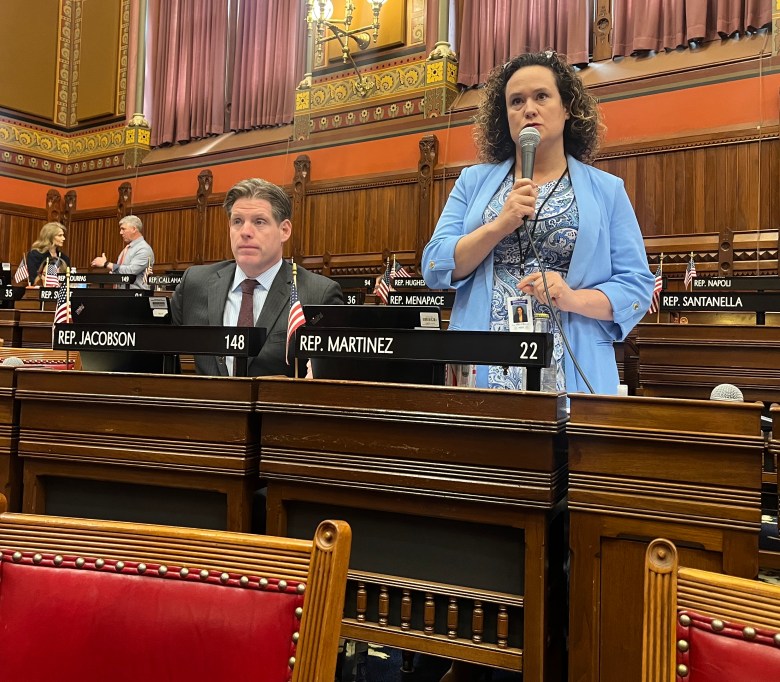
The Connecticut House of Representatives on Wednesday spent hours debating a bill that would strengthen protections for mobile and manufactured home owners, many of whom are seniors, but decided to stop the discussion in the face of Republican opposition.
The sticking point — even in a limited capacity — was a proposal to create a rent cap.
Mobile home owners typically own their homes, but not the land they sit on. Residents pay rent to the park owner on the land. House Bill 5428 would limit annual rent increases to 2% of rent plus any increases in the annual consumer price index and provide a process for park owners to appeal that limit in particular cases.
Rent caps were in the political spotlight in 2023 when a proposal to cap rents at apartments and mobile homes came before the Housing Committee. The public hearing drew hundreds of speakers and broad support from tenants.
The measure faced fierce opposition from landlords who said it would have limited their ability to compensate for increased costs, and the proposal was stripped from the bill before it got a vote in committee.
Republicans opposed it as well, saying it interfered with landlords’ rights and the free market. Some moderate Democrats weren’t sure about the measure, and it ultimately failed. Two years later, the mobile home bill, which would affect a much smaller segment of the population, likely has a tough path forward.
“I think the big concern was the whole notion of restricting how much of an increase can happen with rent, and that’s always been a concern,” said House Majority Leader Jason Rojas, D-East Hartford, Thursday morning. “It was a concern from the beginning of session with that particular bill, but because it was specific to mobile homes, some people felt that it was a bit different than your typical residential unit that might get rented.”
After about five hours, Democrats pulled the bill from debate in a move called “pass temporarily,” which is used typically to answer a question, amend a bill or end long debate.
“It was clearly getting talked, and it was going to continue to get talked,” Rojas said, adding that he was always open to a bill coming back after being passed temporarily. But, he said, he talked with Republicans and couldn’t find a path forward.
Supporters said Wednesday that the bill would help control costs and ensure seniors could stay in their homes as well as add transparency about fees.
“Residents living in manufactured mobile home parks have unusual circumstances,” said Rep. Rebecca Martinez, D-Plainville, the bill’s proponent. “One of their circumstances is that mobile homes are not actually that mobile. It costs a lot of money for one to move their home — upwards of $20,000. Due to the fact that there haven’t been that many parks built over the last 20 years, it leaves them not many places to go.”
Republicans said the measure would interfere in park owners’ property rights and guarantee that they’d raise rents by the maximum amount every year, even in years they might not have otherwise increased rent.
“Let’s just face it. This is a rent cap, rent control,” said Rep. Steve Weir, R-Hebron. “Nowhere in history have rent caps led to more housing, better housing conditions, better living conditions for the residents. What it’s resulted in is less investments, fewer investors, fewer improvements made to the property.”
The House proposal would also limit ancillary fees such as pet fees or fees to have a washer and dryer in a home to $15, require park owners to disclose those fees ahead of time, and increase relocation payments for residents from $10,000 to $20,000 if the owner sells the park with the intent to turn it into something else, among other measures.
It would also require that park owners test the power of fire hydrants on their properties and report the results to fire marshals, a measure added in the wake of two fires at parks in East Hartford that were difficult to control because the hydrants didn’t have enough water pressure.
In recent years there has been a push from homeowners to get legislation passed that would limit rent increases and address other quality of life and safety concerns at mobile home parks.
The parks are typically occupied by people 55 years and older and are a lower cost way to buy a home. But those costs have gone up nationwide in recent years as more investor-backed companies purchase parks.
In 2023, Connecticut lawmakers passed a law that aimed to make it easier for residents to buy their parks. If a property goes up for sale, resident associations must be offered the chance to match any offers and purchase their park.
But residents have said owners have found ways around that law by creating complicated purchasing structures or selling the parks as part of a package of several properties.
Republicans said Wednesday that there were things in the bill they liked, particularly the sections to do with fire prevention and public safety.
But, they said, they couldn’t get past the rent caps.
Correction: A previous version of this story incorrectly said the provision that would require testing the power of fire hydrants on mobile home park properties was added in the wake of fires at parks in Danbury. The fires occurred at mobile home parks in East Hartford.