


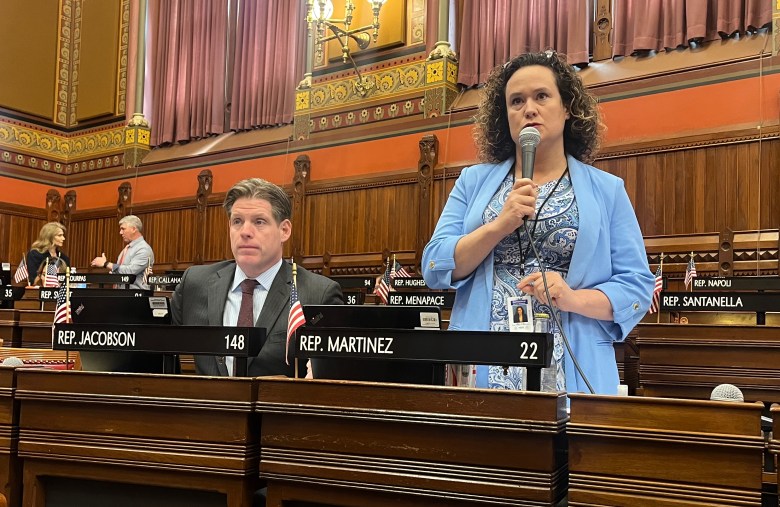
A bill that increases consumer protections for mobile home residents was stripped of any references to rent caps or fee limits and passed the House of Representatives on Tuesday evening.
Lawmakers spent hours discussing House Bill 5428 last week, only to end debate without a vote after Republicans opposed limits to annual rent increases. After Democrats amended the bill, it passed with bipartisan support 132-16.
“This bill will still deliver critical consumer protections to some of our most vulnerable residents in Connecticut, so I urge my colleagues to support this bill and stand up for Connecticut’s manufactured home communities,” said Rep. Rebecca Martinez, D-Plainville, the bill’s proponent.
The House proposal would require park owners to disclose any ancillary fees, such as extra costs to own a pet or have a washer and dryer, ahead of time, and increase relocation payments for residents from $10,000 to $20,000 if the owner sells the park with the intent to turn it into something else, among other measures.
It would also require that park owners test the power of fire hydrants on their properties and report the results to fire marshals, a measure added in the wake of two fires at parks in East Hartford that were difficult to control because the hydrants didn’t have enough water pressure.
In recent years there has been a push from homeowners to get legislation passed that would limit rent increases and address other quality of life and safety concerns at mobile home parks.
The parks are typically occupied by people 55 years and older and are a lower-cost way to buy a home.
“The revised version, as I understand it, eliminates many of the concerning pieces,” said Rep. Steve Weir, R-Hebron. Weir was one of the most vocal opponents of the bill last week, but Tuesday voted in favor.
In its earlier form, the bill would have limited annual rent increases to 2% of rent plus any increases in the annual consumer price index and provide a process for park owners to appeal that limit in particular cases. It also would have limited ancillary fees to $15 annually.
As debate went on last week, Democrats decided to pull the bill from consideration, and leadership said they realized it was going to be talked about for a long time. As the session draws to its Wednesday close, the minority party has more power by talking longer and limiting the number of bills that get passed or killing bills entirely with the promise of a filibuster.
The bill is part of a larger push over the past few years to improve the quality of life and limit housing cost growth at mobile and manufactured home parks, which are typically occupied by seniors. In most mobile home parks, the resident owns the actual structure but not the land it sits on.
Land rents have risen for Connecticut residents over the past few years as more investor-owned and large companies purchase the parks.
In 2023, Connecticut lawmakers passed a law that aimed to make it easier for residents to buy their parks. If a property goes up for sale, resident associations must be offered the chance to match any offers and purchase their park.
But residents have said owners have found ways around that law by creating complicated purchasing structures or selling the parks as part of a package of several properties.
The bill next heads to the Senate for a vote.