



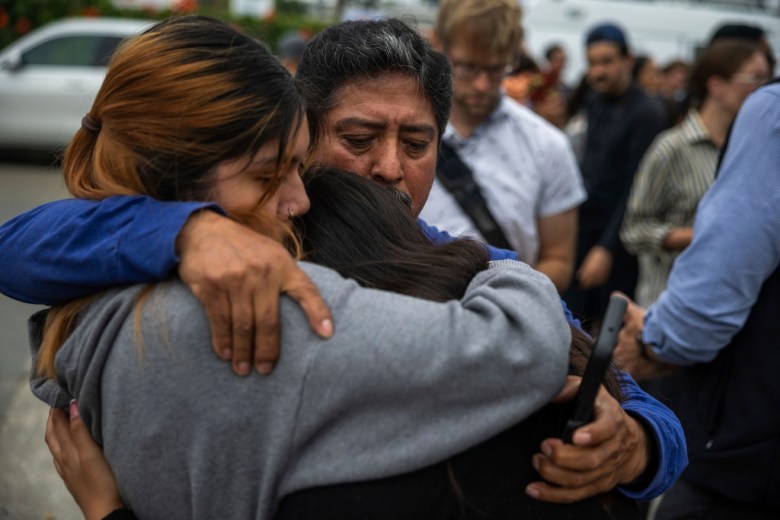
Like many Americans, I’ve watched with heartbreak the recent scenes from Los Angeles, where immigrant families and their allies are protesting the latest wave of federal immigration raids.
These images are painful to witness —parents in fear, children in distress, communities on edge. Behind these protests lies a deep and growing anxiety that families will be torn apart —not because they pose a threat to public safety, but because Congress continues to fail in its duty to pass comprehensive immigration reform.
To be clear: I do not condone violence, looting, or civil unrest. But I cannot look away from the anguish that drives these protests. These are families, neighbors, and workers —human beings— who are watching their lives unravel while political leaders in Washington continue to stall.
Reports from across the country are alarming. Word is spreading that Immigration and Customs Enforcement (ICE) agents are detaining Latino workers with little regard for citizenship status. Some unverified accounts have alleged that children were restrained during enforcement actions, further fueling community outrage.
Here in Connecticut, for example, a high school senior was detained just days before graduation. These are not isolated incidents —they’re signs of a national immigration system that’s broken, blind to justice, and devastating to families. These are not members of violent gangs like the Tren de Aragua; these are individuals trying to survive, provide, and contribute.
What’s perhaps even more troubling is the erosion of due process. Consider the case of Kilmar Abrego Garcia —wrongfully deported to El Salvador and only recently returned after a U.S. Supreme Court decision found the government had made a grave error. Regardless of the charges he faced, he was denied the most basic protection: his day in court. Our Constitution guarantees the presumption of innocence, and it applies to everyone under our laws, regardless of immigration status.
We are watching in real time as constitutional protections are weakened —not for theoretical reasons, but in ways that destroy real lives. Alarmingly, the federal administration has now deployed U.S. Marines to patrol Los Angeles neighborhoods, despite no request from California’s governor. This feels like an overreach of federal power, signaling a disturbing disregard for state authority and civilian life.
Even voices within the president’s own political party are raising concerns. Florida State Sen. Ileana Garcia, co-founder of Latinas for Trump, recently called these immigration enforcement actions “inhumane.” That tells us something important: this is not about partisanship—it’s about humanity.
The Latino community is watching all of this closely. We are frustrated. We are afraid. And we are tired of being the ones who bear the brunt of a chaotic and unjust immigration system. We need solutions —not militarization. We need reform —not fear. And above all, we need our voices heard.
Nonviolent, peaceful protest remains a powerful and necessary tool in our democracy. It’s time we use it to say, clearly and without apology: enough is enough. We cannot continue to allow families to be collateral damage in a policy failure that Congress has refused to fix for decades.
Let us raise our voices not only in protest, but in purpose —calling for real immigration reform that respects human dignity, protects due process, and restores faith in our system of laws.
History will judge how we responded to this moment. Let’s make sure we responded with integrity and humanity.
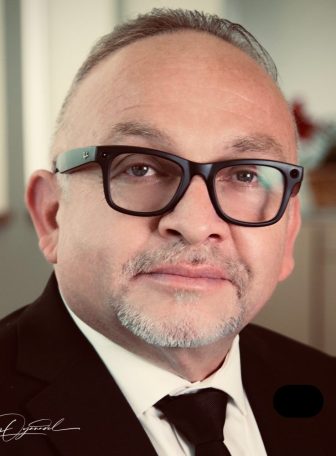
Werner Oyanadel is the Latino and Puerto Rican Policy Director at the Connecticut General Assembly’s Commission on Women, Children, Seniors, Equity, and Opportunity. The views expressed in this commentary are his own and do not represent those of the Commission or the Connecticut General Assembly. He also serves as Vice Chair of the Connecticut Immigrant and Refugee Coalition (CIRC). Born and raised in Santiago, Chile, Werner is a naturalized U.S. citizen and a proud, honorably discharged veteran of the Connecticut Army National Guard.