


|
Getting your Trinity Audio player ready...
|
On July 21, Tracy Ciccone got a call from the warden at Garner Correctional Institution in Newtown. Her son, 32-year-old Tyler Cole, was being held in the facility awaiting trial. She said she expected the call to be about some kind of “little ruckus” that her son had caused at the facility.
Instead, the warden told her that, hours earlier, Cole had been found dead.
She said she barely remembers what happened after that. “I must have yelled or something, because I remember [my husband] Jason running down the hall and picking me up off the ground,” she said.
Cole is one of 15 people who have died from overdoses while in custody of the Department of Correction since 2023, according to information from the state’s Office of the Chief Medical Examiner. The overdoses were from a range of drugs — prescribed and not — including fentanyl, cocaine, xylazine, synthetic cannabis, methadone and antipsychotic medications. They died in prisons, at hospitals, in halfway houses, and in their own bedrooms while on parole.
After three fatal accidental overdoses in 2023, there were nine in 2024. In 2025, there had been three through July, according to the OCME data.
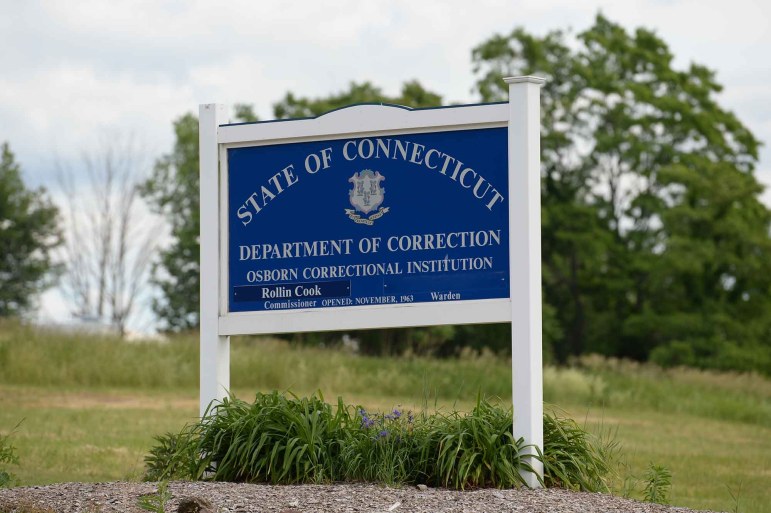
Nonfatal overdoses are also on the rise within the DOC. In recent months, the number of emergency calls for overdoses at prison facilities has increased notably — including an increase of about 30% in Somers, home of Osborn Correctional Institute.
According to DOC data provided to the correction officers’ union and shared with the Connecticut Mirror, the number of ambulance calls to Osborn for “drug-related incidents” jumped from 16 in 2024 to 41 in the first half of 2025. At Cheshire Correctional Institute, there were 18 ambulance calls for drug-related concerns in all of 2024; that rose to 19 in the first half of 2025.
Data from the state Department of Correction obtained through an FOI request shows 74 “suspected overdoses” across 11 facilities from January through July 2025. More than a third took place at Osborn.
The number of overdoses and overdose deaths reflects the intractable, overlapping challenges facing the Department of Correction: keeping illegal drugs out of state prisons and adequately treating addiction within them.
Nearly three quarters of the state’s prison population struggles with substance abuse and needs treatment, according to a 2023 report from the Connecticut Sentencing Commission. For incarcerated women, the proportion was even higher. The same report found that a third of incarcerated people have mental health disorders that require treatment. A quarter of incarcerated people have both mental health and substance abuse disorders.
Drugs coming in
A drug known as K2 is the latest substance to vex correctional staff and threaten the lives of individuals in custody. Prisons around the country are struggling to keep it out. The mixture of chemicals, often bug sprays, with other drugs like marijuana and tobacco — which people then smoke — is difficult to track because it can enter prisons on pieces of paper.
A formerly incarcerated person at Osborn Correctional Institution told CT Mirror he had seen inmates in his cell block smoking K2 by using a battery and a wire to ignite the paper and then inhaling the smoke using a pen cap or pen tube.
“I have personally witnessed inmates rip their cell apart, hide under their bed while attempting to dig into the concrete floor, vomit uncontrollably, roll around and tossing on their bunk, become agitated and out-of-control and have to be sprayed with Mace and restrained, strip naked and feel hot or overheated, while others have passed out, fainted or became unconscious,” he wrote in a letter.
The formerly incarcerated individual, who asked not to be named in this story over fear of retaliation, told CT Mirror that he’d seen correction officers ignore the presence of contraband in the facility, walk past inmates who were high and warn incarcerated people when officers would be coming to search their cells.
But officers told CT Mirror that the presence of K2 is frustrating them, too. Rudy Demiraj, a representative for the correction officers union, said the presence of K2 was causing a “dangerous and volatile environment” inside the prisons.
“I’ve never seen anything this bad,” Demiraj said, referring to K2. “I would say this is an epidemic.” As yet, no one has died of a K2 overdose in custody in Connecticut.
Joseph McCarley, a corrections officer at Cheshire Correctional Institute, said the overdoses had increased to a point where they were happening multiple times per day. If the incarcerated person was sent to the hospital, that meant officers would have to leave the already short-staffed facility, which could mean a partial or full facility lockdown, leaving incarcerated people unable to participate in activities.
“ It results in, a lot of times, facilities needing to deploy staff to handle these emergencies where they would otherwise be monitoring the inmate population,” Demiraj said.
Demiraj said claims that officers were ignoring contraband and overdoses were “baseless” but said staff might be so overwhelmed dealing with the drug usage that they were being pulled away from normal inspections and other duties.
The power of the street drugs has dramatically increased over the past, say, 10 years.
Former inspector general Robert Devlin
Other drugs, including fentanyl, are also finding their way inside.
Ashley Morin died last August from an overdose of fentanyl mixed with other strong opioids. Morin, who was 32 years old and had just given birth, had only been in York Correctional Institution in East Lyme a few days after being arrested for violating a protective order.
According to the Inspector General’s report, Morin said she was offered fentanyl by her cellmates before moving to a different cell. Officers who searched the cell found what they believed to be drugs, but the material later tested negative in a laboratory analysis.
Former Inspector General Robert Devlin said that since Morin had entered the facility only a few days before her death, it was possible she’d managed to bring the drugs with her into the prison. He said he was aware of other cases where people had died in the custody of police departments after overdosing on drugs they brought into the department with them.
“I find these cases really sad. It’s a very sad thing,” Devlin said.
Several hypotheses exist around how the drugs are entering Connecticut’s prisons, but none have been proven.
In 2023, after six incarcerated people died from fentanyl overdoses the previous year, Devlin said he was “determined to pursue” the causes of the deaths. But Devlin said in an interview with CT Mirror in early August that the department still didn’t get any answers.
He said it’s difficult to get people to cooperate with law enforcement for investigations. Devlin said his office had tried to piece together connections between individuals in custody and people they knew outside of prison, but ultimately his office was unable to find the source of the drugs.
“It’s wicked hard with substance abuse. It’s an extremely challenging thing to try and overcome it. I mean, people do. But regrettably, some people don’t. And the power of the street drugs has dramatically increased over the past, say, 10 years,” said Devlin.
And screening isn’t universal. Devlin said many people who regularly visit prison facilities — correction officers, maintenance workers, outside vendors — aren’t screened when they enter, and he suggested that the DOC employ more sophisticated testing processes.
Correctional staff suspect K2 may be entering facilities through the U.S. Mail. Demiraj said the union had spoken with the Department of Correction about either photocopying mail before it goes to incarcerated people or purchasing scanners that could pick up the presence of K2 in mail.
Andrius Banevicius, spokesperson for the Department of Correction, said the department was working on purchasing mail-scanning machines that could detect any chemicals.
Earlier this month, the state bond commission approved funding for four body scanners to be placed at York Correctional Institution in Niantic and Manson Youth Institute in Cheshire. But Demiraj told CT Mirror that the union was opposed to any requirement for officers to go through the scanners when they enter the facility, since the officers, he said, were not bringing in the majority of contraband.
Banevicius said the installation of body scanners would “provide a noninvasive and effective way to detect hidden objects such as drugs.” He said the scanners, which the department plans to install in the lobby area of each of the prisons, would improve safety and decrease the need for strip searches. He added that staff bringing contraband into the facilities is not tolerated and said anyone who did “will be disciplined to the fullest extent possible.”

Treatment on site
While many of the overdose deaths in the last three years in the Department of Correction were the result of overdoses on street drugs, Tyler Cole’s case was different. According to the medical examiner, Cole’s death was from a combination of methadone and antipsychotic drugs he was prescribed, which was being administered while he was at Garner.
A lawyer for Cole’s family, Ken Krayeske, recently filed a claim with the state’s Claim Commissioner asking for permission to sue the Department of Correction and requesting $25 million in damages.
Krayeske said Cole told medical staff he’d been taking heroin, but the facility took over a month before prescribing him methadone. On July 19, he was prescribed 30 mg of methadone. The next day, he was given an additional 40 mg. Krayeske called the increase a “pretty outrageous” jump, which wouldn’t have given Cole time to build up tolerance to the drug. Cole died July 21.
Medical doctors with expertise in addiction medicine gave different responses to CT Mirror about the appropriateness of the methadone dosage Cole received. One doctor said the dosage would have been average or low if Cole was still using heroin, but high if he had, in fact, been abstinent. Another doctor said the dosage was appropriate regardless of whether he was actively using heroin.
Krayeske said he felt it was “highly unlikely” that Cole had been using heroin while in Garner and noted that the medical examiner had not found any heroin in his body at the time of his death.
Krayeske also said that medical staff failed to evaluate Cole for symptoms of opioid withdrawal when he first entered the facility.
If you are worried about overdoses occurring while people are incarcerated, … offering treatment … is going to be part of the solution.
Dr. Ben Howell, Yale-New Haven Hospital
Cole had been arrested on several domestic violence charges, including disorderly conduct and third-degree criminal mischief, according to CT Insider.
To address the pervasiveness of addiction in its facilities, the Department of Correction administers a program known as medication assisted treatment, or MAT. The program launched in 2013, when DOC began a pilot program at the New Haven Correctional Center.
MAT provides medication like methadone and buprenorphine, which suppresses withdrawal symptoms for people addicted to heroin or opiates. The program has expanded over the years, and as of last year some type of MAT existed in 10 of Connecticut’s 13 correctional facilities.
Dr. Ben Howell, a doctor of internal medicine at Yale-New Haven Hospital and one of the authors of a report making recommendations for which programs Connecticut should invest in to address the opioid crisis, said that MAT “absolutely” decreases opioid-related deaths. He also noted that the incarcerated population, as well as people who have recently left correctional custody, are at some of the highest risk for overdoses.
“ If you are worried about overdoses occurring while people are incarcerated, absolutely offering treatment, especially for opioid use disorder, is going to be part of the solution,” said Howell.
According to DOC’s Banevicius, nurses who work for the department are required to complete an annual emergency response training that “reviews how to identify and recognize different medical emergencies including overdose, treatment and interventions for medical emergencies, and competency of emergency medication administration such as Narcan.”
Correctional officers are trained in how to identify an opioid overdose, how to use Narcan or naloxone, the effects of xylazine, and how to identify, care for and manage someone who has been using synthetic cannabinoids — marijuana-like substances.
Each facility has a supply of the anti-overdose medication naloxone and at least one substance abuse counselor, who offers counseling to people in the facility who are struggling with substance use.
But incarcerated people in Connecticut prisons are dying from overdoses often from controlled substances they were prescribed.

Just two days before Cole’s death, on July 19, 2024, 30-year-old Ronald Johnson also died of a methadone overdose at Garner. Johnson had been transferred to Garner from Riker’s Island prison in New York.
Ronald Johnson’s father, Ronald Coleman, told CT Mirror that he knew his son had a substance abuse problem, although he wasn’t sure what drug he was taking. Coleman said Ronald was outgoing and charismatic. He made rap videos that he posted on YouTube, and the two of them enjoyed playing video games together.
“He wasn’t a bad person. He just had an addiction that he couldn’t overcome,” he said.
Coleman said his son eventually became homeless in the Bronx. When he was put in prison for probation violations, Coleman said, he felt that Ronald would be safe — off the streets and with food to eat every day. He saw it as a chance for Ronald to get better.
Coleman said he didn’t understand why no one at the facility had noticed that his son was in medical distress.
Ronald Johnson’s mother, Jamie Johnson, said she couldn’t understand how he could have died from medications that the facility had prescribed.
According to an investigation by the Connecticut State Police, Johnson was found with an inmate request form in his right shirt pocket, on which he’d written that his feet were swelling, and he believed he was having an allergic reaction to methadone. One of the nurses at the facility wrote in the medical report that half of a white medication fell from Johnson’s bunk immediately after they began CPR. According to the state police report, which referred to a medical report by nurse, officials assumed the medication to be Vraylar, an antipsychotic used to treat schizophrenia and bipolar disorder. Johnson was not being prescribed this medication, according to the report.
In response to a question about Cole and Johnson’s deaths, Banevicius said the Department of Correction does not comment on current lawsuits.
“That being said, the medical and correctional staff members of the department are deeply affected and work hard to prevent any untimely death of an individual under our supervision,” Banevicius said.
The Inspector General’s Office is investigating the deaths of both Johnson and Coleman.

A strained system
The high prevalence of addiction — and the department’s struggle to keep prescribed and illicit drug use under control — has placed heightened strain not only on officers and facility staff but also on the wider social safety net in surrounding communities.
Ambulance companies that serve the towns of Suffield and Somers, where Osborn and MacDougall-Walker correctional facilities are located, have told CT Mirror that the number of calls they receive for overdoses is on the rise this year.
Data from the Somers fire department shows that it received 142 calls from Osborn Correctional Institution from January through June 2025. Of those 142, about 65 were listed as possible overdoses or “altered mental states.” A number of other calls, which listed individuals as “unresponsive,” having an “unknown medical emergency” or a seizure, could also be connected to overdoses.
Somers First Selectman Tim Keeney said the number of ambulance calls Somers received from Osborn has increased by 40% overall compared to last year. He estimates that about 30% of the calls are overdoses.
Keeney said he hasn’t fielded any complaints from residents about delays in service; the town prioritizes serving residents, he said. But town officials did try to set up a meeting with the warden at Osborn. The meeting was cancelled, and the town has had no communication with the Department of Correction since.
Banevicius said that when an individual is having a medical emergency, the department “has a legal and ethical responsibility to immediately seek appropriate medical attention for the affected individual, which includes contacting emergency medical services without delay.” In the same way, he said, ambulances have the responsibility to “respond promptly” to emergencies.
John Spencer, chief of the Suffield Volunteer Ambulance Association, said they noticed an uptick in overdose calls to MacDougall-Walker Correctional Institute in Suffield in April. He also said calls to the prison have represented an increasing percentage of the calls they receive. From July 2023 to June 2024, Spencer said, about 10% of their calls were from the prison. The following year, from July 2024 to June 2025, that had increased to 15%.
Spencer said the ambulance association had no problem responding to calls at the prisons but said that the cost of responding to these calls is often more than the amount they are paid through the state Medicaid program.
According to data prepared for the correction officers’ union by the state, the cost of emergency medical transports to prison facilities in Connecticut was about $539,000 for the six months from January through June 2025. In comparison, the cost was about $746,000 for all of 2024.

No antidote for grief
Meanwhile, the family members are dealing with their grief. They say they want accountability for what happened to their sons.
“It was unimaginable and it’s hard,” Ronald Johnson’s mother, Jamie, said. “I’ve been living with this every day. I think of my son every day. How? Why? What really happened?”
She described her son as a “standup person” — someone friendly who would stick up for people who were being bullied.

His father Ronald Coleman said he processed the grief mainly by throwing himself into work. He works in security and started making DoorDash deliveries. He got his commercial driver’s license, something he said he’d talked about doing with his son, so they could go trucking together.
“No amount of money is going to bring my son back. That’s not my thing. My thing is, how many other young men is this going to happen to before somebody notices that there’s something wrong?” he asked.
After Ciccone, Cole’s mother, found out the cause of death was methadone and prescription drugs, she started looking for an attorney. She said she couldn’t understand why Cole received methadone a month after he’d already been at the facility.
Ciccone said her son enjoyed fishing and that he worked for a period of time with a neighbor who did landscaping. She said he also enjoyed spending time with his son, Brantley, who looks just like Cole did when he was young.
Cole was doing well for a few years after his son was born, Ciccone said, but things would get difficult when he didn’t take his medication for bipolar disorder. Cole ended up back in Garner after violating a restraining order, which was a violation of his probation, Ciccone said. He was still waiting to go to court when he died in Garner.
Ciccone said she can’t talk about her son’s death; if she does, she’ll burst into tears. She channels her energy into her grandson Brantley, now 9 years old.
“It was our job to make sure he grew up with everything he ever wanted or needed,” she said.
