


At The Connecticut Mirror, our core coverage area is Connecticut politics and public policy. We cover public officials’ actions — the bills they propose, debate, and pass (or don’t pass), as well as the trials they hold, the lawsuits they file, and the elections they win or lose.
But we also tell the stories of Connecticut residents.
That storytelling can take several forms. Sometimes, it’s a story about how an old or new law is affecting people’s lives. Other times, it’s a quirky, under-the-radar story about life in our state that may or may not have a direct tie to public policy.
Our top 10 stories this year, defined by engaged minutes — the total amount of time people spent reading them — exemplify that mix. The list includes part of an investigation that led to legislative change, the verdict in a high-profile trial, practical information about energy charges and new laws, and a feature on the nation’s oldest public ferry.
As 2025 comes to a close, we hope you enjoy looking back at the stories that readers spent the most time with this year.
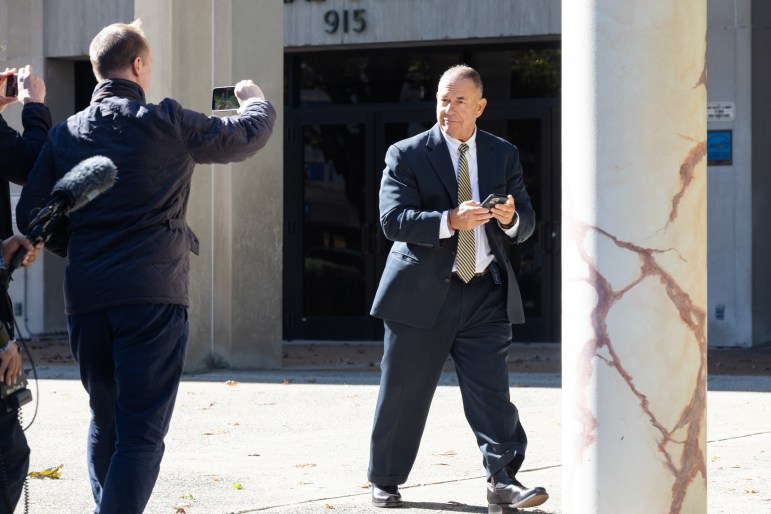
1. Kosta Diamantis guilty on all charges
Konstantinos Diamantis, Connecticut’s former deputy budget director, was found guilty in October of 21 counts of bribery, extortion, conspiracy and lying to federal investigators. During his trial, several witnesses told the jury that Diamantis used his influence at the state’s school building office to help companies win lucrative construction contracts on several projects. (Published Oct. 22)
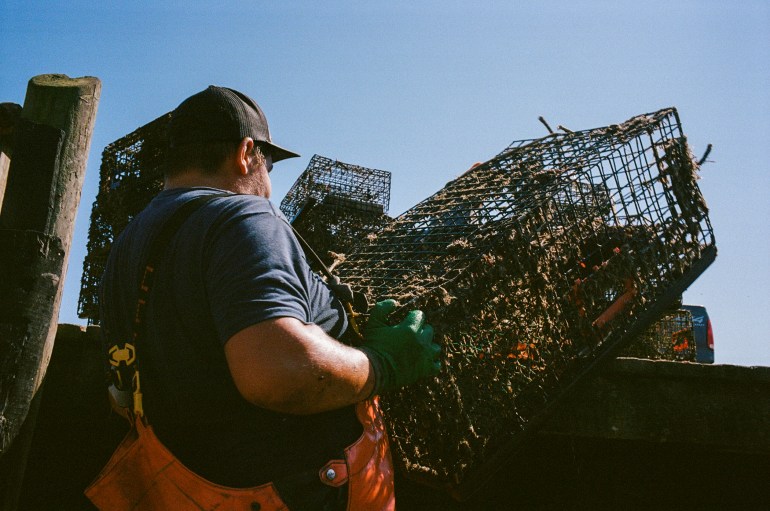
2. 26 years after lobster die-off, CT lobstermen reflect on a net loss
The Long Island Sound lobster industry, formerly the third most-productive in the country, was decimated practically overnight in 1999. There are no more full-time commercial lobstermen in Connecticut, but there are still a few part-timers who are keeping the tradition alive in Stonington. (Published Oct. 19)
3. It’s the oldest public ferry in the country. Here’s what keeps it afloat
The Glastonbury-Rocky Hill ferry has been crossing the Connecticut River since 1655, weathering wars, revolutions and threats of bridges. The “four-minute cruise,” a trip that could otherwise become a 13-mile trek on highways, has become a source of local pride. (Published July 20)

4. Adrian Peeler, convicted in murder case, gets clemency from Biden
Adrian Peeler, who was convicted of conspiracy in a brutal double murder that led the state to create a witness protection program, was granted clemency by former President Joe Biden shortly before he left office. Peeler was initially sentenced to 25 years in prison for conspiracy to commit the murder of Karen Clarke and her 8-year-old son, Leroy “BJ” Brown, in January 1999. (Published Jan. 21)

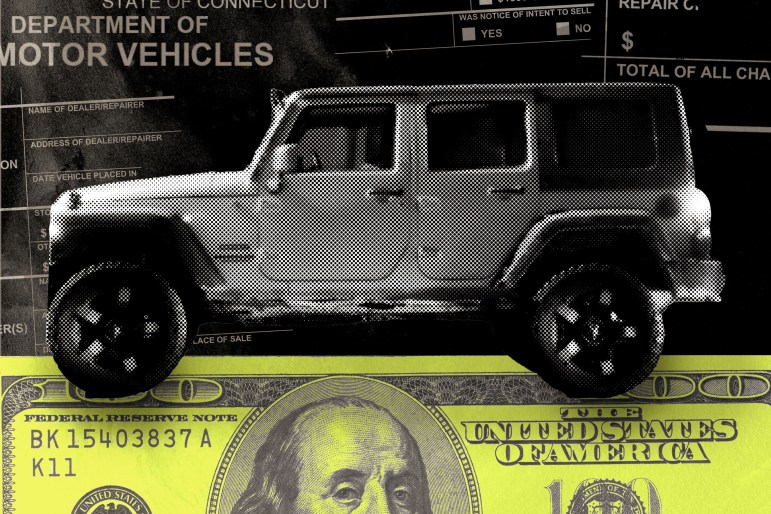
5. How a CT DMV employee made thousands by selling towed cars
A towing company cut DMV lines in exchange for discounts on towed cars, an internal DMV report says, showing the agency’s oversight failures during a process that allows tow companies to sell cars they’ve towed after two weeks if the cars are valued at under $1,500. (Published March 7)
6. Bigger Social Security checks coming to thousands in CT
Two longtime provisions reduced, and in some cases, eliminated Social Security payments for beneficiaries who also collected a pension from jobs that were not covered by Social Security. But those two provisions were repealed under the Social Security Fairness Act. (Published March 21)

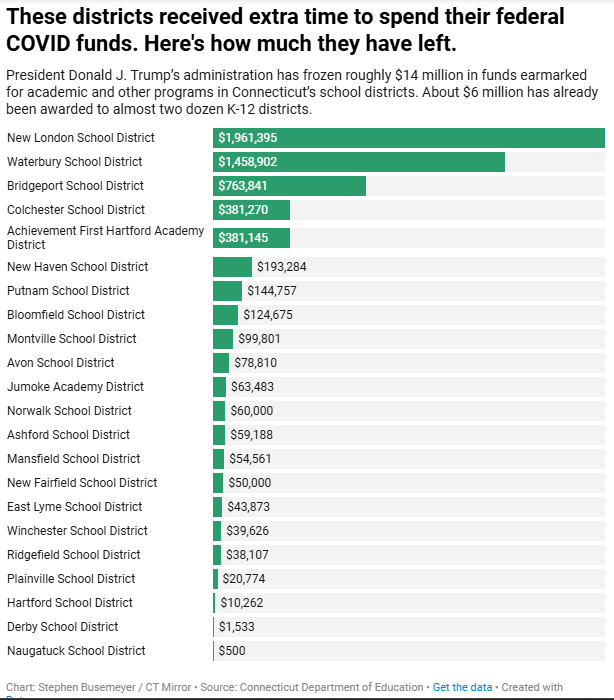
7. Trump freezes $14 million in aid for K-12 education in CT
Days after reclaiming $155 million in public health aid to Connecticut, President Donald J. Trump’s administration froze roughly $14 million in funds earmarked for academic and other programs in Connecticut’s school districts. (Published March 31)

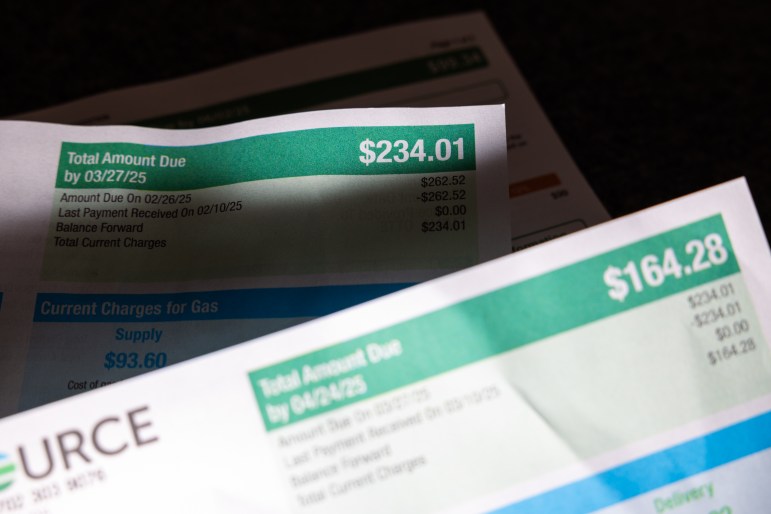
8. What to know about the public benefits charge on your electric bill
If you’ve taken a detailed look at your Connecticut electric bill recently, you probably noticed that it’s broken down into four sections: supply, transmission, local delivery and — to the confusion and ire of many — a section labeled “public benefits.” Here’s what to know about that charge. (Published May 19)
9. New London, Waterbury schools hit hardest by federal funding freeze
Just over $6 million of Connecticut’s last remaining federal COVID-19 relief funds were granted to roughly two dozen K-12 school districts, with more than half slated for two struggling cities. But a federal funding freeze in March put the money in flux. (Published April 2)
10. New CT laws taking effect Oct. 1: E-bikes, towing, Sunday hunting
Over seven dozen Connecticut laws concerning a range of issues — an overhaul of Connecticut’s towing laws, regulations around e-bikes and helmets, a permit of Sunday hunting, and more — wholly or partially took effect on Oct. 1. (Published Sept. 22)

