



Let’s tell the truth. Elder abuse and neglect in nursing homes is not a mystery, not a surprise, and not an accident.
It is the predictable, inevitable outcome of a system that allows the squeezing of profit from the bodies of the elderly while far too often delivering poor care in return. And just when the crisis reached a breaking point, our federal government made it worse.
As reported by MedPage Today (“HHS Officially Rescinds Nursing Home Minimum Staffing Rule,” Joyce Frieden), the U.S. Department of Health and Human Services officially rescinded the national minimum-staffing rule enacted in May 2024 that required nursing homes to provide at least 3.48 hours of care per resident per day and to have a Registered Nurse onsite 24/7.
Those protections were not luxuries. They were the minimum needed to keep residents safe and alive.
Patient-advocacy organizations called the decision “very disappointing,” warning that this repeal returns us to a status quo where residents will continue “suffering and dying because nursing homes are not staffed adequately.” They are right.
We know ;exactly what understaffing does, because we have been fighting this system for more than 35 years.
We have represented countless families whose loved ones were injured, abandoned, or betrayed by facilities that promised safety and delivered suffering. We have spent decades hearing the same lines — “falls just happen,” “bedsores are unavoidable,” “we did the best we could.”
But let’s be clear about something critically important: frontline staff are not the enemy. Many aides, nurses, and caregivers desperately want to provide good care. Some cry on their way home, knowing they couldn’t reach all of their residents. They are victims too — trapped in a system where too often administrators, management companies, and private-equity bosses understaff facilities to maximize profit.
These workers are not the cause of the crisis. They are casualties of it. The abuse is not hidden. It has just been ignored for far too long.
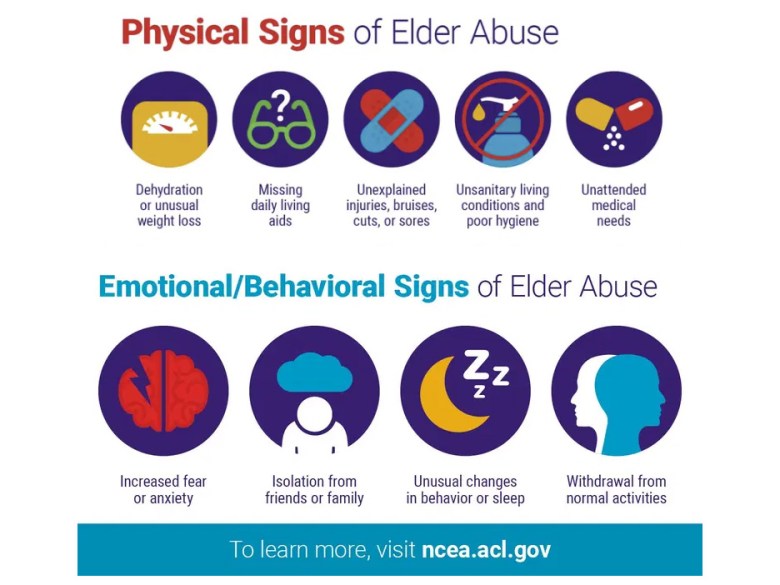
Here’s what “cost-cutting” looks like behind closed doors:
- A man on a restricted-diet chokes to death because her aide was untrained or never given the essential instructions for her care.
- A woman with dementia falls again and again because no one answers call lights for an hour—or longer.
- A resident who cannot walk or speak appears with fractures, bruises, and internal injuries… and the facility shrugs.
- Bed sores rot into bone because staffing is so low that no one has time to turn a patient.
These are not rare tragedies. They happen too frequently in facilities that know they are understaffed, undertrained, and unsafe — and simply do not care enough to fix it.
And now, thanks to the HHS decision, they no longer will have to meet a national basic safety floor.
We have allowed a system that treats human beings as disposable.
For decades, the elderly have been treated as if they are somehow “worth less” because they are frail or nearing the end of life. Insurance companies argued it openly, while many injury lawyers told families that their loved one’s suffering “didn’t have much value,” and that bringing a lawsuit was not practical.
This is morally wrong and frankly not what we all know to be true.
An elderly person’s life does not shrink in value when their body weakens. Their dignity does not evaporate when they lose the ability to speak, hear, or feed themselves. Their humanity does not vanish when they enter a nursing home.
If anything, the opposite is true: the more vulnerable someone is, the fiercer our obligation to protect them.
Where are our lawmakers? Where is the outrage?
The truth is already in plain sight:
- Staffing ratios are dangerously low.
- Training requirements need strengthening.
- Regulators are understaffed.
- Penalties are weak and delayed.
- Corporate owners are not held accountable in a meaningful way.
- And now, federal minimum-staffing protections have been gutted.
And people are dying because of it.
Accountability must finally mean something. We need to stop pretending civil fines and sternly worded letters will fix this. They won’t.
What will?
- Mandatory staffing ratios tied to resident acuity
- Criminal charges — not just civil penalties — when neglect leads to serious injury or death
- Transparency in ownership, finances, and staffing
- Real whistleblower protections and encouragement for staff who report abuse
- Automatic suspension of licenses for falsified records
- Public reporting of all injuries, not just the ones facilities choose to disclose — with significant penalties for failure to report
If a trucking company can face criminal charges when negligence kills someone, why can’t a nursing home?
If an airline can be grounded for safety violations, why can’t a facility that leaves residents to fall, fracture, choke, and die?
Lawsuits alone are not enough — but they matter. For 35 years, we have advocated for the elderly and lawsuits do matter when verdicts finally make neglect more expensive than prevention.
That is why nursing homes work so hard to keep these cases out of court. That is why they hide records, falsify charts, and pressure staff into silence. That is why they push families into arbitration agreements.
They fear the truth. And they should.
This is not just about the elderly. It is about us. We are all headed in the same direction. If we allow this broken, cruel system to continue, we are condemning not only today’s residents — but our future selves.
This is not merely a fight for the elderly. It is a fight for what kind of society we choose to be.
Enough excuses. Enough silence. Enough injury and death.
We must demand bold reforms. We must insist on real oversight. We must hold corporations personally, financially, and criminally accountable. And we must reject the poisonous idea that an aging life is worth less than any other.
The elderly are not invisible. They are not disposable. They are ours. And it is long past time we acted like it.
Michael A. D’Amico is founding partner of D’Amico Pettinicchi Injury Lawyers in Watertown.