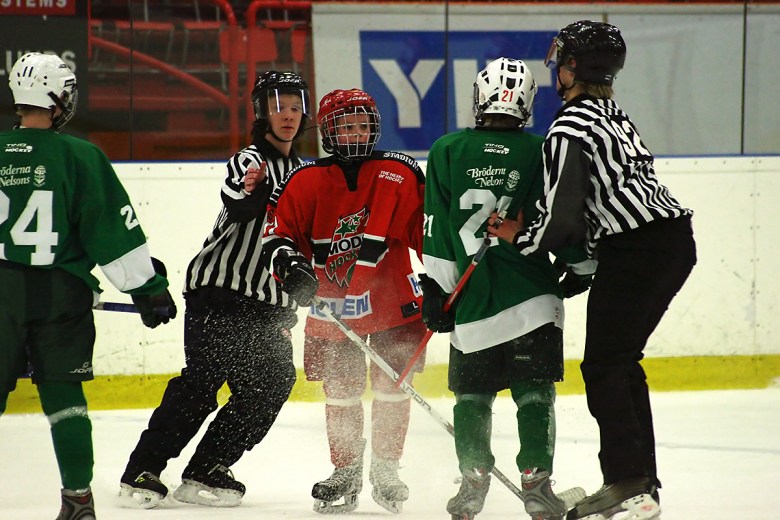
According to a survey conducted by the American Academy of Pediatrics, 70% of kids drop out of youth sports by the age of 13. While a family’s demographics, socioeconomic status, and geographic location all play a role, much of the reason for this high dropout rate is because of the major time and financial demands involved.
When youth sports become primarily about who can pay, we lose the fundamental benefits of what they were intended to be.
In my own personal experience, I have seen this first-hand as a lifelong youth player, a high school & college student-athlete, as a lead counselor for an ice-hockey camp, and coaching many youth sports teams.

Youth sports ideally allow kids to be active, have fun, and hopefully build friendships and connections. Youth sports should also allow kids to learn about themselves, others, and life skills such as teamwork, leadership, and responsibility.
However, the current culture of youth sports has the opposite impact. Instead of encouraging exploration and enjoyment it places early pressure on kids to specialize, pushes them towards high-intensity year-round commitments, and forces families to incur financial burdens. These combined pressures contribute greatly to the burnout and declining participation we see in youth sports today.
The first major effect of the youth sports culture is the unnecessary early pressure on kids to succeed and specialize in a single sport. Travel team organizations, particularly in ice hockey and lacrosse, often require near year-round commitment. They expect kids to commit to their sport, often full-time even before middle school.

This environment leads many kids to choose one primary sport far too quickly. In a survey led by Project Play, “53% of youth sports parents justified the pressure to specialize because they say their child wants to play high school sports.”
This mindset reveals how competitive high school sports have become in many parts of the country. Instead of allowing kids to explore different sports, discover new interests, or build friendships across groups, the system pushes them toward narrowing their focus long before they are ready. Studies increasingly show that multi-sport participation provides physical and social benefits, despite the current culture.
The second effect of this youth sports culture is burnout and loss of passion. Many young athletes stop enjoying the sport long before they reach high school. While working with youth ice hockey players as young as nine years old, I have seen how demanding their schedules can be. Many begin training in May or June, during what should be the off-season, and continue through summer camps before entering a full-time schedule from fall through March. These kids often practice two to three times a week and play at least 55 games in a travel season. That amount of structure, intensity, and expectation would be exhausting for an adult, let alone an aspiring youth athlete.
This nonstop schedule often strips away what made the sport enjoyable in the first place. Kids face pressure from adults, with long travel times and disruptive routines, and are exposed to what many call the “professionalization” of youth sports. In the age of social media, year-round training, sport-specific workouts, film analysis, and more become standards at younger ages, with youth sports looking like the pros.
This reality misses the point of childhood athletics entirely. Instead of fostering joy, experimentation, and personal growth, it creates environments where kids feel evaluated and judged. As a result they burn out, lose interest, and ultimately step away from the sport far too soon.
The third effect of the current youth sports culture is the rising financial cost, which excludes many families from participation altogether. According to a survey conducted by Project Play, “the average US sports family has spent 46% more in the past five years compared to pre-Covid 2019 levels in youth sports expenses.” Travel teams, specialized training, and travel related expenses put youth sports out of reach for many families with limited resources as, on average, these expenses can add up to be between $3,000-$10,000. This creates inequities not only in participation, but also in long-term opportunities, reinforcing that youth sports in America are increasingly pay-to-play operations.
Addressing these issues of early specialization, burnout, and affordability, requires intentional changes at the community and organizational levels. One solution is to expand access to low-cost, community-based programs that prioritize participation, fun, and development over intense competition. While expenses such as uniforms, facility rentals, and tournaments, will always exist, community-driven programs supported by fundraising and sponsorships can significantly reduce barriers. Increasing scholarships and financial aid opportunities for families in need would also broaden participation and help restore the inclusive spirit youth sports were meant to be.
If communities and organizations emphasize enjoyment, sportsmanship, and balanced scheduling, and if they work to manage parental expectations while ensuring affordability, youth sports in America can begin to recover from the current 70% dropout rate. These changes not only keep more kids engaged, but also promote healthier, more meaningful experiences that impact young athletes’ lives long after their playing days are over.
Brayden Warde, of Yarmouth Maine, is a junior at Connecticut College, majoring in Government.