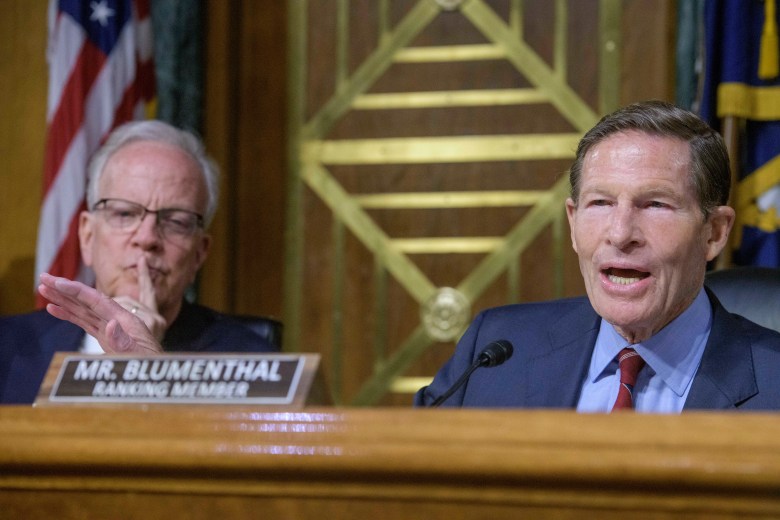
U.S. Sen. Richard Blumenthal, D-Conn., and Treasurer Erick Russell announced on Tuesday the expansion of a program that will allow people with disabilities to save money without jeopardizing their access to benefits.
The ABLE CT savings accounts previously served people who had experienced the onset of a disability before age 26; now the eligibility ceiling has been changed to before age 46, making around 6 million people newly eligible across with country, including thousands in Connecticut.
“Making more people aware is critical because the expansion is benefitting people only if they take advantage of it,” Blumenthal said at a press conference at Easterseals, a nonprofit that serves people with disabilities including veterans. “That 20 years of eligibility is hugely important to people who may be disabled. People may be disabled on the job.”
The program allows people to save money in a special tax-free account dubbed an ABLE CT account, named for the Achieving a Better Life Experience Act. Advocates say that the accounts represent a critical step to break the cycle of poverty that people can fall into when they become disabled: unable to save funds to supplement medical costs without jeopardizing their eligibility for benefits, bills for any number of expenses can plunge them into debt and even homelessness.
In Connecticut, the legislation also allows for deductions on state income taxes up to $10,000 for people filing jointly and up to $5,000 for single filers.
Advocates say that disabled veterans will be major beneficiaries of the change in age eligibility, since they often experience an onset of disability during their service and after the previous age 26 cut-off.
“For people who aren’t able to gain employment and earn sustained gainful employment, this definitely assists with enriching their lives going forward,” said Ryan Landry, associate director of military services for the Capital region and Eastern Connecticut Easterseals, and a veteran U.S. Army sergeant.
Blumenthal, the ranking member on the Senate Committee on Veterans Affairs, said that veterans often have “invisible wounds” that leave them disabled.
“More and more invisible wounds that we’re learning can have disastrous effects on veterans — the burn pits in Afghanistan and Iraq, the contamination of water at Camp Lejeune,” Blumenthal said. “Veterans may be disabled for a vast variety of reasons, they get care and benefits from the VA, but in addition they can take advantage of these ABLE accounts. And that can be life saving.”
The expansion of the law was passed in 2022 and goes into effect this month. Similar to a 529, the money saved in the account can be invested and later withdrawn tax free, as long as it’s used for broad categories of disability-related expenses like housing, medical needs, job training and caregiving. In Connecticut, the federal law was adopted and also allows for a tax deduction for contributions to the ABLE accounts.