



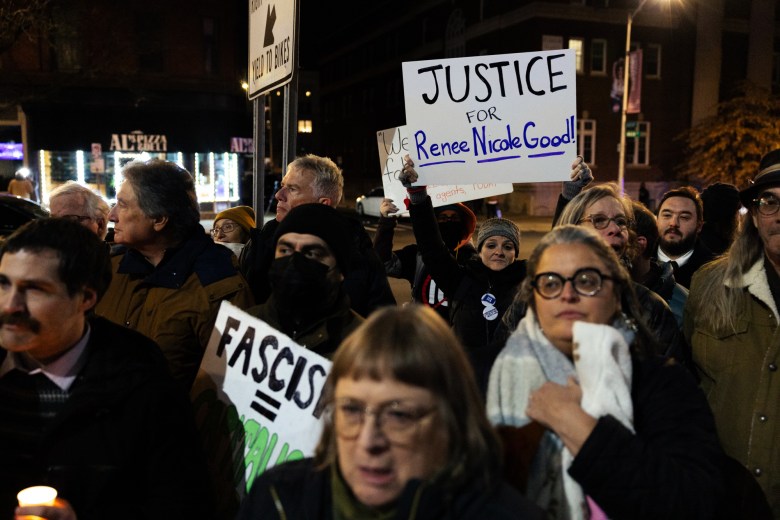
We are living through a profound and accelerating test of the First Amendment. Across the country, people exercising their constitutional rights to speak, protest, and record public activity are increasingly met with confusion, intimidation, and force.
Observing what the government is up to and peacefully protesting are among the most fundamental rights guaranteed by the United States Constitution. It protects people across the political spectrum and has powered movements that expanded Americans’ rights for generations.
These protections require officials at every level of government to respect the constitutional limits on their power. When people’s most basic rights are ignored, our government erodes public trust and sacrifices the civil liberties that form the foundation of our democracy. Understanding our rights and the limits of government officials is essential to protecting public safety.
Here are key rights every Connecticut resident should know, whether they are a U.S. citizen or not. Although these rights are the law, policing and the prosecutorial system are biased, and everyone has their own risk calculus to weigh when stepping out of the house. What the law is on paper is no substitute for a person’s own sense of safety.
Attending a protest
- Your rights are strongest in what are known as “traditional public forums,” such as streets, sidewalks, and parks. You also likely have the right to speak out on other public property, like plazas in front of government buildings, as long as you are not blocking access to the government building or interfering with other purposes the property was designed for.
- Private property owners can set rules for speech on their property. The government may not restrict your speech if it is taking place on your own property or with the consent of the property owner.
- You don’t need a permit to march in the streets or on sidewalks, as long as marchers don’t obstruct car or pedestrian traffic. If you don’t have a permit, police officers can ask you to move to the side of a street or sidewalk to let others pass or for safety reasons.
- Shutting down a protest through a dispersal order must be law enforcement’s last resort. Police may not break up a gathering unless there is a clear and present danger of riot, disorder, interference with traffic, or other immediate threat to public safety.
- If officers issue a dispersal order, they must provide a reasonable opportunity to comply, including sufficient time and a clear, unobstructed exit path.
- Individuals must receive clear and detailed notice of a dispersal order, including how much time they have to disperse, the consequences of failing to disperse, and what clear exit route they can follow, before they may be arrested or charged with any crime.
- The First Amendment does not protect “true threats” or incitement. Incitement requires intent, imminence, and likelihood: You must intend to provoke another person to break the law immediately, and your speech must be likely to do so.
Recording in public
- When you are lawfully present in any public space, you have the right to photograph anything in plain view, including federal buildings, the police, and federal officials.
- On private property, the owner may set rules about photography or video.
- Police officers may not confiscate or demand to view your photographs or video without a warrant, nor may they delete data under any circumstances. However, they may order people to cease activities that are truly interfering with legitimate law enforcement operations.
- Police should not order you to stop taking pictures or videos, and they may not demand that you delete your photographs or video.
If you are stopped by police
- Stay calm. Make sure to keep your hands visible. Don’t argue, resist, or obstruct the police, even if you believe they are violating your rights. Point out that you are not disrupting anyone else’s activity and that the First Amendment protects your actions.
- Ask if you are free to leave. If the officer says yes, calmly walk away.
- If you are under arrest, you have a right to ask why. Otherwise, say you wish to remain silent and ask for a lawyer immediately.
- Don’t say anything or sign anything without a lawyer.
- You have the right to make a local phone call. If you are calling your lawyer, police are not allowed to listen.
- You never have to consent to a search of yourself or your belongings. If you do explicitly consent, it can affect you later in court.
- Police may “pat down” your clothing if they suspect you have a weapon and may search you after an arrest.
You can find a comprehensive guide to protesters’ rights on the National ACLU website.
Protests are meant to disrupt complacency. They are how people force urgent issues into public view, especially when every other avenue has failed. When protests are met with excessive force, mass surveillance, vague dispersal orders, and worse, deadly violence, it sends a clear message: stay home, stay quiet, or risk harm. That is not public safety. It is repression. And it corrodes the foundation of our democracy.
Our government has a responsibility to ensure that people can exercise their constitutional rights without fear of retaliation. Knowing your rights is the first step.
Dan Barrett is the legal director at the ACLU of Connecticut.