For months, Patricia hasn’t slept through the night. She’s stopped visiting friends, she no longer goes to the gym or the park, and she’s gained 60 pounds since immigration enforcement ramped up in the past year.
Patricia moved to the U.S. from Mexico 18 years ago and built a life as an active member of her community in Connecticut. But today, the only time she leaves her house is to work for a few hours each weekend, cleaning offices.
“Any small noise startles me,” Patricia, who asked that her last name not be published for fear of immigration enforcement, said in Spanish. “I’m afraid to fall asleep deeply. Fear has taken over.”
Across Connecticut, residents who fear they or a loved one may be deported are self-isolating and facing mounting mental and physical health consequences as a result.
A survey from CT DataHaven released in October found nearly a third of Connecticut residents worry “a lot” or “some” that either they or someone close to them could be deported, detained or have their legal immigration status revoked. That concern is significantly higher among Latino residents, 44% of whom reported such fears.
Anxiety surrounding potential immigration enforcement measures is leading some people to skip medical appointments, lose sleep and opt out of social activities — all of which, physicians say, damages mental and physical health.
Missed appointments
Researchers at DataHaven found that, of the Connecticut residents who fear immigration enforcement, 14% have avoided medical care or know someone who has.
Camila Bortolleto is a steering committee member for Husky 4 Immigrants, a group that advocates to expand state-sponsored health coverage for residents regardless of immigration status. She said many immigrants are fearful that ICE will show up at their doctor’s appointment, or that they will get in trouble if they seek health care.
“We’re seeing a lot of folks who are very scared to seek medical care,” Bortolleto said. “They ‘tough it out’ until it gets so bad that they need urgent medical care. At that point, it’s much, much worse, health-wise. It’s also much more expensive by that point.”
Research finds this is a general trend influenced by immigration enforcement increases or policy change. Atheendar Venkataramani, a clinician, researcher and professor at the University of Pennsylvania, contributed to a study in 2021 that found that increased immigration enforcement correlated with a reduction in Hispanic individuals seeking health care.
“On average, what we found was that there was less health care seeking, even among people with chronic conditions who we would expect to see their doctor relatively frequently,” Venkataramani said. “Ours is one study, but there are tons of studies that link immigration enforcement with health care seeking and health care outcomes.”
Immigration enforcement activity has escalated around the country since President Donald Trump took office. The administration and Department of Homeland Security tout ICE arrests, saying they are meant to “Make America Safe Again” by removing “criminal aliens.” The agency implemented high daily arrest quotas, and data shows large shares of those recently arrested by ICE across the nation have no criminal record.
In Connecticut, arrests sharply increased following Trump’s inauguration. In August, a series of immigration raids across cities including Danbury, Stamford and Norwalk, dubbed “Operation Broken Trust,” resulted in 65 arrests. ICE agents staked out courthouses and police stations to conduct arrests of those entering the buildings. Earlier this month, a man was arrested by ICE inside the New Haven Superior Court building.
Organizations representing medical facilities in the state said there have been no reports of immigration enforcement officers entering Connecticut hospitals or community health centers. But, amid immigration-related unrest in Minnesota, there have been reports of ICE agents entering hospitals to accompany individuals that have been detained as they’re receiving medical care.
On Monday, the American Medical Association released a statement stating that the presence of immigration enforcement activity in and around hospitals was “fueling fear among patients and hospital staff alike” and “ultimately undermines basic trust in our health care institutions.”
“To fulfill our oath and best serve our patients, physicians must be able to work in spaces that create a sense of safety for all, not fear for our most vulnerable,” AMA board chair David Aizuss stated.
Despite her fears around the spike in immigration enforcement, Patricia, who lives in central Connecticut, isn’t able to completely avoid medical care. She sees a doctor every three months to manage her diabetes. The disease runs in her family — she and seven of her eight siblings have it.
Zoom appointments are an option, but Patricia said she prefers in-person visits because they are more thorough, even though leaving the house makes her anxious.
“I go because of my health, but I go with fear,” Patricia said.
Laurel Shader worked as a pediatrician at Fair Haven Community Health Care for 32 years before retiring in April. Like Patricia, Shader said telemedicine can be marginally successful, but it doesn’t always have the same impact that in-person treatment can have, particularly for children.
“I think the little kids can’t quite do it, in the same way that it was hard for little kids to do school online,” Shader said. “There are a lot of things that you have to have your hands on in order to do stuff. And you can only do that if you’re in person.”
Shader worries medical care avoidance could cause health outbreaks and that children with developmental issues may not receive the intervention they need.
Mental health effects
Even beyond direct impacts to physical health, Shader said the major issue she saw among her patients and their families was behavioral changes.
“Some of the parents would talk about how concerned they were, and some of the older kids who were aware of what was going on would be afraid to be separated from their parents,” Shader said. “They thought that if they went to school, something might happen to their parents.”
The DataHaven survey found that more than half of Connecticut residents who fear immigration enforcement report increased stress or anxiety. And of residents fearing enforcement, around 20% report avoiding public settings, like school and work, or reported problems eating and sleeping.
Venkataramani agreed with Shader, saying that mental health is likely the aspect of health that “shifts most exquisitely” with immigration policy and enforcement changes. He’s seen these changes first-hand in his own patients who are immigrants.
“They’ll screen positive for depression and anxiety. They will come in with elevated heart rate, possibly elevated blood pressure,” Venkataramani said. “They’re very circumspect to share what’s going on.”
Plus, increased stress can have dramatic physical effects on the body, impacting cortisol levels, metabolism and heart health, he added. One 2018 study found that immigration policy targeting undocumented residents in Arizona led to lower birth weight in babies born to immigrant mothers.
Patricia said she’s struggling mentally but can’t afford to get help. Without health insurance, she’d have to pay out of pocket to see a provider, and money has been tight since her husband got severely injured at work two years ago. Patricia said she has to be her “own therapist.”
Based on her income alone, Patricia would qualify for traditional Medicaid, which provides government-sponsored health coverage to people whose incomes fall below specified thresholds. But, outside of a few exceptions, undocumented immigrants and others without “qualifying immigration status” can’t access the program.
Connecticut currently offers Medicaid-like coverage to children 15 and under — as well as women who are up to a year postpartum — who would qualify if not for their immigration status. Children who enroll are covered until they turn 19. The state does not currently offer any similar coverage for adults.
Patricia’s 16-year-old daughter, who is a citizen, receives health coverage through HUSKY. She’s the only one in the family receiving mental health treatment. Patricia worries her own stress impacted her daughter’s mental health.
“I think I caused part of my daughter’s anxiety,” Patricia said. “She often doesn’t want to leave the house. She stays home, and I think my warnings contributed to her fear.”
Patricia said there is a major need for mental health services within the immigrant community, particularly for those who are undocumented. She and her husband continue to live in fear with minimal support as they watch friends and families like their own get arrested by immigration authorities.
“Many people need mental health help,” Patricia said. “There are many families like us.”
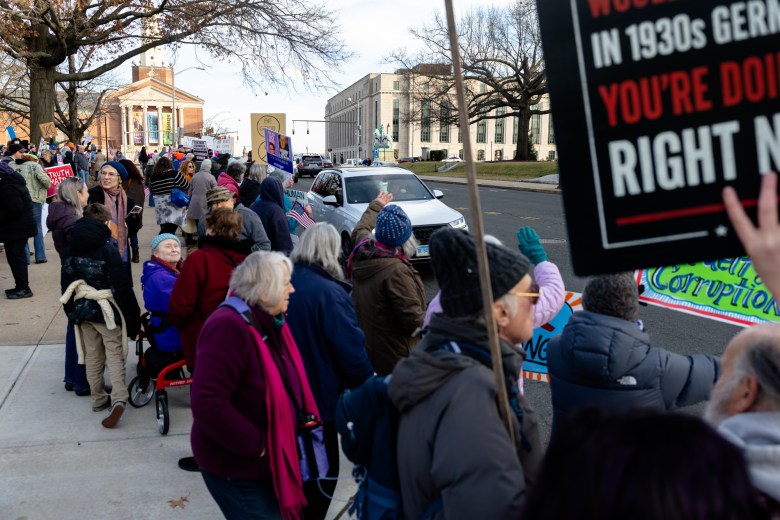
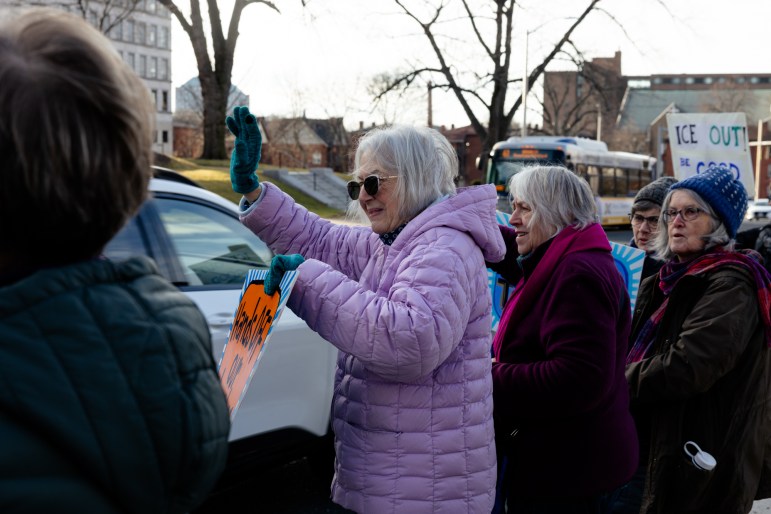
Across the nation, many American-born or naturalized citizens have filmed encounters and arrests between immigrants and ICE agents, and many have protested immigration enforcement in Connecticut. Patricia recognized this support.
“Even though many Americans support us, if someone says ICE is at a location, Americans will go and film, and support people, the fear among immigrants is still huge,” Patricia said.
CT Mirror reporter Mariana Navarrete contributed to this story.