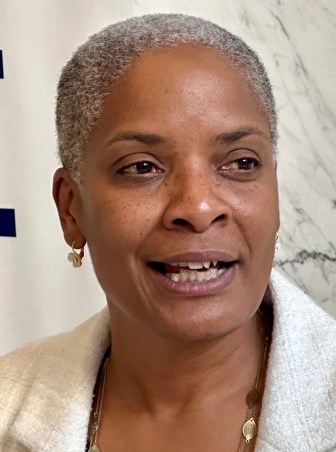
As Connecticut’s Secretary of the State, I see our election system up close. Not in headlines or sound bites, but in town halls, polling places, and conversations with the local bipartisan officials who run elections in all 169 of our municipalities. I see the work, the safeguards, and the accountability that make our representative democracy function.
That is why President Donald Trump’s recent remarks suggesting the federal government “should take over the voting,” and alleging that some states are “so crooked” they cannot be trusted, are not just troubling. They are dangerous — not because they identify a real failure in our system, but because they propose a potentially unconstitutional solution to a problem that does not exist.
What “should” happen instead is far simpler and far more responsible: The White House should stop making off-hand, inciting comments about elections, and stop suggesting federal takeovers that may violate the Constitution.
In Connecticut, elections are secure not because power is centralized, but because it is shared transparently, locally, and with bipartisan oversight. When an error is identified through that system of checks and balances, the Legislature works with us to fix it quickly and make the system stronger.
Yet national rhetoric often erases these distinctions. When election issues are framed as something happening broadly “in the U.S.,” voters understandably assume those claims apply everywhere, including in their own states. But they do not.
By design, elections in Connecticut do not operate the same way as elections in any other state. Our laws, processes, and protections reflect our local structure, our bipartisan administration, and decades of deliberate policymaking. Studies also show local context matters.
In 2022, the Pew Research Center found that people tend to trust elections most when they are familiar and local, run by officials they know and systems they’ve experienced themselves.
Confidence drops when elections are discussed only through national rhetoric, when voting methods feel unfamiliar, or when partisan messaging convinces voters that losing must mean something went wrong.
In other words, trust in elections isn’t eroded by how elections are actually run, but by how they’re talked about.
Time and again, sweeping claims of systemic election fraud have been investigated and found to be untrue. Actual cases of voter fraud are exceedingly rare. But repetition matters. When national figures repeatedly question election legitimacy, that distrust seeps into states where elections are working exactly as intended, including Connecticut.
The Constitution anticipated this risk. Although it gives Congress the ability to change regulations, it gives states the authority to determine the “times, places, and manner” of elections because the framers understood there could be no one-size-fits-all system. Election laws reflect population size, geography, local government structure, and community needs. That flexibility is not a weakness. It is the backbone of our representative democracy.
In Connecticut, elections are administered locally by trained, bipartisan officials. Every town has both a Republican and a Democrat responsible for running elections. We use paper ballots. Our voting equipment is not connected to the internet. We conduct rigorous pre-election testing, post-election audits, and continuous training for election workers. When problems arise, they are investigated openly and addressed through law and not political rhetoric.
Nationalizing elections would not strengthen this system, but undermine it. Federal mandates that override state processes or impose rushed, unfunded requirements would actually make Connecticut’s elections less secure. Our system depends on controlled access, local knowledge, and accountability rooted in community trust. Introducing sweeping federal control would add complexity, create new vulnerabilities, and strain already under-resourced local offices.
Security does not come from distance. It comes from process. From trained people in your community checking each other’s work every step of the way. From clear rules, transparency, and accountability to voters, rather than to Washington.
This moment also places responsibility on voters themselves. As local journalism has shrunk, it has become challenging for people to access accurate, state-specific information about how elections actually work. In that vacuum, national headlines — and misinformation — often take over.
Today, civic responsibility requires more than voting. It requires initiative. It means seeking out reliable sources close to home, including your Secretary of the State’s office, your town clerk, your registrars of voters. These are the people who actually administer elections where you live. Meet us. Ask questions. Learn how your system works. Understand why Connecticut’s process is worthy of trust.
Our elections are not perfect. No system is. But in Connecticut, we are committed to fair, secure elections and to continuously improving an already proven process. That commitment matters, because when people lose confidence that the system is fair or that their vote counts, they disengage.
And in today’s climate, disengagement is not an option. Informed, confident voters are needed more than ever.
Democracy is not something to be seized or centralized. It is something to be stewarded locally, deliberately, and together.
Stephanie Thomas is Secretary of the State of Connecticut.