



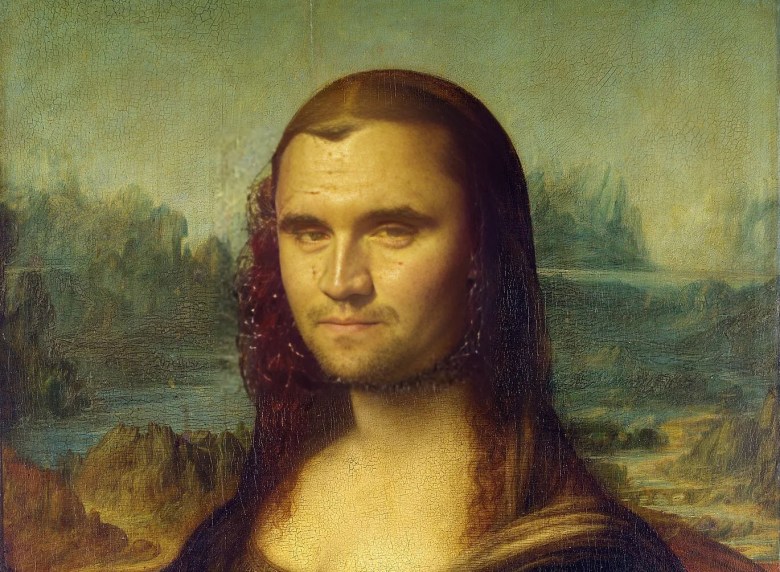
If you’re between the ages of 14-29, kirkified memes —a phenomena where individuals digitally alter photos, usually by face-swapping with AI, to overlay it with the face of right-wing political commentator Charlie Kirk— are becoming inescapable.
Since the assassination of Kirk back in early September of 2025, various images and videos surfaced across the internet, dominating the controversy surrounding his death.
For all of us who are “chronically online” or are a part of Gen Z, this is not surprising, as it seems that with every major political event, no matter how disastrous or bloody, memes are bound to follow. While brutality, pain, and misery are, and have always been, fascinating to Americans, in recent decades, the tribalistic encouragement of apathy and violence in my generation has been palpable.
To me, ever since knowing of Kirk’s existence years ago, I found his rhetoric deplorable. He is the antithesis of everything I stand for, and when he died, I was more worried about the backlash of such gratuitous violence than the action itself. I knew it was going to be bad, and that whichever way society chose to lean, the outcome would not be in our favor.
And in a way, I was right. The months after his death were relentless: first the raw footage of his demise were shared everywhere, which then turned into memes and songs, and eventually, kirkified speech. People adding “Kirk” to a sentence is increasingly common among Gen Z, and it’s being used as an intensifier— the same way “ass” can be used to increase the severity of the original sentence. Saying “lowkirk” or “lowkirkenually” subverts the gravity of his death, and because people consider it to be ironic, instead adds a sardonic, yet political, connotation to the new word.
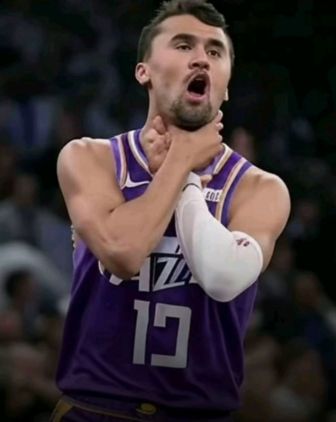
The internet has been alight in a way I haven’t seen since the attempted assassination of Donald Trump back in July of 2024. It wasn’t so much that we’re talking about it, but more about the way in which we discuss it that disturbed me in ways I didn’t know how to explain when it all started.
When looking at anything online, there is a barrier placed between us and what we watch behind our screens. For Americans specifically, political posts— especially those on short-form platforms—prompt a split, yet simultaneous reaction: detachment and complete doom and despair. This gap allows us to separate ourselves from the antics, while activating our own personal fears, transgression, and biases. Short-form political messaging bombards us with ideas of nihilism and destruction, making any hope of peace and restoration futile, and downright silly. This is what desensitization looks, and with it comes the perpetuation of the political meme.
Comedy is one of the most important tools used when influencing people. It makes ideas once taboo, awkward, or embarrassing socially permissible. For a moment, what we see and believe requires no in-depth analysis, keeping our world-views intact. But if assassinations, genocide, poverty, or famine ‘aren’t that deep,’ then what is?
It is a tragedy, truly, to watch the people around you become waking, desensitized zombies. It’s another to watch yourself become one too. And as the world panics over the growing attention-span crisis, what it should worry more about is our dwindling capacity to care. For Gen Z, and all generations that follow, this hunk of metal is our primary connection to the “real” world, and when that world is becoming increasingly volatile and unserious, it’s no wonder that everything is a joke.
Talking to friends, one said something that stuck with me:
“I think Charlie Kirk was an evil person […] He got what he wanted when he said deaths are worth it to keep Second Amendment rights, he just didn’t think he’d be one of the death’s in question. […] Therefore, I mean, why not joke about it?”
Kirkified memes, and all political memes in general, are only a response to our environment. It’s a coping mechanism for things we believe are out of our control, and for the youth (and adults as well, if I’m being honest), it seems the only way we can engage in politics is through fleeting, often sardonic avenues. It’s easier to laugh at a reel, say “we’re cooked” and send it to a friend, then fully process what’s going on and come to our own conclusions.
In a way, our worries and angst are monetizable. Online political content, and subsequently political memes, are just as, if not more heavily monitored by social media platforms and their algorithms than traditional news-media.
The phrase “for you” is bastardized, as we are made to associate our intrinsic selves —our beliefs, values, likes and dislikes —with something that can be curated and sold to us. Spending all our time on screens, algorithms know us better than we know ourselves, spoon-feeding us content that will keep us engaged on their platforms for the maximum amount of time.
Fear, anger, and doubt keep us online, and when being exposed to atrocity after atrocity, numbness is inevitable.
In this way, Kirkification is extremely brilliant; it effectively closes the gap between politics and comedy, acting as a form of humorous political subversion. In warping videos, images, and the way we speak, Kirkification has an everlasting presence, burrowing its way not only into how we view violence, but also in how we treat one another.
Political memes would not be as volatile if we as people had the vocabulary and respect for one another to talk about our what is causing us distress. This would then require the majority of us not only to be literate, but to also have the courage to speak about what we fear.
As Marshall McLuhan would say, “the medium is the message,” and the medium of today is distinctly unnatural. It should not feel like an uphill battle to pay attention and care about others, and it certainly shouldn’t feel this hard to have real, honest discussions about the state of our world, and yet, here we are.
Kirkification, and similarly morbid memes, are rotting away the last remaining bits of our sympathy, and the saving grace for our youth will not be those who expound indifference, but those who are willing to show us a different way of expressing our discontent, whether that’d be through fundraising, protesting, or simply educating us on the true history of this country.
Being online teaches us to turn a blind eye to the humanity of others, and whether you believe it’s funny or not, the more you engage, the less you’ll be able to handle whatever life throws your way.
Jada King lives in Farmington.