



Affordability: It’s become the Democratic Party’s mantra heading into these crucial midterms, repeated by members of Congress and hopeful challengers coast to coast.
This single word – which dominated Zohran Mamdani’s campaign for mayor of New York – might propel Democrats back to power in the U.S. House and maybe even the Senate. And without ranked choice voting, Mamdani’s campaign might have been over before it started, and Democrats would have never realized the power of this term.
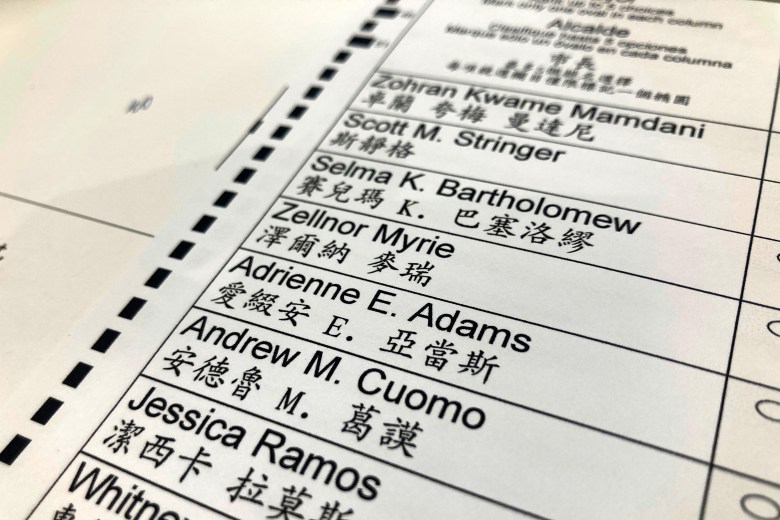
Ranked choice kept Mamdani’s campaign afloat when early polls showed him as an unknown with 1 percent. In most other elections, Mamdani would have been pressured to drop out – to help the “progressive lane” consolidate behind one candidate in order to defeat Andrew Cuomo, the better-known and well-funded favorite.
But in a ranked-choice election, voters have the power to rank the field, instead of just a single choice among a dozen candidates. There’s no such thing as a spoiler, and no need for anyone to bow out early. Instead, candidates are incentivized to do as Mamdani did: Go everywhere. Talk to everyone. Campaign with creativity. Maybe even hit upon a theme that resonates nationwide.
Connecticut’s state legislature is now considering, once again, a bill that would give cities and towns the option to use ranked choice voting in their elections. It would also allow state parties, if they chose, to adopt RCV to determine nominees. The legislature should grant localities and parties this power: RCV elections work better, produce issue-driven campaigns, drive participation and improve voter satisfaction.
RCV is easy, and an important tool in any race with more than two candidates: Instead of casting a ballot for a single candidate, voters can choose to rank their second and third choice. If someone wins 50 percent of voters’ first choices, they win, like any other election. If not, the bottom candidates are eliminated, and an instant runoff ensues. If your candidate is still in the race, your vote stays with them. If not, backup choices come into play. The winner always has a majority, and the widest and deepest support among voters.
As RCV expands nationwide – to over 50 cities, counties and states, including statewide races in Alaska and Maine – there’s a growing body of evidence that shows voters like it. In New York, 96 percent of 2025 Democratic primary voters found it simple, and another 76 percent wanted to keep it or expand it to other races. In Alaska, 84 percent of voters in 2024 found it easy to use.
Just as important, RCV allows women and communities of color a better chance to elect representatives of their own choosing. New York City and St. Paul, Minn., elected their first female-majority city councils after adopting RCV. Oakland elected its first four women mayors. And in Minneapolis, Salt Lake City and St. Paul, RCV helped produce the first-ever councils where members of color held a majority of seats.
In fact, former New York City Council speaker Melissa Mark-Viverito and current New York City Council majority leader Amanda Farias both praised how RCV has helped improve representation for women of color in their testimony before Gov. Ned Lamont’s working group on ranked choice voting.
The New York mayoral primary showcased RCV’s transformative powers. A dozen candidates wanted the nomination. Under the old, single-choice rules, every candidate would have understood the math: A race that crowded might be won with 35 percent. The key to victory would be turning out the base and attacking everyone else. That turns voters off.
Instead, with RCV, voters were treated to something new: A positive, issue-based campaign. Candidates teamed up with each other. Instead of criticism, they offered cross-endorsements. Instead of going after opponents to differentiate themselves, they asked to be the second choice of voters ranking those opponents first. Mamdani won because he spanned the city and connected with voters of every neighborhood in every borough.
And voters could still consider him even though he polled low in early surveys, before anyone tuned into the race, because the ranked ballot meant there was time to talk about issues and no rush to elbow anyone out of the contest. Now the power of affordability – uncovered because of the incentives of a ranked choice campaign – might drive Democrats to victory nationwide.
In 2028, Democrats nationwide will face an even more crowded ballot when as many as two dozen hopefuls seek the presidency. Wouldn’t a ranked ballot, and a more positive, dynamic primary campaign, be useful there, as well?
At the very least, Connecticut parties and communities ought to have the choice to try RCV. As citizens work to improve our democracy and give everyone a more meaningful voice, the legislature’s approval of this common sense, pro-voter bill would be an important first step.
David Daley, a South Windsor native and former Publisher of the Connecticut Mirror, is the author of three national best-sellers on voting rights and democracy, including his latest, Antidemocratic. Colin Hosten is the chair of the Norwalk Democratic Town Committee and a member of the Norwalk Common Council.