



Connecticut is trying to build a world‑class education system on a cracked foundation, and the fracture runs straight through the experiences of Black and Latino boys in our public schools.
In 2021, the state’s Commission on Racial Equity in the Criminal Justice System (created by Section 119 of Public Act 20‑1) issued a clear mandate: invest in prevention, not punishment. This was the last biennial report released by the commission. Five years later, we still have not matched that blueprint with the funding and urgency it deserves.

If we are serious about changing outcomes for boys of color, we have to stop treating initiatives like the Generationally Enhancing Males (GEM) Conference as “nice extras” and start recognizing them as essential equity infrastructure.
Our classrooms are more diverse than ever, yet outcomes remain painfully predictable. Black and Latino students continue to trail their white peers in reading, math, and graduation rates. Behind those numbers are thousands of boys of color in grades six through eight already deciding how they fit in: as valued students or as problems to be managed. The 119K Commission identified this period – the middle school years – as a critical intervention point, when discipline patterns harden and relationships with adults either deepen or break.
Middle school is also where disparities become unmistakable. Black boys in Connecticut are suspended at rates far higher than their white classmates. In some urban schools, the suspension rate is so high it functions like an unofficial exit ramp from education into the school‑to‑prison pipeline. Each lost day sends a message: your presence is a disruption, your questions are a threat, your potential is negotiable.
The commission warned that exclusionary discipline does not improve behavior. It increases the chances that a young person will disengage from school and eventually meet the justice system. Its recommendations were not vague. It called for prevention over punishment: investing in positive youth development, culturally responsive programming, mentorship, and community partnerships that keep young people engaged in school and connected to caring adults.
Yet instead of saturating high‑need schools with these resources, Connecticut has seen years of flat or inadequate funding for the districts serving the highest concentrations of boys of color. When budgets tighten, the first things to go are often the opportunities that make school feel worth showing up for: after‑school programs, mentoring, culturally affirming events, and leadership development. In other words, the very supports the commission said we should prioritize.
When boys rarely see themselves honored in assemblies, in curriculum, or on classroom walls, they stop expecting recognition there. In that void, other forces step in: gangs that promise brotherhood, online voices that glorify hyper‑masculinity and misogyny, peer groups that have already written school off as a dead end. We offer boys of color very little structured belonging and then punish them for seeking it wherever they can find it.

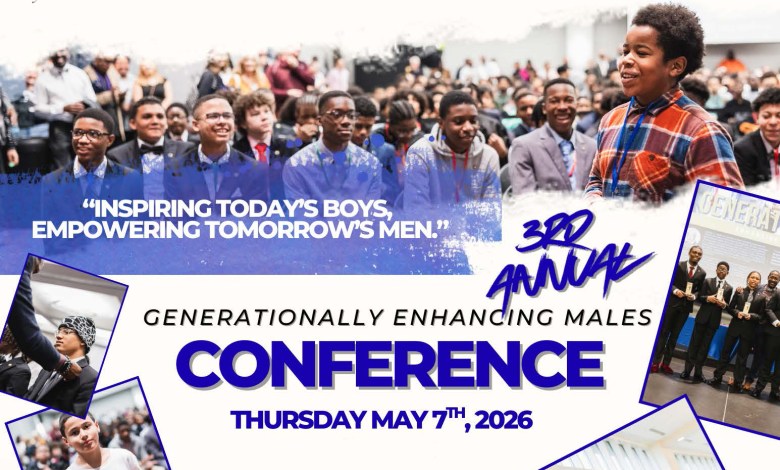
This is the gap the GEM Conference seeks to fill, and why it should be understood as a direct response to the 119K Commission’s call for prevention, affirmation, and community partnership. GEM is the only statewide event in Connecticut focused specifically on middle school boys of color. It brings them together not to be fixed, but to be celebrated. Boys who are used to being called out for discipline are called up for distinction. They see their academic effort, resilience, leadership, and character publicly affirmed. They meet men who look like them and have navigated college, careers, and community leadership.
Last year, more than 600 hundred boys attended GEM expecting another adult‑centered assembly and instead found that 100 of them were the guests of honor. For some, it was the first time their name had been read over a microphone in a positive context. In the life of a 12‑ or 13‑year‑old who usually hears his name only when trouble is involved, that can be a turning point.
This year, the partnership between the Equity Enrichment Alliance and Southern Connecticut State University deepens that impact. On May 7, SCSU will host the 2026 GEM Conference on its New Haven campus. More than 1,000 boys from across the state are expected to attend. They will walk college hallways, sit in lecture spaces, and see themselves reflected not only in the speakers, but in the institution itself. This is the kind of institutional and community partnership the 119K Commission envisioned: K‑12 schools working alongside higher education and community organizations to create affirming experiences before the justice system ever enters the picture.
Yet work like GEM is precisely what disappears when budgets tighten, because it is still too often classified as “enrichment” instead of “essential.” For a middle school boy who has never been applauded for his potential, a moment of public affirmation is not a luxury. It is the kind of preventive support our own commission told us to fund.
Connecticut spends tens of thousands of dollars each year to incarcerate a single young person. The per‑student cost to bring a boy to GEM is a fraction of that. The state asked the 119K Commission to tell us how to reduce racial inequities in the criminal justice system. The commission gave us a roadmap that starts in our schools. Conferences like GEM are already walking that path. The question now is whether we will fund what we say we value.
Sean Allen is Founder of the Equity Enrichment Alliance/ Hamden.