On a quiet stretch of Main Street in Bridgeport’s South End, two aging wooden houses stand weathered but enduring.
Their paint is worn. Their frames carry the weight of storms, salt air and centuries. To some, they might look like structures long past their prime. But to those who know their story, these homes are something else entirely.
They are proof.
Proof that in the 1800s, when slavery still gripped much of the United States, a thriving, self-sustaining Black community not only existed in Bridgeport, but flourished.
Those homes, known today as the Mary and Eliza Freeman Houses, are the last standing remnants of Little Liberia, a once-vibrant settlement of free Black and Native American people who built wealth, community and power in a nation that tried to deny them all three.
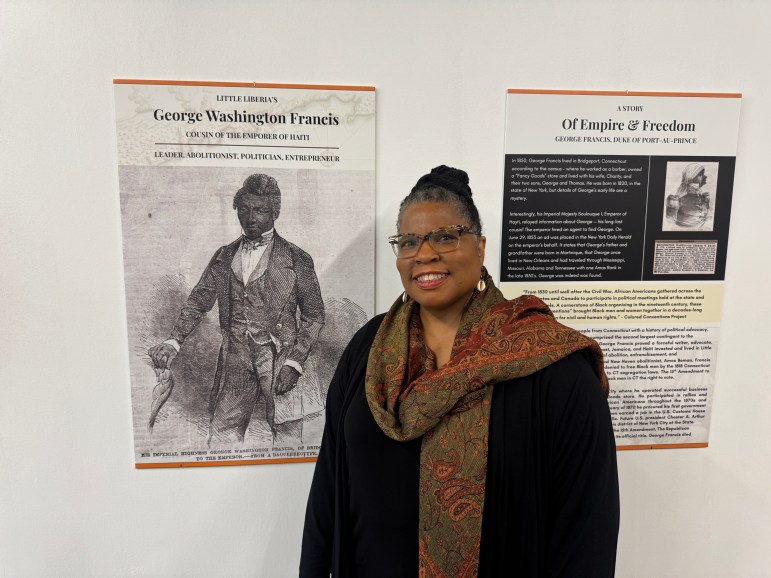
Long before it was nearly erased from memory, Little Liberia was created intentionally. It was not an accident of geography or a byproduct of outside influence. It was built with purpose.
“It was established in 1821 when Connecticut and the United States still had slavery,” said Maisa Tisdale, president and CEO of the Freeman Center. “You have a place that eventually names itself Liberia, meaning free land, in a land that was anything but free.”
Unlike many other Black settlements of the time, Little Liberia was created by free people of African and Native American descent who deliberately carved out a space where they could live with dignity, safety and autonomy. They were not isolated. They were connected to the world.
Men traveled the seas as whalers and sailors, bringing back knowledge from across continents. Women built businesses and managed property. Families invested in land and created an economy that stretched far beyond Bridgeport’s shoreline.
“They were very much part of this very modern, very cosmopolitan idea about Black freedom,” said Jamila Moore-Pewu, a University of Maryland professor who studies the community within the broader Black Atlantic. “They were tuned into what was happening globally and what it meant to be free in the modern world.”
Little Liberia was also a destination. It became a place where formerly enslaved people could arrive, rebuild their lives and finally use the skills they had long been denied the chance to benefit from. It was a hub of organizing and activism, deeply tied to movements like the Colored Conventions, a series of political gatherings where Black leaders, activists, and educators across the U.S. and Canada met to organize against slavery, racial violence and discrimination. At a time when most of the country denied Black humanity, this community insisted on it.
At the center of that story are two sisters, Mary Freeman and Eliza Freeman, whose lives challenge nearly every assumption about Black existence in 19th century America.
“They purchased land. They owned it outright. There was no benefactor,” Moore-Pewu said. “They created opportunities for their community through their own enterprises.”
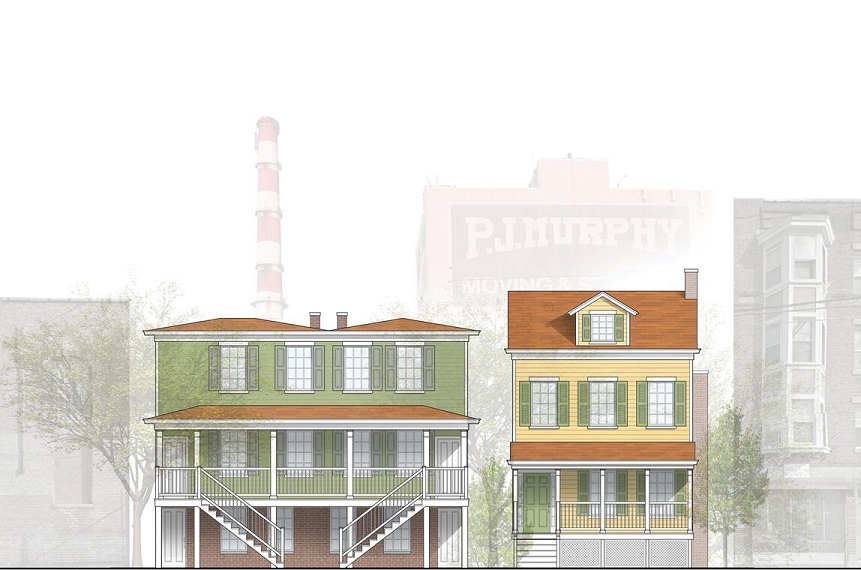
The sisters worked hard — Mary as a chef in New York City and Eliza working in private homes doing cleaning, cooking and household care — and earned enough money to invest heavily in property in Bridgeport. Alongside their brother, they helped develop entire sections of the South End. They financed homes, issued mortgages and supported tenants trying to build stable lives.
Eliza Freeman died in 1862, years before her sister’s fortune reached its peak. When Mary Freeman died in 1883, her estate was valued between $75,000 and $100,000, a fortune that would translate to millions today. The only Bridgeport resident with more wealth at the time was P.T. Barnum.
Despite that wealth, the sisters lived in relatively modest homes. That choice may have been strategic.
“They knew there was a danger in over-presenting their wealth,” Moore-Pewu said. “They were building something powerful, but they also had to protect it.”
But then, for decades, that entire history disappeared. There were no textbooks, no monuments and little public recognition of Little Liberia’s existence.
That changed when Charles Brilvitch, Bridgeport’s former city historian, came across the houses in the early 1980s and began asking questions.
“I noticed there were a couple houses left that dated back to that time,” he said. “So I went to the library and started digging.”
What he uncovered reshaped the narrative. A city directory listing identifying Mary Freeman. Property records. Newspaper clippings. Fragments of a community that had been hidden in plain sight.
Piece by piece, Brilvitch reconstructed the story by mapping land ownership, tracing family connections and uncovering evidence of Black wealth and influence that contradicted what many had been taught.
“I assumed like most people that Black people in the 1800s lived on the lowest rung,” he said. “It turns out almost the exact opposite was true.”
There were thriving businesses, institutions and even a resort hotel known as the Duncan House, where wealthy Black travelers from cities like New York and Philadelphia came to stay. The Little Liberia community was vibrant, connected and economically active.
“It was an amazing picture,” he said. “And there was zero mention of it anywhere.”
By the time that history was rediscovered, the houses were in danger. For years, they faced demolition, neglect and political resistance. At one point, they were marked for teardown.
“If they had been demolished, people wouldn’t have known what they lost,” Tisdale said. “Because no one knew the value of this place.”
Saving them required decades of persistence, advocacy and community effort. Tisdale spent years working to stabilize the structures, raise funding and push back against efforts to erase them.
Today, efforts to restore the Freeman houses continue, though no start date or funding details have been announced. The Mary & Eliza Freeman Center for History and Community, located at 1115 Main St. in Bridgeport, opened in 2019 and serves as a hub for preserving and sharing this history.
But the Freeman Houses are more than structures. They are evidence of a different history, one that challenges how Black life in America is often framed.
“Only a fraction of historic sites in this country tell stories about African Americans from this period,” Tisdale said. “These houses help fill that gap.”
They reveal a past where Black people were not only surviving, but thriving, building and leading.
“They have so much to teach people,” Brilvitch said. “Especially young people about self-sufficiency, about pride, about what’s possible.”
For Tisdale, that lesson is deeply personal.
“If they could accomplish all of that under those conditions,” she said, “then I have no excuse.”
Plans for the Freeman houses extend well beyond preservation. The Mary Freeman House is envisioned as a museum highlighting the lives and legacy of the Freeman sisters, while the Eliza Freeman House is planned as a resilience center focused on climate justice and community engagement. Together, the site is intended to serve as a cultural hub, offering educational programs, research opportunities and spaces for gatherings that connect Bridgeport’s history to present-day challenges in housing, equity, and sustainability.
But at its core, the mission is to ensure that this story is not lost again.
Today, the two houses are weathered but still standing. They have survived floods, neglect and near erasure. They have outlasted the very forces that once threatened to silence their former residents.
“If we value this history, we have to do the work of remembering it,” Moore-Pewu said. “If there’s no archive that tells your story, then build it.”