



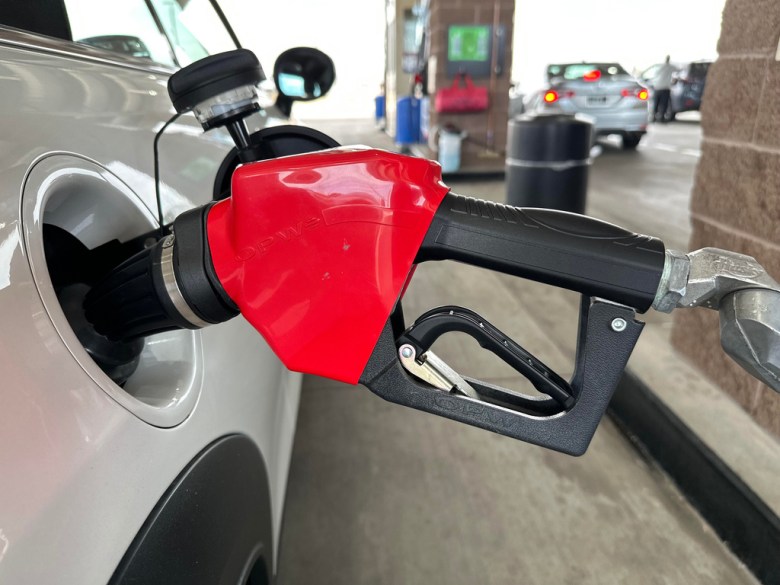
As Connecticut residents pull up to the pump this week, the sticker shock is visceral. The President’s war of choice is a humanitarian and national security disaster, and the ripple effects on oil prices demonstrates the instability of our reliance on fossil fuels.
In the last few weeks, gasoline prices have surged by more than 85 cents per gallon. This increase will likely lead to a windfall in profits for some oil and gas companies not reliant on Middle East production and transport, who will seek to profit off the war.
Yet, in the halls of the State Capitol, opponents of HB 5156, the Connecticut Climate Superfund Act, are using this global pain to peddle their decades-old misinformation. They claim that holding the world’s wealthiest polluters accountable for decades of environmental damage will further drive up the cost of gas and heating oil for Connecticut families.
This argument is not just a distraction; it is economic nonsense.
Global markets, not local fees
The current 85 plus-cent-per-gallon “war premium” we are paying proves a fundamental truth: oil prices are set by global supply and demand, not by regional accountability measures. Connecticut is a “price taker” in a $30 trillion global economy.
If a multi-billion-dollar oil giant attempted to add a surcharge in Connecticut to their gas to cover a Superfund assessment, they would immediately lose market share to competitors who are either not subject to the fee or are willing to absorb it to maintain their footprint in the Northeast. In a competitive retail market, you cannot simply pass on a penalty for past behavior without being undercut by the station across the street.
The industry knows this. When Exxon paid billions for the Exxon Valdez spill, and BP paid over $60 billion for the Deepwater Horizon disaster, retail gas prices did not spike to cover the legal bills. Prices moved in lockstep with the global price of a barrel of oil. Liability for past damages is a hit to a company’s capital, not a variable cost of today’s production.
What big oil tells its own investors
We don’t have to guess how these companies will handle a Climate Superfund bill; we can read it in their own words. In recent SEC filings, major energy firms have begun listing “Climate Superfund” legislation as a risk to investor profits, not as a driver of consumer prices. They admit that these assessments are “fixed costs” related to historical emissions from 1995 to 2024.
Economically, you cannot pass a fixed cost for 30-year-old behavior onto a future product in a competitive market. The Superfund bill doesn’t hit the consumer’s wallet; it hits the corporate profits.
The hidden costs we are paying
Connecticut is already facing a massive, un-budgeted bill for climate change. From the catastrophic $300 million flooding damage in western Connecticut in August 2024 to the projected $5.3 billion needed for seawalls and resilient infrastructure by 2040, the costs are piling up.
Currently, when a culvert collapses in Oxford or a road washes out in Southbury, the bill goes to the Connecticut taxpayer. When homeowners’ insurance premiums skyrocket due to storm frequency, you pay the difference. We are currently subsidizing the very industry that spent decades denying the known climate risks of its products while reaping record profits.
Shifting the bill to the source
The Climate Superfund Act moves the burden of climate adaptation from the victims—the families and small businesses of Connecticut— back to the massive corporate entities that generated more than one billion metric tons of greenhouse gas emissions.
Iran has shown us how little control we have over global energy shocks. But here in Hartford, we have total control over who pays for our own local resilience. We can either continue to let the taxpayers foot the bill for climate disasters, or we can demand that the companies who profited from the crisis finally pay their fair share.
The choice is clear. It’s time for the General Assembly to pass HB 5156 and ensure that Big Oil, not Connecticut families, pays for the damage it left behind.
Stephen Lewis of South Windsor is Chair of the Sierra Club Connecticut Legislative Committee.