


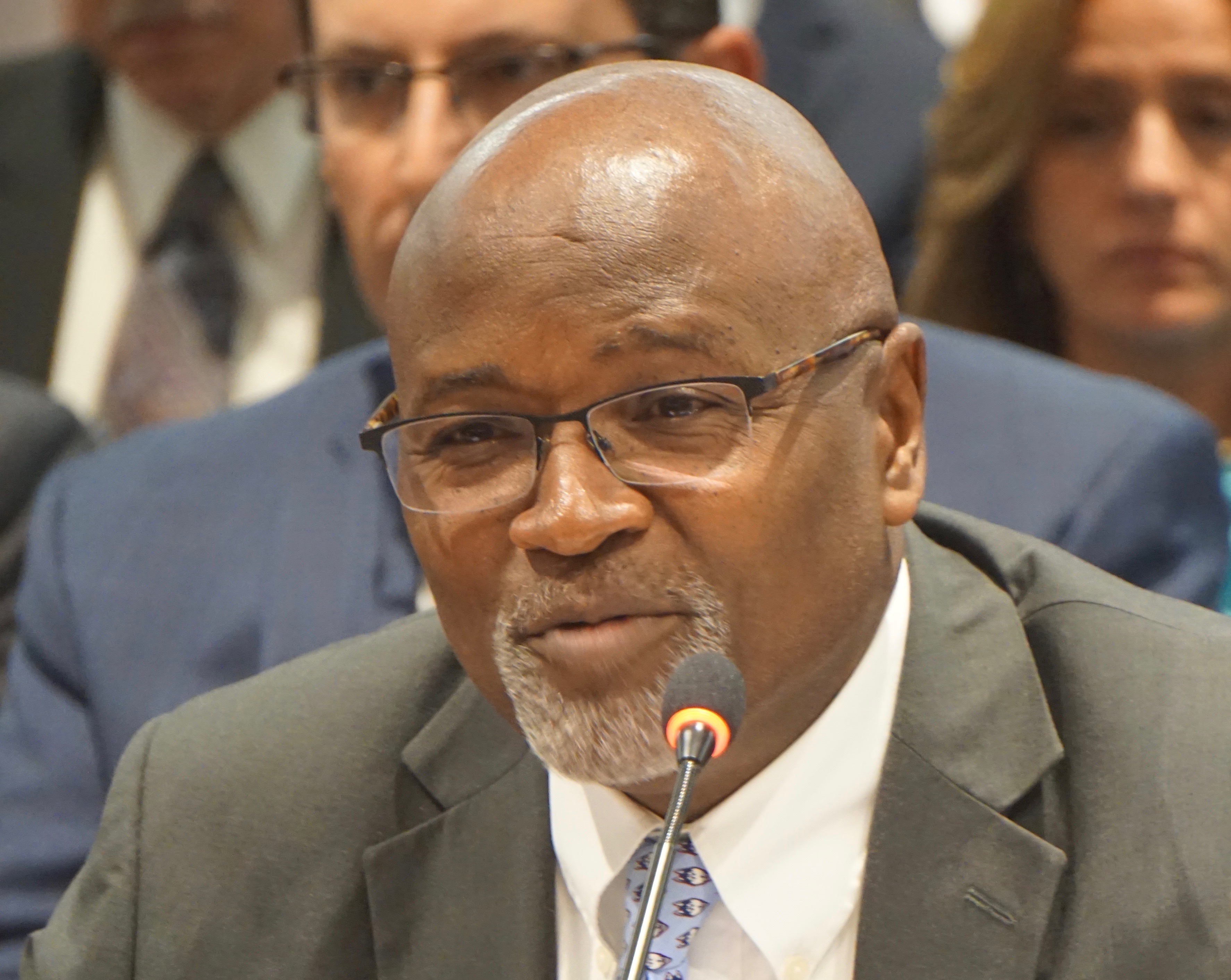
Attorneys from the Day Pitney law firm argued in a Friday motion that they should not be disqualified from representing a client because their colleague, former Chief Justice Richard Robinson, had heard the case previously while on the Connecticut Supreme Court.
Robinson’s involvement in the case, which began shortly after he retired from the court and joined Day Pitney in September 2024, was “minimal and immaterial,” they argued, although they acknowledged that “his work on this case at Day Pitney, limited though it was, violated Rule 1.12” of the Rules of Professional Conduct.
“Day Pitney and Chief Justice Robinson deeply regret the error, but they believe that disqualification of the firm is not warranted based on all of the facts,” attorney Glenn Dowd wrote.
The motion is in response to a complaint from opposing counsel in the 13-year-old civil case that Robinson, who billed more than $7,000 for time spent on the case at Day Pitney, was privy to prior Supreme Court discussions that gave his firm an unfair advantage.
The Connecticut Rule of Professional Conduct Rule 1.12 states “a lawyer shall not represent anyone in connection with a matter in which the lawyer participated personally and substantially as a judge … unless all parties to the proceeding give informed consent, confirmed in writing.”
Affidavits included in the motion, including one from Robinson, seek to describe the limited input Robinson had in the case.
In his affidavit, Robinson acknowledged it was wrong for him to work on the case at all.
“When I worked on this case at Day Pitney, I did not believe that I was precluded from doing so, which I now understand to be incorrect,” Robinson wrote.
He then described what he did on the case and refuted allegations that he revealed confidential discussions among his fellow Supreme Court justices who adjudicated the first appeal.
“I did not share with anyone at Day Pitney anything regarding how any Supreme Court Justices viewed or thought about any aspect of this case,” Robinson wrote in the affidavit. “I did not share with anyone at Day Pitney anything regarding the Supreme Court Justices’ deliberations in this case.”
But internal emails from Day Pitney reveal that at least the two lawyers on the case, Dowd and Harold Fetner, had some concerns initially about Robinson’s involvement. In an email to “Ric” in July 2025, the day the Supreme Court’s decision on the second appeal was released, Dowd questioned whether Robinson could assist them.
“This is a recent decision we got in the Clinton case. In the interest of full disclosure, you were on the panel for an earlier argument/decision in this case, and I don’t know whether that precludes you from advising on this latest opinion. If you are able to advise us, Howie and I would value your opinion on the attached options which were released today,” Dowd wrote.
Robinson’s involvement in the case was revealed during a routine hearing regarding outstanding legal fees before Judge Amir Shaikh last month in a case that has been pending since 2013 involving a contract dispute between Clinton and three defendants Michael E. Aspinwall, Steven F. Piaker and Lynn P. Young.
While reviewing the legal bills that Day Pitney produced, the defendants’ attorney, Garrett Flynn of West Hartford, noticed Robinson’s involvement and asked if he had been screened out of the case as required by section 1.12 of the code of conduct.
Records show that Robinson sat on the panel that heard the original case and issued a decision in 2022 remanding it back to the Superior Court. Robinson retired from the court on Sept. 6, 2024 and went to work for Day Pitney. Billing records show that within days at his new job he charged legal fees for reviewing documents in the Clinton case.
When Dowd confirmed it was Robinson who submitted more than $7,000 in legal bills, the judge stopped the hearing, and Flynn filed a motion to disqualify Day Pitney’s attorneys because the firm had failed to notify the defendant’s attorneys or the court that Robinson worked on the case.
In his motion to disqualify, Flynn argued that Day Pitney gained an unfair legal advantage because “Justice Robinson knew confidential information about what three current Justices once thought about this very case.”
In its brief, Day Pitney acknowledged that Robinson “spent a total of 15.7 hours working on this case at Day Pitney, most of which was spent reading briefs” but argued that Robinson “has had no involvement in this case since August 2025.” Dowd then said “he (Robinson) has now been screened from the case and will have no further involvement in it regardless of the outcome of defendants’ motion.”
