This story has been updated.
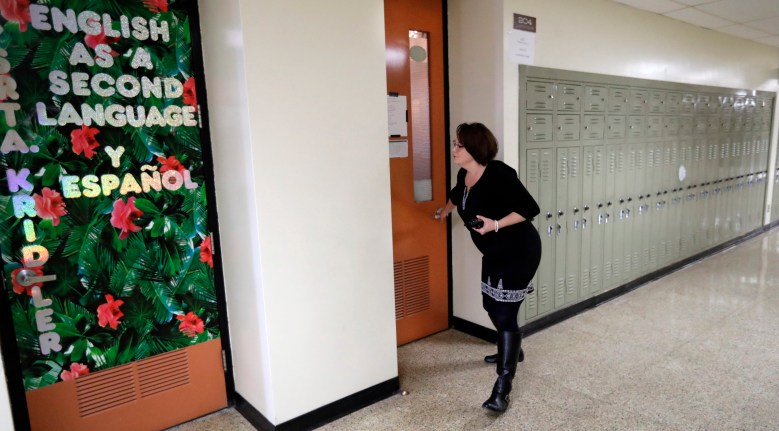
Abbey Clements, a former second-grade teacher at Sandy Hook Elementary, has lived through a school shooting. But she’s not enthusiastic about school crisis response drills.
Clements, who co-founded the national advocacy organization Teachers Unify to End Gun Violence in 2021, has two problems with crisis drills. First, she said, it’s an open question how much they actually keep kids safe from active shooters. Second, there’s some evidence drills may be hurting kids’ mental health — a particularly unfortunate outcome if the benefit to physical safety is indeed minimal.
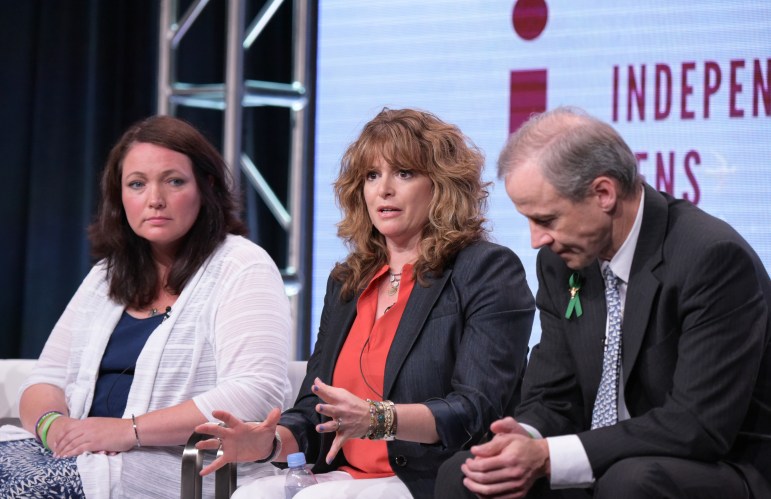
“There really is no clear recommendation, (no) clear protocol, that school districts across the country are following,” Clements said.
That’s why Clements is pleased about provisions in the recently passed Senate Bill 298 that substantially change how Connecticut school districts approach crisis drills. The new law begins the process of standardizing the drills, which until now have been developed and implemented on a district-by-district basis with very few explicit guidelines in state law.
The new standards include early notifications for parents, age-appropriate instruction and an explicit requirement that drills be “trauma-informed.”
That last component appears to be a growing concern around the country. A 2025 report from the National Academies of Science, Engineering, and Medicine found that, although available data is “mixed and limited,” there’s enough to raise “concerns that these drills may be associated with negative mental, emotional, and behavioral health outcomes.” The report suggests that, in the rush to “harden” schools against physical threats, safety drills have neglected students’ psychological well-being.
Connecticut Association of Boards of Education Executive Director Patrice McCarthy said she doesn’t think the issues with crisis drills and trauma were especially widespread in Connecticut. Still, she said the new law makes sense.
“We don’t want to traumatize students who may have experienced trauma in other parts of their lives as well,” McCarthy said.
How we got here
After the Sandy Hook shooting in 2012, schools across the country raced to improve security. One of the ways they did that was by revamping crisis drills — particularly for lockdowns. However, the National Academies report found “definitions of what it means for a school to be ‘safe’ still vary widely among educators, researchers, policymakers, and the public.”
Newtown Federation of Teachers President Trent Harrison said approaches have varied across the U.S.
“One state, they will do a lockdown and they have kids barricading the door with chairs. One, they make them all huddle in the corner holding textbooks,” Harrison said.
Prior to SB 298, Connecticut law on crisis drills was limited to one paragraph of Section 10-231 of the General Statutes. The statute calls on school boards to run a crisis drill once every three months and “develop the format … in consultation with the appropriate law enforcement agency.” It does not actually require active shooter training per se, nor does it specify what such training should entail.
Harrison said he’s heard of lockdown drills where police officers have run down the halls making noise, which he said could be traumatic for younger kids. He said he’s been in drills that even left him unsettled as a teacher.
“The security guards would come by and rattle the doorknobs. That would shake me up a bit,” Harrison said.
It’s not just lockdown drills that can be problematic, either. Harrison said he’s also had students with autism who struggled with loud noise during a fire drill.
“If we pull an alarm, I know it’s coming, so I can be like, ‘Hey, student, why don’t you come over here with me?’ Because, you know, I had a runner one year. He would hear an alarm and he would just run,” Harrison said.
Harrison said he does believe crisis drills are helpful if done right, and he likes his district’s current approach: In a lockdown, teachers lock the doors and kids move out of a potential attacker’s line-of-sight.
“We basically tell the kids … if you can see out the window of the door, they can see you,” Harrison said.
In his opinion, crisis drills should be like airplane safety instructions: designed to ensure everyone knows the process, not scare people.
Bristol Federation of Teachers President Michael Reynolds said lockdown drills at his school have evolved in the years since Sandy Hook. At first, he said, the drill involved hanging color-coded cards outside classroom doors to let first responders know whether the people inside were safe. That changed after it turned out the first responders themselves didn’t know what the cards meant.
Reynolds said there wasn’t much effort to engage with students or answer questions about the drills, either. That changed in the last year, when the district implemented age-appropriate lessons to kids about what happens in drills and why. Reynolds said the results so far are promising.
“I feel like they felt better about [the drills] than when we would just be sitting there, and they’re just like, they didn’t understand,” Reynolds said.
Nationwide, one of the more extreme approaches to crisis drills is the use of assailant simulations — in other words, having someone actually roam the school, pretending to be an attacker. Clements said she’s heard the practice has made kids afraid of going to school.
“Sometimes … people think, ‘Well, the more intense the drill, the more prepared kids will be.’ But again … there’s no evidence,” Clements said.
(CABE’s McCarthy said she’s not aware of assailant simulations taking place in Connecticut.)
Clements said she heard from a mother whose child collapsed in a grocery store after hearing an alarm go off — a response the mother attributed to crisis drills.
“Her child just flat laid on the floor and started crying hysterically, because of that response that she’s been practicing at school,” Clements said.
Feedback on crisis drills eventually reached the ears of the General Assembly’s Education Committee, prompting the creation of a bipartisan working group in 2024 to address the issue. The working group’s recommendations turned into House Bill 7077 the following year, which cleared the Education Committee by a vote of 44-0 — only to die without getting a vote in the Senate.
But that wasn’t the end of HB 7077’s story. This February, Democrats — who, according to House Speaker Matt Ritter, were frustrated that many popular bills died amid Republican filibustering last year — shoved its language into a wide-ranging emergency certification bill they could pass without the usual committee meetings and public hearings. That bill, SB 298, became law in March.
What’s in the new law
One of the new law’s goals is to standardize terms and procedures relating to crisis drills. The law itself doesn’t do that; instead, it calls two organizations — the Department of Emergency Services and Public Protection and the Connecticut Center for School Safety and Crisis Prevention at Western Connecticut State University — to come up with something. They’ll also have to conduct a study on how crisis drills impact school communities, to be presented by July 1, 2028.
Schools will have to update their own policies and procedures once that happens.
The law also adds several of its own requirements for crisis drills:
- School boards should include their school climate committees in planning drills
- Drills must prioritize both “physical and psychological safety”
- They must be trauma-informed and designed to prevent emotional harm
- School personnel should provide age-appropriate instruction before drills occur, as well as training to other personnel
- Schools communicate with parents and guardians before a drill
- Schools explicitly tell students and staff that the drill is in fact a drill
- Accommodations must be made for students with disabilities
- Drills must be regularly evaluated and improved
And on the off chance any schools in Connecticut were considering assailant simulations, those are now explicitly banned during the school day. They can run such simulations outside regular school hours for personnel, first responders and volunteers.
Harrison, who participated in the working group for HB 7077, said he doesn’t expect much to change in Newtown. His district is already doing most of this anyway.
McCarthy echoed his comments. The biggest changes for most districts, she said, will be the part about notifying parents and the involvement of climate committees in creating and reviewing procedures.
Clements said she also supports all of these changes.
“This forward-looking legislation could be a model for what more states are doing to keep students and staff safe in schools, both physically and mentally,” she said.
But she added a caveat. None of this, Clements said, addresses what she views as the core problem: gun violence.
“We have to expect [teachers] to be flexible and to do the very best we can in a country that refuses to get a handle on this public health crisis,” Clements said.
Correction
An earlier version of this story incorrectly reported the grade Abbey Clements taught at Sandy Hook Elementary. She was a second grade teacher, not a first grade teacher.