President Trump signed a proclamation on February 6 removing restrictions on commercial fishing in the Northeast Canyons and Seamounts Marine National Monument.
Several weeks ago, a group of U.S. Senators, led by Sen. Richard Blumenthal, sent him a letter demanding he reverse this decision. Last week on April 3 NOAA rescinded the regulations that restricted commercial fishing, with no public comment period. The final step in the process that turns long-term conservation of our natural heritage into short-term cash is done.
However, the rationale for this action, as presented in the proclamation, is that commercial fisheries are managed sustainably in the region so, by inference, should protect the whole of diversity within the Monument. Unfortunately, the issues of sustainability that are espoused in the proclamation are, forgive the fish pun, a red herring.
Sustainable fisheries are not the same as protection of species diversity and ecosystem processes. Indeed, sustainable fisheries, as managed by NOAA are, for the most part, assessed to be sustainable at the regional scale and population level for each managed species. This approach, while generally fine in a fisheries context, does not address the ecological role that such species play within the boundaries of the Monument.
It would be possible to fish until a species is functionally extinct in the Monument and still be sustainable at the regional – fisheries management – scale. Further, sustainable fisheries is not the same as “sustainability for ecosystems”. Allowing fishing back into the monument risks drastically damaging deep sea corals and other fragile and long-lived organisms, depleting forage species that form the foundation of the food web for predators. Towed fishing gear will again continue to damage complex geology that serve as habitat for fish and other seafloor species. Loss of the protection from vertical lines with buoys and fixed fishing gear puts marine mammals, seabirds, and turtles at risk of entanglement and drowning.
An economic analysis of fishing activity around the monument done after the monument was closed to fishing found that fishermen made MORE money after the closure.
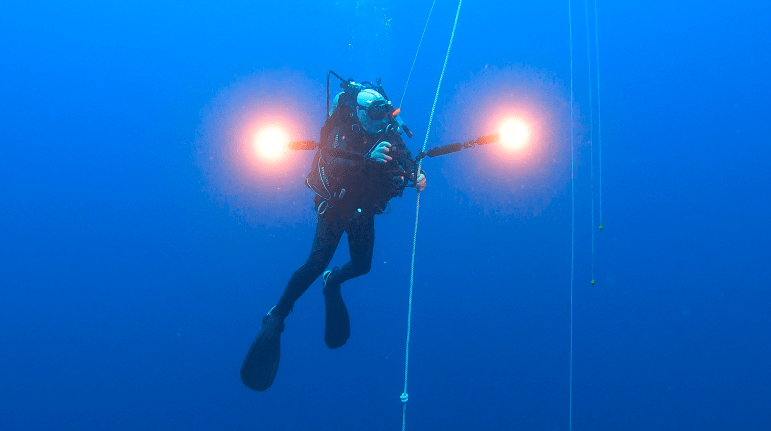
Many studies around the world have shown that fisheries closure in defined areas actually INCREASE fishing productivity just outside the closure boundaries. This “spillover” effect works in all oceanic systems, as fisheries closures allow animals inside to breed faster, more, and larger offspring, which then travel outside the closure. Opening protected areas to fishing actually damages fisheries!
One role of the Monument is to facilitate research, as stated in the Antiquities Act. That is sacrificed as the impacts from fishing will undermine studies attempting to understand the balance between conservation and sustainable ocean uses. That loss minimizes or negates the benefit of the Monument to the fishing industry and the American people.
This action turns the Monument, in large part, into a paper-park. Bouncing back and forth between a protected area and a commercial fishery, delays any deep understanding of fishing vs climate effects in this deepwater ecosystem. This proclamation is yet another move that sacrifices American public lands and waters in exchange for political favors to a few.
P.J. Auster, PhD, of Chester is a Research Professor Emeritus at the University of Connecticut. S. D. Kraus, PhD, of Sandwich, NH is Emeritus Senior Scientist at the New England Aquarium. Their opinions are not necessarily those of their affiliated institutions.