




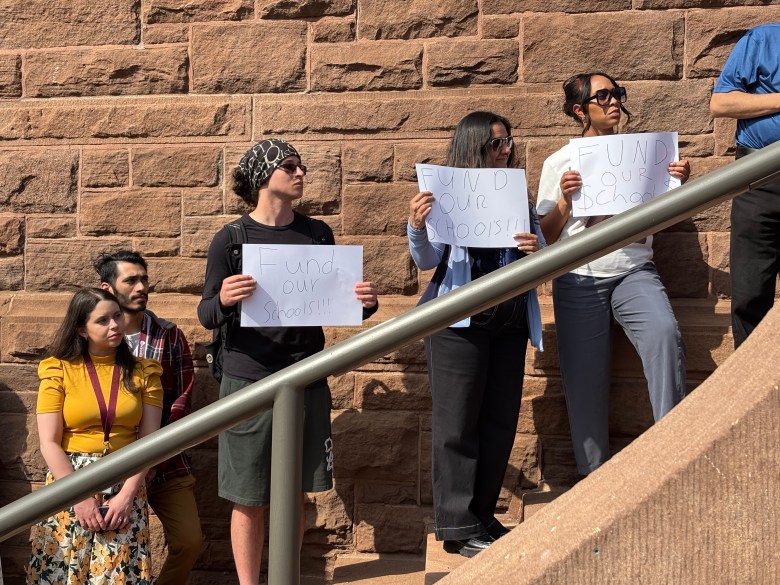
Ask any educator across Connecticut how the last decade of teaching has gone, and you’ll hear some version of the same answer: “We made it work.”
“We made it work” is the polite way of describing what happens when a state freezes its education funding formula and asks its highest-need districts to figure it out. It means cutting programs; deferring investments; telling good teachers that the system values them, without showing it in their paychecks or their working conditions.
Last week, Connecticut took a real step toward changing that by passing one of the largest single-year increases in education funding in its history. At the center of it is a roughly $170 million boost to Education Cost Sharing (ECS), the main formula Connecticut uses to distribute state dollars to public schools. That increase is permanent and results in something that hasn’t happened in 13 years: a raise to the per-student foundation amount, the base figure the formula uses to calculate what each child’s education is worth to the state.
On top of this increase to foundational funding, Hartford, Bridgeport, New Haven, and other municipalities will receive a share of an additional $100 million in one-time aid directed to the communities feeling the most financial pressure, much of which is expected to support local schools. For cities that have been absorbing the cost of an underfunded formula for over a decade, this is real relief.
I join educators across the state in celebrating this. The teachers I work with testified, organized, and advocated for this kind of investment, and these much-needed injections of funds reflect what happens when educators turn their voices into power. At the same time, I also owe those same teachers honesty about what this win does and doesn’t solve. Connecticut has taken a significant step, but it has not crossed the finish line.
For 13 years, Connecticut held its education funding formula still while costs kept rising. Districts didn’t choose to watch programs disappear or leave positions unfilled—they had to. They did everything they could with what the state gave them, and the communities of Hartford, Bridgeport, and New Haven felt that gap between what they were given and what students needed most acutely. This investment begins to correct that. Still, “begins” is the operative word. The legislature must act next session to tie the foundation amount to inflation so Connecticut never again finds itself 13 years behind, chasing dollars that evaporated while the formula stood still.
There is a second crisis this budget did not fully address: the skyrocketing cost of special education. Connecticut has two programs specifically designed to provide schools with the added dollars needed to support students with disabilities: the Excess Cost Grant and the SEED grant . Both are underfunded, the SEED grant severely so: districts are getting just 15% of the dollars they are owed through it.
Districts are legally obligated to serve every student with a disability regardless of what the state reimburses. But legal obligation and actual delivery are not the same thing. When the state falls short, students pay the price. They lose services. They lose support. They lose what the law says they’re owed.
That is why when the General Assembly returns, fully funding SEED and reforming the Excess Cost Grant must be at the top of the agenda.
Stable funding also opens a conversation that goes beyond keeping the lights on. Right now, there is no financial incentive for Connecticut’s most skilled teachers to work in our highest needs schools and communities. A pay structure that ignores both the role and the community makes it harder to recruit and retain great teachers in places that need them most. Innovative compensation models can change that, creating pathways that reward educators who serve high-need schools, recognize specialized expertise, and make staying in the profession worth it. Connecticut districts have more resources today than they did yesterday. The next question is whether it has the strategy to use them effectively.
Connecticut made history last week, and the teachers who fought for it know exactly what it took. They also know that the students in our highest-need communities cannot afford for this to be the end of the conversation. That means tying the foundation amount to inflation so the state never falls this far behind again. It means fully funding SEED and reforming the Excess Cost Grant so that districts are no longer forced to choose between their students. And it means building compensation models that put great teachers where students need them most.
This session marked a new beginning. What comes next is ensuring that “We made it work” becomes “We’re able to do the work.”
Daniel Pearson is the Executive Director of Educators for Excellence-CT.