



School administrators carry an enormous amount of responsibility. Every day, we are managing budgets, supporting teachers, addressing student mental health, and navigating state and federal mandates. We also have an enormous privilege to create an environment where every child can learn and grow. While there are many factors we can’t control for our students, there are plenty we can.
Limiting the ability of children and teens to access intoxicating hemp-derived products that harm their health and well-being is an easy one.
A federal loophole in the 2018 Farm Bill allowed for a gray market of intoxicating hemp products to be produced with no regulation or oversight. While the legal technicalities in the loophole can be confusing, the impact has been far more obvious.
Manufacturers could create synthetic THC that had the same chemical signature as the delta-8 THC found in very low-levels of hemp. While giving a similar high to the delta-9 THC many are more aware of, this and other hemp-derived strains were more closely linked to nausea and anxiety, and other negative side effects.
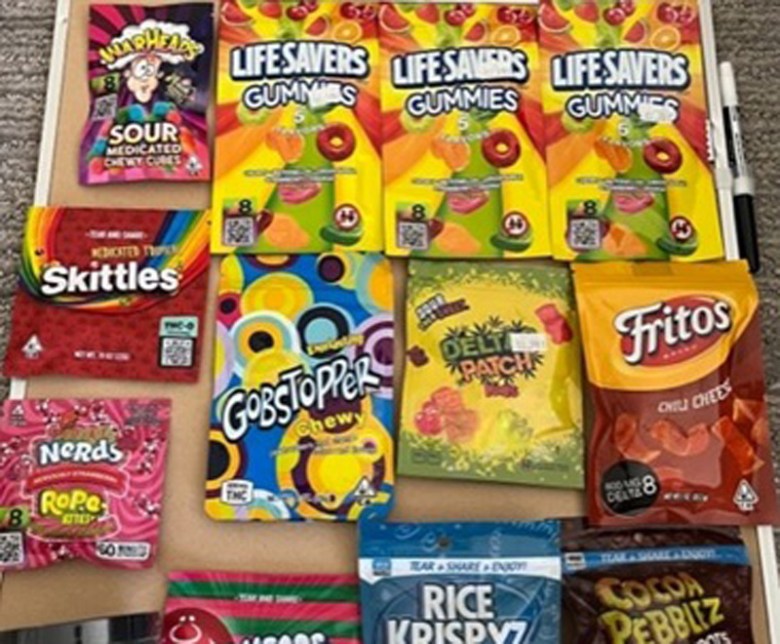
But with no federal regulation, dangerous hemp products like gummies, candies, and drinks were packaged to look like popular snack brands as a means of targeting children and teenagers across the country, including right here in Connecticut.
Whether older kids were intentionally buying these products because they were sold at gas stations and convenience stores without age restrictions or they were found by younger children who mistook them for popular snacks and candy, the threat to their health was real.
The FDA documented that 82% of unintentional delta-8 THC exposures reported to poison control centers affected pediatric patients. Research has also consistently linked adolescent THC exposure to serious harm, including impaired learning, memory, attention, and long-term brain development, which is especially alarming when when more than one in 10 high school seniors report using delta-8 THC.
Seeing the harms and potential abuse of these products, Connecticut has been a leader in regulating intoxicating hemp. Our legislature has taken these products out of general retail spaces and enforces quantity and quality requirements as well as age restrictions. Our Attorney General William Tong led a coalition of 38 attorneys general urging Congress to close the loophole, warning that these products were being manufactured and sold without proper age restrictions, labeling standards, or safety requirements. He has rightly pointed out that these products get adults high while harming and even killing children.
Congress made the right decision last year when it voted to close the federal loophole, with enforcement set to begin this coming November. Connecticut had already been addressing this issue at the state level, and the federal action provided the backing our state needed. Now the industry is lobbying hard to reopen the loophole at the expense of our country’s youth. Connecticut’s Congressional delegation must reject that effort.
School administrators are not naive about the challenges young people face. But we cannot do our jobs effectively when dangerous products in an unregulated market are actively working against us. And our students deserve adults who are doing everything they can to keep them safe.
The decision to keep the loophole closed is straightforward: it protects children, supports the work of educators, and is backed by Connecticut’s chief law enforcement officer. I urge Connecticut’s Congressional delegation to hold that line.
Victor Cristofaro is the President of the Connecticut Association of School Administrators and the Principal at Burns Latino Studies Academy in Hartford.