



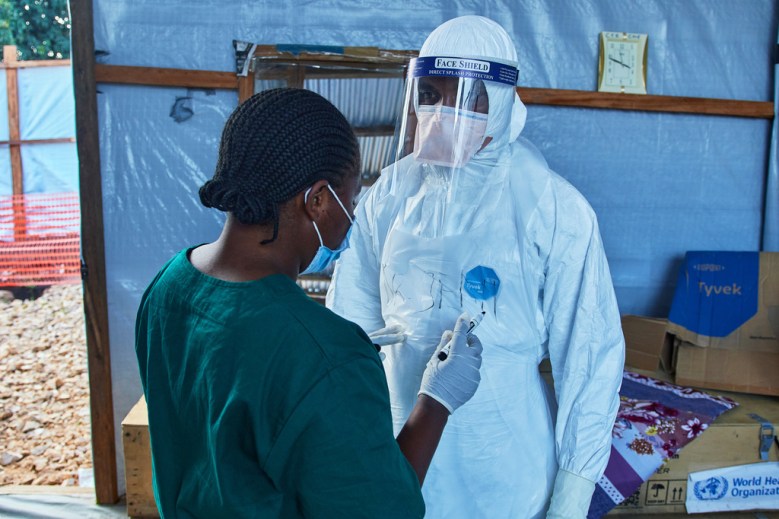
The distance between the dense forests of the Democratic Republic of the Congo (DRC) and the commuter hubs of Connecticut has never been shorter.
In our hyperconnected global economy, health security is assuredly a matter of self-interest. A virus capable of reaching an international airport in Africa is less than 36 hours away from John F. Kennedy International Airport, the primary gateway for thousands of Connecticut residents, businesses, and biotech researchers.
On May 16 the World Health Organization (WHO) declared the Ebola outbreak in the DRC a Public Health Emergency of International Concern. Ebola is not casually contagious because it requires direct contact with bodily fluids. Yet, the danger to the American public is not massive, uncontained community spread, but rather the acute paralysis of our local healthcare infrastructure.
It takes only one or two confirmed cases in a single city to completely overwhelm local systems. Just one admission could force a total operational reset for a hospital, triggering grueling isolation protocols, exhausting personnel, and igniting panic both inside and outside healthcare institutions.
It’s important to note that this strain isn’t the Ebola of the past. The current epidemic is driven by the Bundibugyo ebolavirus strain, a highly lethal variant for which there are currently no certified vaccines or specific treatments. Unlike the Zaire strain, which modern medicine learned to contain with highly effective vaccines, the Bundibugyo strain leaves clinicians essentially empty-handed.
We are currently in the volatile acceleration phase of such a crisis. As of early July, the toll stands at 1,729 confirmed cases and 582 deaths. Driven by deep seated regional conflict in the DRC’s Ituri province, the virus spread undetected for weeks before global authorities sounded the alarm. It has now established active cross border transmission into its neighboring country Uganda. The domestic danger is real enough that the U.S. Centers for Disease Control and Prevention (CDC) issued an emergency continuation order extending entry restrictions on foreign nationals traveling from the affected regions.
In response, the United States is currently investing heavily, deploying significant capital and emergency resources to stem the tide. But this surge highlights a recurring flaw in American policy, we are reactive rather than proactive. By dismantling baseline global health surveillance systems and cutting predictable funding to partnerships like USAID in recent years, we enabled a dangerous vacuum to form.
Now, Washington is forced to spend exponentially more money on emergency stabilization than it would have cost to maintain prior global defenses. This panic and neglect cycle guarantees worse clinical outcomes abroad and higher financial costs at home.
Why should an everyday reader or a policymaker in Connecticut care about an outbreak thousands of miles away? The motivations are structurally split between public health realities and economic self-interest.
From a public health perspective, the frontlines of American defense are international. When the U.S. draws back its global presence, such as recent, short-sighted funding cuts to USAID and WHO surveillance partnerships, it creates a dangerous vacuum. Early detection systems collapse, allowing deadly pathogens to quietly mutate and travel. Investing in global health isn’t mere selflessness, it is strategic medical diplomacy.
Economically the math is simple. Containment at the source is exponentially cheaper than a domestic response. If a single undetected case slips through our airports, the local economic footprint is devastating. A reactive domestic footprint means panicked healthcare providers and patients, impacted financial markets, and disrupted supply chains. For a state like Connecticut, which prides itself on its world class healthcare networks and thriving biopharma sector, the cost of global neglect may well be paid locally.
As this crisis unfolds, readers should look past headline case counts and focus on the underlying signs of control. Individuals can monitor for a drop in the ratio of community deaths on a weekly basis. If people are dying outside of isolation wards, it indicates that contact tracing is failing. We should also watch for a stabilization of cross-border transit hubs like Kampala and keep an eye out for how quickly international regulatory bodies are fast tracking clinical trials to pivot therapeutic research toward the Bundibugyo strain.
On the ground, we need to see slowing case growth despite widespread access to testing, and a case fatality rate that doesn’t rise. Beyond the borders of the Democratic Republic of the Congo, the true metric of success is preventing geographic spread. While single imported cases have appeared in France and a U.S. citizen in Germany, containment is largely holding, as evidenced by Uganda successfully preventing a sustained outbreak. Ultimately, finding comfort will depend on seeing greater coordination among international partners to stop further transmission.
The political obstacle to global health funding has always been a lack of immediate local urgency. But we can no longer afford to treat global surveillance as a luxury. Writing massive emergency checks after a crisis erupts is a failing strategy. Congress must shift from emergency damage control to sustained, proactive funding for global surveillance and neglected viral research.
If we refuse to fund the frontline defense, we will consistently overpay to fight the fire at home.
Sebaga Kombo is a senior at Occidental College double majoring in economics and international relations. Howard P. Forman is a Professor of Management, Radiology, Public Health, and Economics at Yale University.