

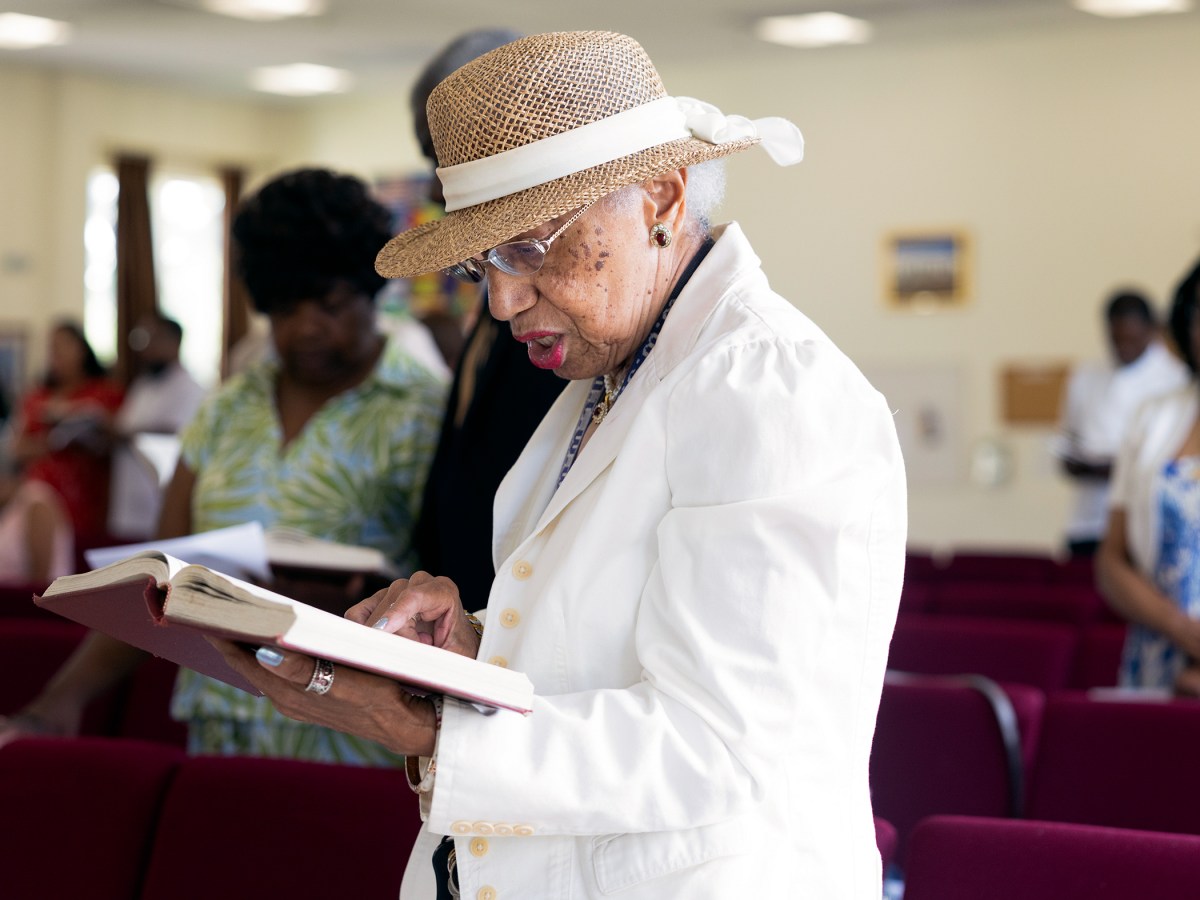


For 122 years, St. Monica’s Episcopal Church has been a pillar of Hartford’s North End and a sanctuary for Black worshippers. Until recently, it was the only historically Black Episcopal congregation in Connecticut with a full-time pastor.
But now, facing a shortage of congregants and money, the church has had to cut its pastor’s hours to half time.
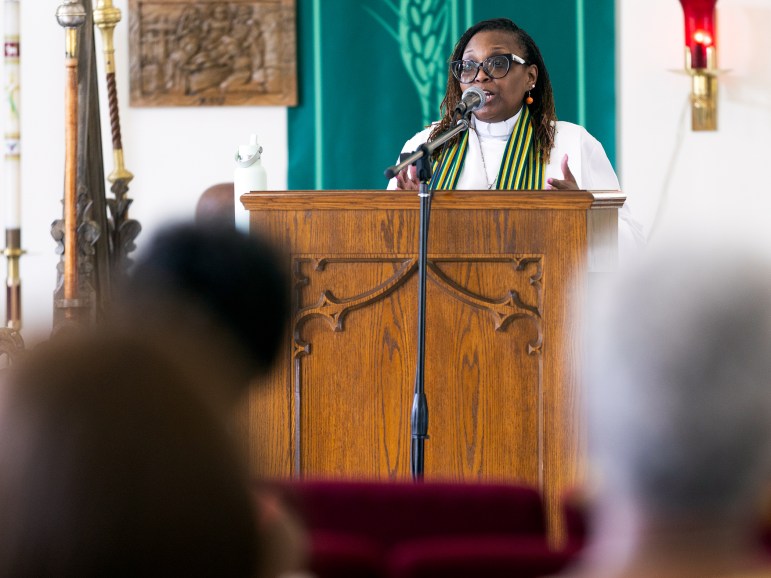
The Rev. Tracy Johnson-Russell will still lead the service every other Sunday. But on her off weeks, members of the congregation will have to run the service on their own.
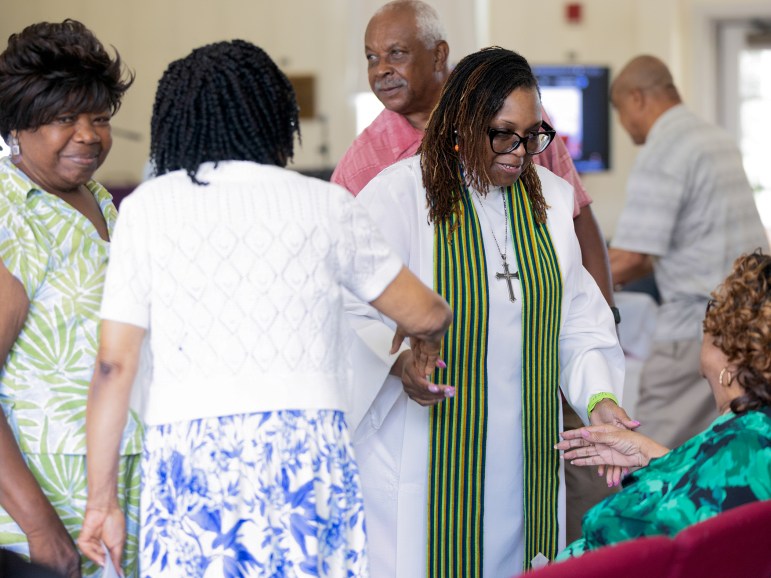
It’s a blow to parishioners like senior warden Stephanie Lightfoot, who has been coming to St. Monica’s to worship, find community and raise her kids for 40 years.
In Johnson-Russell’s absence, Lightfoot has been inviting members of the congregation to preach, “something that might kind of spark some talking or different way of being in church.”
St. Monica’s situation is not unique.
“The percent of congregations that have a part-time clergy is rising,” said Charissa Mikoski, assistant professor of research at Hartford Institute for Religion Research, adding that four in 10 Episcopal churches don’t have a full-time priest.

‘That began quietly‘
Some 50 years ago, services were full at St. Monica’s, then located on Mather Street. Parishioners would throw yearly fundraising galas attended by the governor and senior warden Edith Gaines, the first Black and female superintendent of Hartford Public Schools, who “knew how to get money out of a rock,” Lightfoot said.
Gaines had a vision for a town within a town. The plan was to build low-income and elderly housing on a plot of land St. Monica’s bought in the North End of Hartford. They would use the profits to build a parish meeting hall and a church.
But members miscalculated the terms of their HUD grants and ran out of funds for the church building. Now they hold their services in the parish meeting hall on Main Street, just south of the Windsor town line.


Evelyn Green sorts through the archives of St. Monica’s Episcopal Church at the church in Hartford on Wednesday, August 5, 2026. (Photos by Sarah Gordon/CT Mirror)
Evelyn Green started noticing a slowdown of volunteers in the early 2000s. For every 10 engaged seniors in the congregation who died or became less active, it seemed there were only four young people to take their place.
“I think that began quietly. It’s like you don’t really notice it,” Green said. And as the older women in the congregation aged, “you recognize that the three younger women have to do the majority of stuff.”
The median age of churchgoers now is 60, and the median number of people attending a service is 45, according to the Epsicopal Church’s 2024 Parochial Report Data.
In 2024, St. Monica’s had an average of 61 Sunday attendees, down from 104 in 2015.
And lately, the church has been struggling to retain its young members.
“Everyone who grew up here when I came, and they went off to college, they didn’t come back,” Johnson-Russell said.


St. Monica’s has a food pantry every Wednesday morning for community members in need. (Photos by Sarah Gordon/CT Mirror)
‘We’re still driving the bus, just not as fast‘
Members have been navigating how to support their aging congregation while still balancing the budget sheet. They hold a bible study on a weekday morning and provide advice in their Sunday announcements on how to get a good night’s sleep.
St Monica’s still hopes to recruit newer and younger members to improve their prospects, and part of that strategy will be staying true to who they are: “a church that has continuously been welcoming to the stranger,” Green said.
The church’s West Indian population grew as their pastor, the Rev. Alfred Lambert, biked out to Windsor to visit migrants working on tobacco farms.
“He would also bring them news of what’s happening and try to help them acclimate to a new society and a new way of life,” Green said. “A lot of the people he connected with became members here and became citizens.”
Another pastor, the Rev. Himie Budu Shannon, an immigrant from war-torn Liberia, “worked diligently, from what I understand, with immigration,” Green said. “If people reached out to him and said they needed help, then he was right there to help them through that process,” Green said.
Green thinks the church couldn’t have picked a better name. St. Monica, the mother of St. Augustine of Hippo, fervently prayed for her son’s conversion. “Awesome, but such a role model,” she said. “St. Monica’s is a nurturing place.”
Now, as she ages, Green has had to let go of the expectation that there will be a cohort of younger women to replace her. But regardless of the size of the membership, “it’s that St. Monica’s still understands what’s the most important, and that’s caring for people and loving people.”
St Monica’s rents its 60 subsidized apartments across the street, and every month, the pantry provides food to 200 people.
“It’s something that God has called us to do,” said Pat Nelson, who runs the pantry with her husband, Bob.
And to recruit, it’s important “on Sundays, if we have the guests, to be very hospitable and welcoming,” said Bob Nelson.
“We’re still driving the bus, just not as fast as we used to,” Green said.
Benign neglect
But Johnson-Russell sees a centuries-long history of “benign neglect” by the diocese.
“The Black churches, in order to thrive, need full-time clergy presence,” Johnson-Russell said. “You can’t grow a church quarter-time and/or part-time.”
She is currently looking for a second part-time role to supplement her income. Her previous role was at 123-year-old St. Andrew’s, in New Haven, a church that became majority Black as a result of white flight. It closed after accruing too much debt to the diocese. And the oldest Black Episcopal church in Connecticut, St. Luke’s in New Haven, is down to a less-than-quarter-time priest.
“My grandparents are rolling in their grave,” Johnson-Russell said.
Episcopal churches pay for their own expenses but are able to apply for certain grants through the diocese. Churches, including wealthier and whiter congregations with bigger endowments, contribute 10% of their operating expenses towards a pooled fund.
“We do not have the sufficient funds or resources to pay for full-time clergy positions,” said Rosanna Rosado, canon for finance and operations at the Episcopal Church of Connecticut.
More and more, churches are going to need to find ways to continue their mission without a full-time priest, said Kevin Olds, canon for congregations and transitions at the Episcopal Church of Connecticut. “You can have a healthy, vibrant community, and the priest is there 20 hours a week. But it’s a journey to get there.”
‘I would love to have more youth to talk to‘
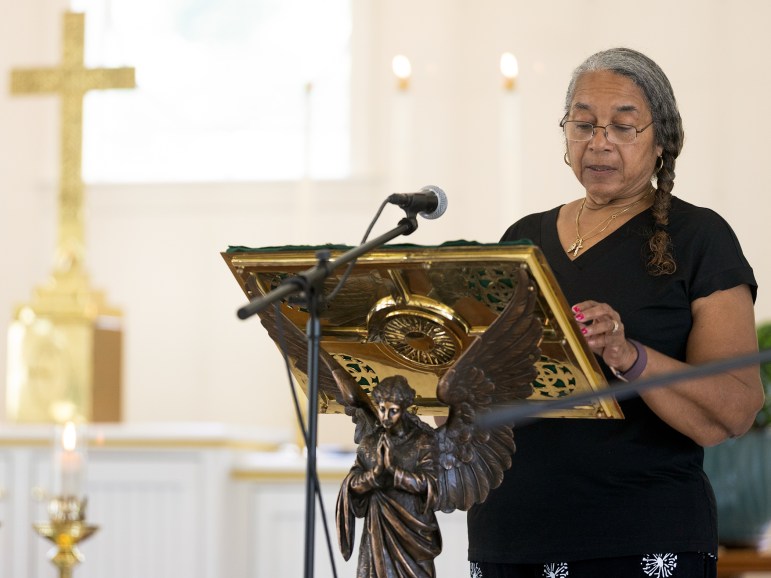
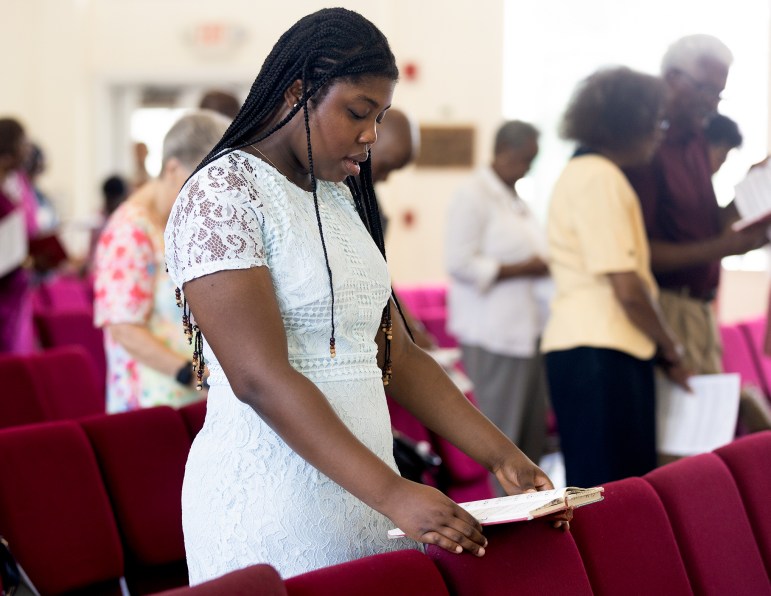
On a Sunday without Johnson-Russell, parishioner April Cantor addressed the church and prayed for St. Monica’s absent young congregants, about 30 in total, by name.
One of them, Maya Tuning, 17, was recently confirmed. Reached later by telephone, Tuning said she was disappointed that there weren’t more young people going through the process with her.
“I would love to have more youth to talk to about their experiences and about how they’re interpreting different things,” she said. She heads to Drexel University this fall.
Tuning said she wonders “whether or not I will make time to come back [to the church] and to help out with what I can while it’s still there, which I hope will be for a long time afterwards.”
St. Monica’s doors remain open every Sunday at 10:30 a.m.
